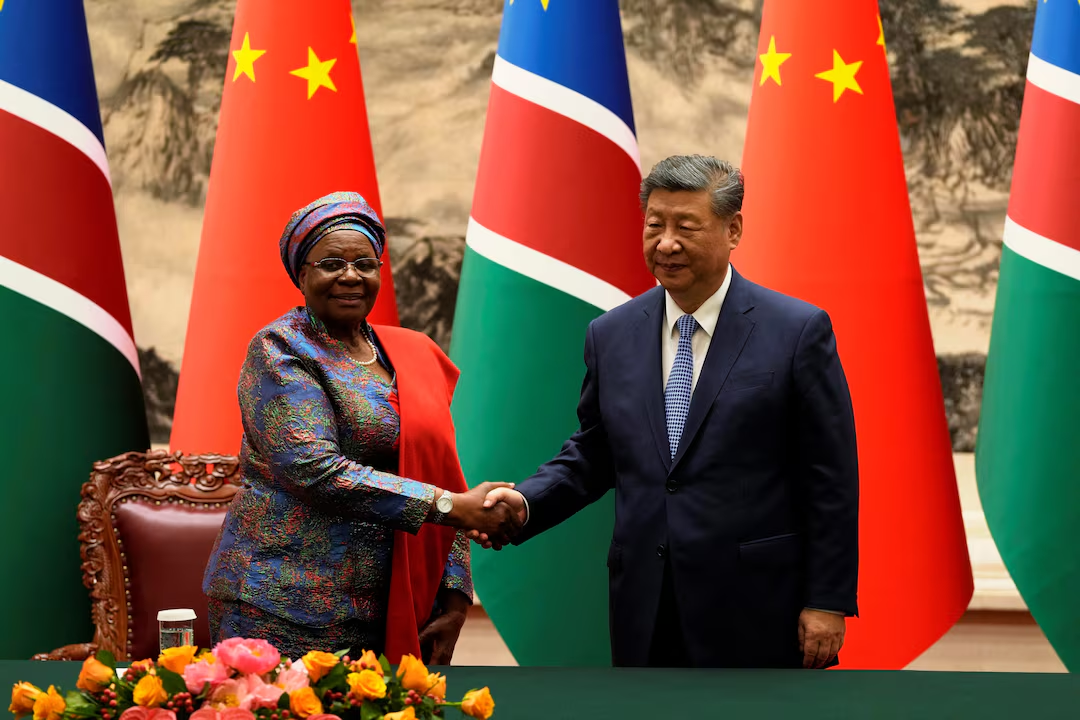
Namibian President Nandi-Ndaitwah and Chinese President Xi Jinping oversaw the signing of eight cooperation agreements spanning energy, critical minerals, infrastructure, agriculture and broader development initiatives.
Namibia Deepens Economic Ties With China Through New Strategic Partnership
WINDHOEK – Namibia has strengthened its economic partnership with China after signing a series of cooperation agreements covering infrastructure, mining, energy, agriculture and trade during President Netumbo Nandi-Ndaitwah’s state visit to Beijing.
The visit, Nandi-Ndaitwah’s first outside Africa since taking office earlier this year, highlighted the importance Windhoek places on its relationship with Beijing as it seeks to accelerate economic growth, industrialisation and job creation.
President Nandi-Ndaitwah and Chinese President Xi Jinping oversaw the signing of eight cooperation agreements spanning energy, critical minerals, infrastructure, agriculture and broader development initiatives.
Xi described China and Namibia as long-standing strategic partners and pledged to deepen cooperation across sectors of mutual interest. Nandi-Ndaitwah, in turn, reaffirmed Namibia’s commitment to expanding its partnership with Beijing.
READ MORE: Namibian-Owned Nasan Energies Completes Landmark US$50 Million Fuel Retail Acquisition
A central theme running through the agreements is the drive to process Namibia’s mineral resources domestically instead of exporting them in raw form. The two countries committed to strengthening cooperation in mineral beneficiation, technology transfer and skills development, with the aim of building more value-added industries inside Namibia.
The focus reflects Windhoek’s broader ambition to capture a greater share of the economic benefits from its vast deposits of uranium, lithium and rare earth minerals, rather than remaining primarily an exporter of raw commodities.
China Already Namibia’s Biggest Trading Partner
China is already Namibia’s largest trading partner and one of its biggest sources of foreign direct investment.
Chinese companies have invested an estimated US$4.2 billion in Namibia, largely in the mining sector, while Beijing purchases roughly a quarter of the country’s exports. Uranium remains the cornerstone of that trade relationship, underscoring Namibia’s growing importance to China’s energy security and industrial ambitions.
For Beijing, the latest agreements form part of a wider strategy to secure reliable supplies of critical minerals needed for electric vehicles, renewable energy technologies and advanced manufacturing. Namibia’s reserves of uranium, lithium and rare earth elements have become increasingly significant as global demand for energy-transition minerals continues to grow.
The strengthened partnership also comes as Namibia positions itself as one of Africa’s emerging oil producers following major offshore discoveries by Shell and TotalEnergies.
The country is estimated to hold around 2.6 billion barrels of recoverable crude oil, with commercial production expected before the end of the decade. If realised, the new petroleum industry is expected to complement, rather than replace, Namibia’s mining sector as a major pillar of economic growth.
READ MORE: ‘Fees Have Fallen’, Declares Namibian President Nandi-Ndaitwah
Economic diversification has been one of the defining priorities of Nandi-Ndaitwah’s administration.
Her government is seeking to attract greater investment into agriculture, manufacturing, renewable energy and mineral beneficiation in an effort to reduce Namibia’s dependence on raw commodity exports while creating more employment opportunities for its growing population.
The International Monetary Fund has also encouraged Namibia to pursue structural reforms that broaden economic activity beyond mining and strengthen long-term economic resilience.
Beyond Namibia, the agreements could serve as an important indicator of how resource-rich African countries are reshaping their relationships with China.
Rather than relying solely on extractive investment, Windhoek is pushing for greater local processing, industrial development and technology transfer as part of its resource partnerships.
Whether these commitments ultimately translate into new factories, skilled jobs and lasting industrial capacity will become clearer as the agreements move from the signing table to implementation.
Additional reporting: Impact Newswire
Subscribe to Our Newsletter
Keep in touch with our news & offers
Thank you for subscribing to the newsletter.
Oops. Something went wrong. Please try again later.