President Cyril Ramaphosa has urged BRICS countries to shift investment towards beneficiation, manufacturing and technology, warning that Africa cannot continue exporting the minerals needed for future industries while higher-value economic activity takes place elsewhere.
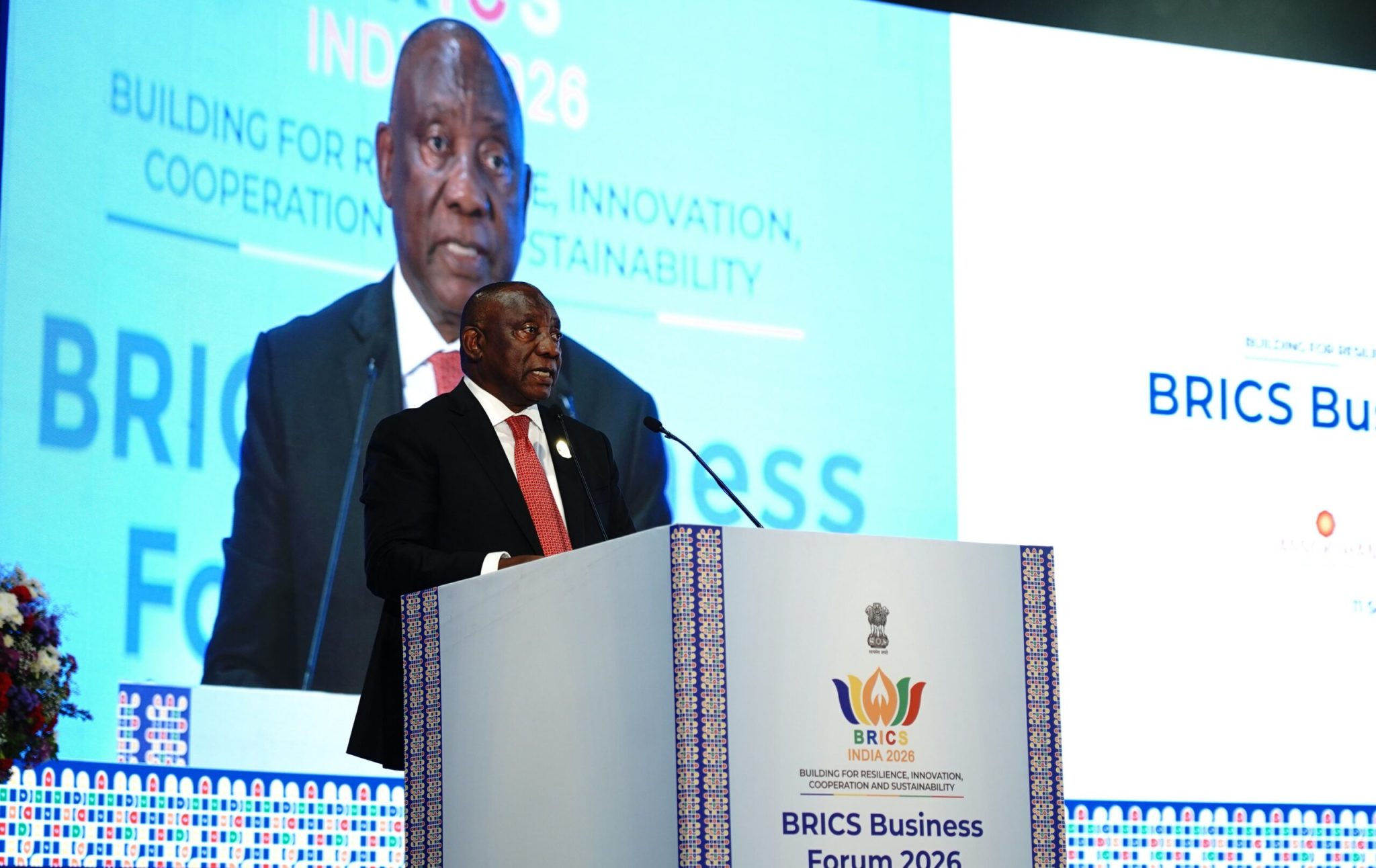
NEW DELHI — South African President Cyril Ramaphosa has called on BRICS countries to help reshape global value chains so that developing economies capture more value from their natural resources, technology and manufacturing.
Addressing the BRICS Business Forum Leaders’ Dialogue in New Delhi on Friday, Ramaphosa said the expanded grouping had an opportunity to build stronger productive partnerships across the Global South rather than reproduce traditional patterns of trade.
For Africa, he said, that means moving beyond the export of unprocessed minerals and commodities and towards industries that create jobs, technology and greater economic value on the continent.
Ramaphosa’s intervention builds on South Africa’s long-standing push for greater beneficiation of its mineral resources.
The country has repeatedly argued for African economies to process and manufacture products from their own resources rather than exporting raw materials for higher-value processing elsewhere.
That debate has gained greater significance as demand grows for critical minerals such as platinum group metals, manganese and battery minerals needed for the global energy transition.
ALSO READ: Vladimir Putin’s Inability To Attend G20 Could Spell Danger For SA Inside BRICS
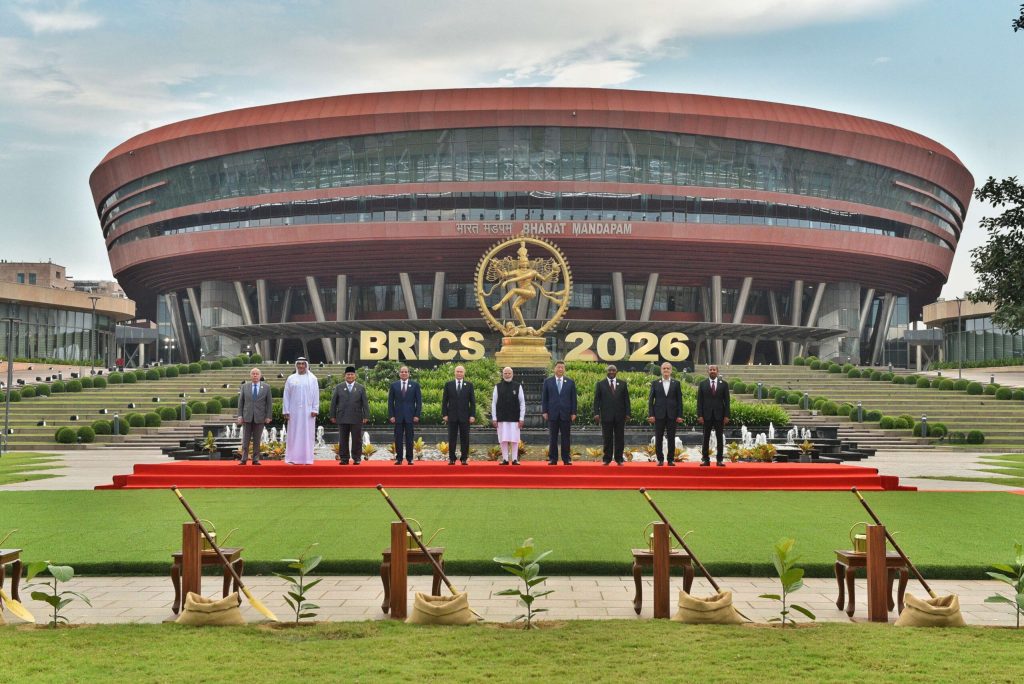
Speaking to the expanded BRICS membership, which includes Egypt, Ethiopia and the United Arab Emirates alongside Brazil, Russia, India, China and South Africa, Ramaphosa said the bloc should use its combined economic weight to create new opportunities for developing countries.
“The question is no longer whether there is potential within BRICS, but whether we have the ambition, the instruments and the partnerships to convert this potential into economic value for our people,” he said.
“We cannot accept a future where Africa supplies the minerals on which the next generation of industries depends, while value addition and manufacturing take place elsewhere,” he added.
From raw materials to industrial capacity
Ramaphosa said changes in global trade and supply chains presented BRICS economies with an opportunity to develop stronger domestic industries.
He argued that investment should not be limited to companies entering markets to sell products. Instead, investors should establish production capacity and develop local capabilities in the countries where they operate.
“For us, this is an opportunity to shape a more resilient, diversified and inclusive economic future for the Global South,” he said.
“We must direct investment towards manufacturing and beneficiation, industrial technologies, energy systems, infrastructure and logistics,” Ramaphosa added.
The approach would seek to position resource-rich developing economies further up global value chains while strengthening their ability to manufacture products linked to sectors such as energy, technology and infrastructure.
Ramaphosa also called for closer cooperation between governments and the private sector, describing their relationship as a “compact” needed to translate economic ambitions into investment and production.
Governments, he said, must create conditions that support trade and investment, while businesses identify commercial opportunities and build productive capacity.
ALSO READ: BRICS Pushes for New World Order with Southern Leadership
He said the BRICS Business Council should play a more active role in turning those opportunities into actual commercial partnerships.
“The Council must serve not simply as a forum for consultation, but as a mechanism for developing commercial relationships and productive partnerships,” Ramaphosa said.
The President argued that the success of BRICS should ultimately be measured by whether its cooperation creates tangible economic opportunities for people across its member countries.
A test for BRICS and Africa
Ramaphosa’s message places the question of who captures value from Africa’s natural resources at the centre of the bloc’s economic ambitions.
BRICS has significant combined economic weight and access to capital, technology, energy and natural resources. Turning that potential into industrial investment, however, will require more than political commitments.
For African countries, the measure of progress will be whether investment produces processing facilities, manufacturing capacity, technology transfer, infrastructure and jobs rather than simply expanding exports of raw materials.
That will be particularly important for South Africa, where successive governments have sought to use the country’s mineral wealth as a foundation for industrial development.
Ramaphosa’s challenge to BRICS is therefore also a challenge to its member states: to build partnerships that allow developing economies to move higher up global value chains rather than remaining suppliers of the raw materials that drive industries elsewhere.