By Abbey Makoe
The South African government has come out strongly against the Trump administration’s decision to impose sanctions on judges of the International Criminal Court (ICC), calling it an act of intimidation aimed at derailing international justice.
In a statement released by the Department of International Relations and Cooperation (DIRCO), Pretoria expressed “deep concern” over Washington’s latest move, which it sees as a threat to the ICC’s independence and the broader global rule of law.
Relations between the US and the ICC have long been rocky, shifting between reluctant cooperation and open hostility. Under Donald Trump, that tension has escalated into outright confrontation. In February, Trump sanctioned ICC Prosecutor Karim Khan, accusing the court of engaging in “illegitimate and baseless actions” against the US and its ally Israel. Then, on June 5, Secretary of State Marco Rubio announced further sanctions, this time targeting four ICC judges.
Two had backed an investigation into alleged US war crimes in Afghanistan; the other two had approved arrest warrants for Israeli Prime Minister Benjamin Netanyahu and former Defence Minister Yoav Gallant.
DIRCO described the move as “a direct affront to the principles of international justice,” warning that such punitive actions “undermine the independence of the ICC and threaten the integrity of international legal institutions.”
ALSO READ: Ukraine will pay a heavy price for drone attacks on Russia’s airbases
South Africa has been vocal and uncompromising in its condemnation of Israel’s war on Gaza, which it has referred to as a “genocidal campaign.” Since the Hamas-led attack on Israeli territory in October 2023 which killed more than 1,000 people and led to dozens of kidnappings, Israel’s military response has claimed over 60,000 Palestinian lives. Pretoria’s position on the conflict led it to file a case against Israel at the International Court of Justice (ICJ), a move that reportedly triggered US displeasure and the recall of South Africa’s former ambassador to Washington, Ebrahim Rasool.
Now, South Africa is once again at the forefront, standing firm in defence of the ICC and its judges. The statement from DIRCO reiterated that these sanctions are “designed to hinder the court and its personnel in the exercise of their independent judicial functions.”
Unlike the United States, South Africa is a founding member of the ICC, having ratified the Rome Statute. Washington, however, has never joined the treaty, and Pretoria didn’t mince words, saying the sanctions are “an attempt to intimidate and obstruct the court’s efforts to hold perpetrators of the most serious crimes accountable.”
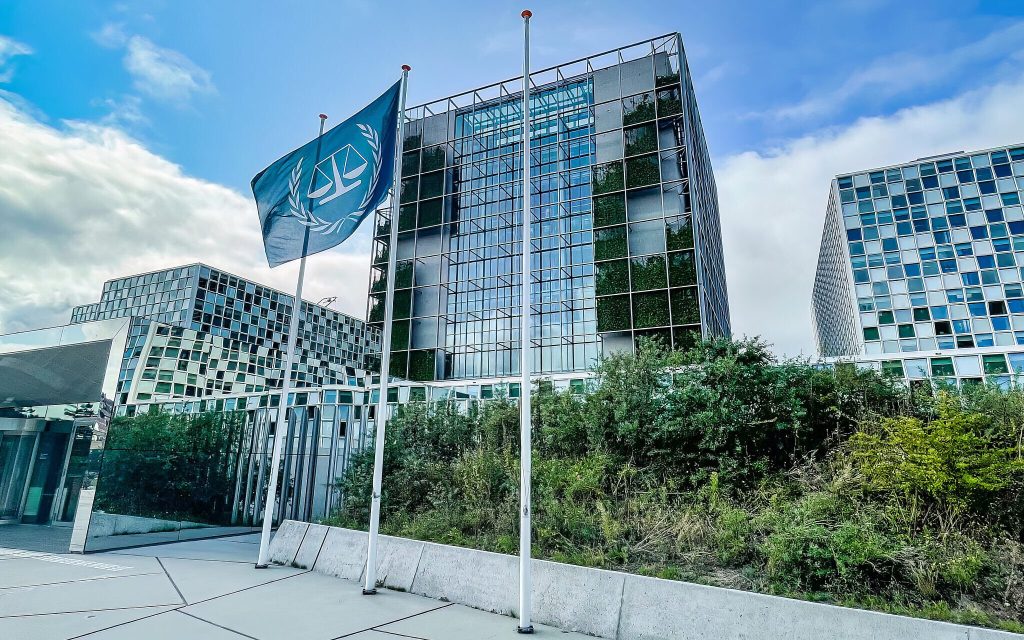
DIRCO emphasised the ICC’s core mandate: to prosecute individuals for genocide, war crimes, crimes against humanity and aggression, especially when national jurisdictions are unwilling or unable to do so.
Taking on the world’s largest economy and military superpower is no small feat. South Africa’s stance, however, is consistent with its long-standing foreign policy posture: siding with the oppressed over the powerful. To many, this confrontation is a classic David vs. Goliath scenario.
But the issue isn’t one-sided. The ICC itself faces legitimate criticism, especially under Karim Khan’s leadership. For many across the Global South, the court has too often appeared as an instrument of the West, disproportionately targeting African leaders while steering clear of powerful nations and their allies. For these critics, the US crackdown feels like poetic justice, the court is now being cornered by the very powers it has long tiptoed around.
ALSO READ: Trump’s Sweeping Travel Ban on 12 Nations Takes Effect, Drawing Global Outrage and Legal Scrutiny
The ICC, if it is to restore credibility, will need to confront the perception that it serves the interests of the Global North. It must demonstrate that its pursuit of justice is consistent, impartial, and immune to geopolitical pressure.
Judicial independence isn’t optional—it’s essential. But the ICC now finds itself in a precarious position. If it presses ahead with investigations into leaders like Netanyahu, it risks fierce backlash. If it backs down, it forfeits any claim to impartiality. It’s caught in a bind—largely of its own making.
The road ahead will be tough. The ICC has few friends left in the Global South. If it hopes to regain trust, especially in Africa, it must prove that justice is not selective.
In the meantime, South Africa continues to punch above its weight. Its unflinching stance deserves credit, even if it invites reprisals. Trump’s administration thrives on confrontation, and Pretoria may well find itself in Washington’s crosshairs yet again. But, as President Cyril Ramaphosa might say: It is what it is.
As the sanctions bite and the pressure mounts, one can only wonder how the ICC judges are coping. When the United States flexes its muscles, the world tends to take notice.
Abbey Makoe is the Publisher and Editor-in-Chief of the Global South Media Network.