Sierra Leone is exploring a potential partnership with Riders for Health to tackle one of its most persistent healthcare challenges: getting ambulances, medicines, vaccines and diagnostic services to people living in remote and hard-to-reach communities.
Sierra Leone Looks Beyond Ambulances As It Weighs New Model For Reaching Patients In Remote Communities
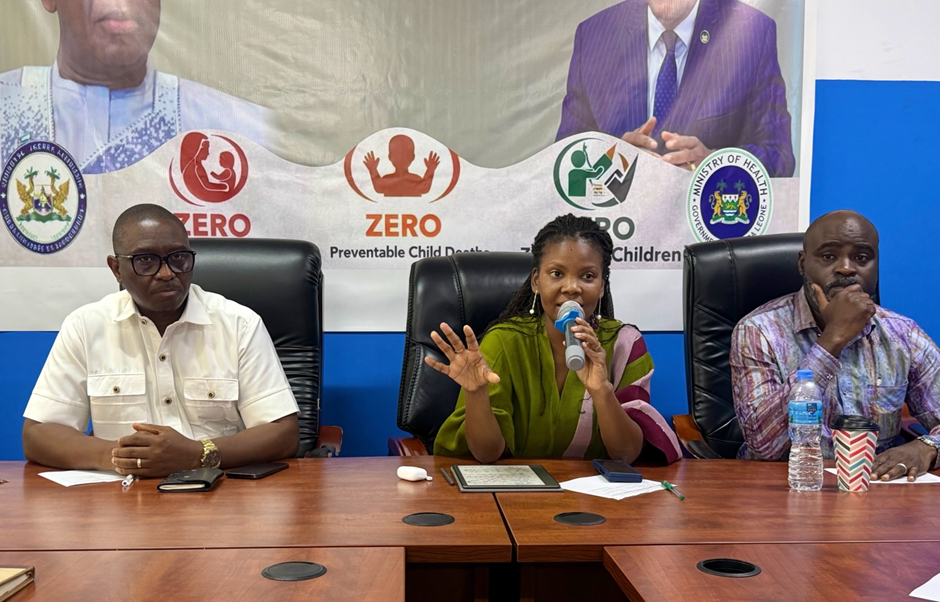
FREETOWN, Sierra Leone – Sierra Leone is exploring a potential partnership with Riders for Health to strengthen ambulance services, referral networks and the transport systems that move medicines, vaccines and diagnostic samples to some of the country’s hardest-to-reach communities.
The discussions between the Ministry of Health and a senior delegation from Riders for Health come after a series of assessments examining weaknesses in ambulance and referral services, health supply-chain transportation and support for health facilities.
The meeting could have implications beyond the country’s emergency ambulance network. At its centre is a longstanding challenge in Sierra Leone: getting healthcare to people who live far from major roads, hospitals and other essential services.
Deputy Minister of Health II, who chaired the meeting, said geography and transport limitations should not determine whether a patient receives lifesaving treatment.
“Wherever our people live, whether in remote, hard-to-reach or riverine communities, poor roads, limited transport options or the absence of proper access routes should not determine whether they can receive timely and lifesaving healthcare.”
The ministry said the proposed collaboration is being considered as part of efforts to improve maternal and child healthcare, particularly referral systems and ambulance services during the implementation of the government’s 300 Days of Activism.
The last-mile problem
Sierra Leone already has a national emergency medical transport system.
The Ministry of Health’s National Emergency Medical Services (NEMS) was established to provide an organised ambulance referral system, supported by trained paramedics and drivers, operational centres, workshops and information systems. The ministry says the service initially deployed 97 ambulances nationally in 2018 before increasing the fleet to 100.
The World Bank reported in 2020 that NEMS had received almost 32,000 emergency calls and carried out more than 30,000 missions by the end of January that year, including nearly 27,000 referrals. More than half of its missions at the time were related to obstetric emergencies, highlighting the importance of transport to maternal healthcare.
But having ambulances is not necessarily the same as having reliable access to emergency care.
ALSO READ: In Yaoundé, Communities Take the Fight Against Cholera Into Their Own Hands
Sierra Leone’s geography and road network make the final leg of a journey particularly difficult. The World Bank reported in 2024 that only about one-third of the rural population had access to an all-season road network. Many communities remain dependent on rivers, canoes and other informal transport, with some crossings becoming difficult or impossible during the rainy season.
A WHO account of vaccine delivery in northern Sierra Leone illustrates the problem at community level. Health workers serving remote villages reported that some communities could only be reached by motorcycle or on foot, while others required canoe crossings. One health post was about 20 kilometres from the nearest city along rugged dirt roads.
That means an emergency referral system can face a problem before an ambulance even reaches the patient.
Why Riders for Health is being considered
Riders for Health specialises in managing transport for healthcare programmes across Africa, including motorcycles, ambulances, trucks and other vehicles adapted to difficult terrain.
The organisation says its model combines fleet procurement, preventive maintenance, driver and rider training, budgeting and monitoring rather than treating vehicles simply as equipment to be purchased and replaced when they break down.
Its services include emergency health transport, medical supply distribution, outreach transport and the movement of diagnostic samples. Riders says it currently operates all-terrain and other ambulances for ministries of health in The Gambia, Liberia and Lesotho.
That model is potentially significant for Sierra Leone because the country’s transport challenge extends well beyond emergency cases.
A functioning health system needs vehicles to move nurses to communities, medicines to health facilities, vaccines to remote areas and laboratory specimens back to testing centres.
Riders says its motorcycle-based specimen transport systems move more than one million samples and results a year, with its relay model allowing more than 78% of samples to reach laboratories within 24 hours in its 2023 reporting.
Its 2025 impact report records more than 37,000 patients transported by ambulance, 223 ambulances managed, nearly 6,000 health facilities reached and almost three million samples and results transported across its programmes.
The figures are from Riders’ own reporting and do not represent a projected impact in Sierra Leone. However, they illustrate the scale of the transport model the ministry is examining.
From Ebola lessons to everyday healthcare
Transport also has a role in Sierra Leone’s disease surveillance and outbreak preparedness.
During the Ebola crisis, the country faced major logistical problems moving patients, health workers and laboratory samples. WHO has previously documented how poor road systems and shortages of ambulances complicated the movement of patients during the outbreak.
The experience also demonstrated the importance of moving diagnostic samples quickly.
ALSO READ: She Chose the Frontline: The Ugandan Doctor Healing Somalia’s Wounded
WHO reported in 2014 that Sierra Leone’s Ebola response emphasized case detection, sample collection and transportation as part of strengthening the country’s ability to identify and respond to cases.
That lesson remains relevant beyond Ebola. In May 2026, WHO reported that Sierra Leone was strengthening its laboratory system to improve diagnosis and disease surveillance, including for malaria, cholera, blood screening and emerging diseases.
A stronger transport network could therefore serve several parts of the health system at once, from emergency referrals to routine diagnostics and medicine distribution.
A system that has to reach the last mile
The ministry’s discussions with Riders come as Sierra Leone continues efforts to improve access to healthcare and reduce preventable maternal and child deaths.
WHO’s 2025 country report put Sierra Leone’s maternal mortality ratio at 354 deaths per 100,000 live births, with an under-five mortality rate of 90.5 per 1,000 live births and a neonatal mortality rate of 20 per 1,000.
Those figures make the referral question particularly important. A woman experiencing a life-threatening obstetric complication may require care beyond what is available at a community health facility. In such circumstances, the speed and reliability of the referral chain can become as important as the availability of clinical services.
The challenge is not simply getting more vehicles onto the road. It is ensuring that vehicles are available, properly maintained, appropriately matched to terrain, operated safely and connected to a functioning referral system.
Sierra Leone’s Ministry of Health itself has recognised the need to modernise NEMS operations. In 2025, the ministry issued an expression of interest for a central remote dashboard for NEMS ambulance fleet management, linked to plans for a future National Health Intelligence Centre. The stated objective included improving vehicle tracking, call-centre operations, monitoring and coordinated emergency responses.
That suggests the emerging conversation is increasingly about managing the entire transport system, rather than simply counting ambulances.
For remote communities, a four-wheel ambulance may not always be the most practical solution. Motorcycles, all-terrain vehicles, boats and other forms of transport can play different roles depending on terrain and the stage of a patient’s journey.
Riders’ own experience is built around that principle, with the organisation describing its approach as a combination of different vehicles, maintenance systems, trained personnel and supply-chain planning designed around local conditions.
For Sierra Leone, the question now is whether that model can be adapted to complement, rather than duplicate, the country’s existing emergency medical system.
The Ministry of Health said the latest meeting provided an opportunity to examine the findings of Riders’ assessments and consider a potential partnership capable of responding to growing demand for timely delivery of essential healthcare commodities and referral services.
No final partnership or implementation agreement was announced.
For now, the discussions point to a broader recognition within Sierra Leone’s health sector: healthcare access does not end at the clinic door. For millions living beyond reliable roads and transport routes, the ability to move a patient, nurse, medicine or laboratory sample can determine whether healthcare is available at all.
Subscribe to Our Newsletter
Keep in touch with our news & offers
Thank you for subscribing to the newsletter.
Oops. Something went wrong. Please try again later.