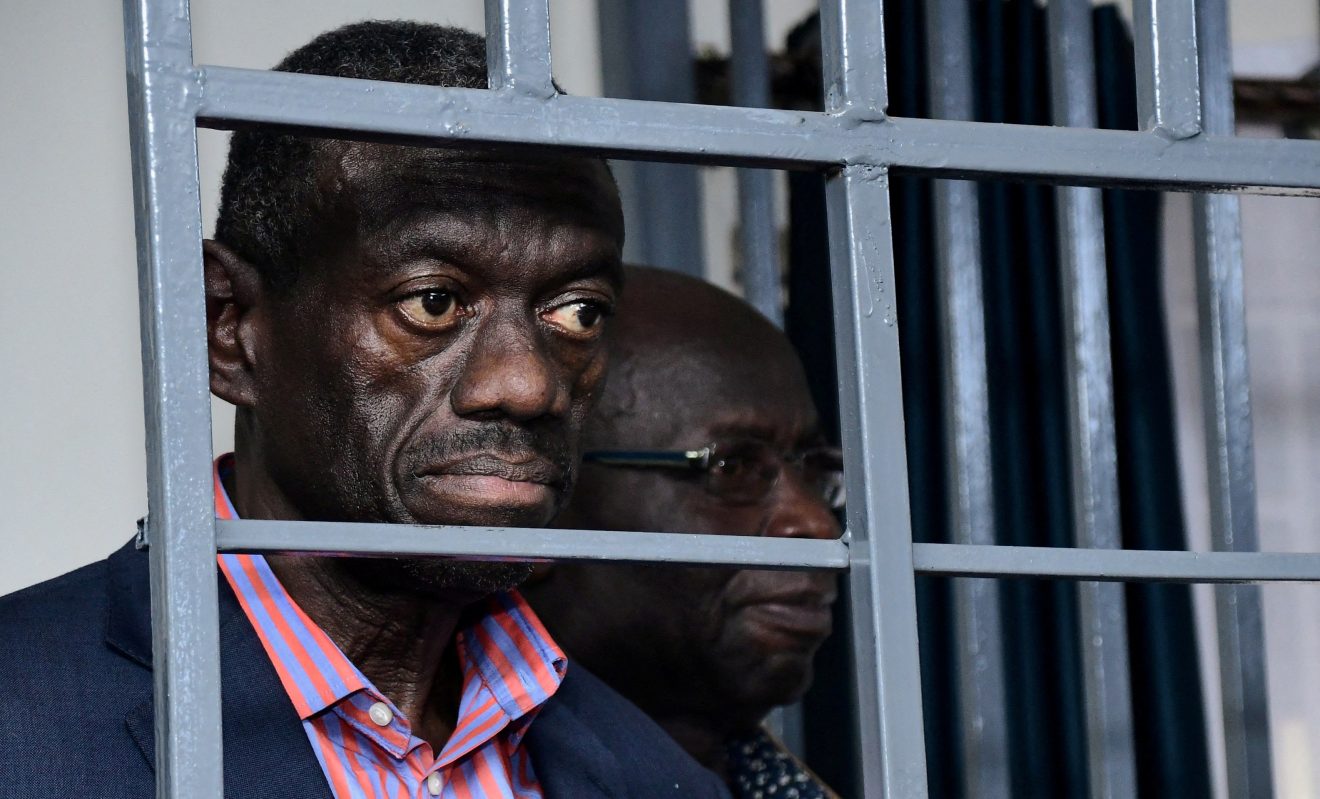
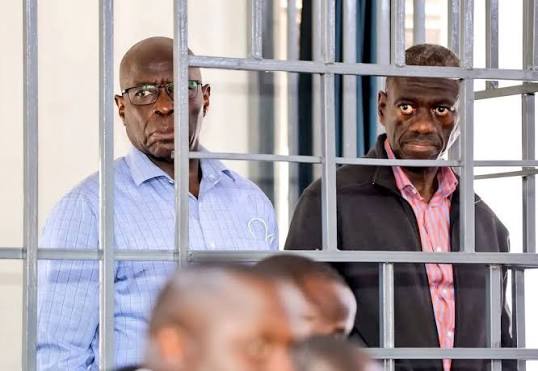
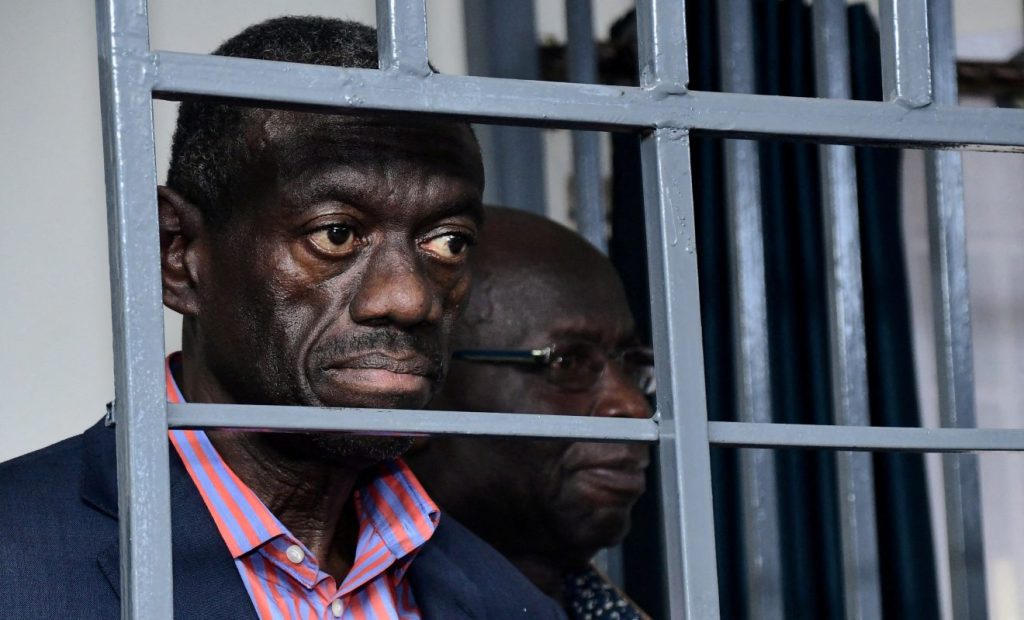
KAMPALA — Uganda’s High Court has dismissed an application by veteran opposition leader Dr Kizza Besigye and his co-accused, Hajji Obeid Lutale, to have their treason case struck off the roll, paving the way for a trial that could have significant political implications ahead of future elections.
In a ruling delivered electronically on July 13 through the judiciary’s Electronic Court Case Management Information System, Justice Emmanuel Baguma described the application as incompetent and an abuse of court process intended to delay the criminal proceedings. The ruling means Besigye, Lutale and Uganda People’s Defence Forces Captain Denis Oola will now stand trial on treason charges, which carry the death penalty under Ugandan law.
Besigye and Lutale had asked the court to terminate the case, arguing that their constitutional right to a fair trial had been irreparably violated. They also sought an unconditional release and requested that the government facilitate treatment at the African Centre for the Treatment and Rehabilitation of Torture Victims, or another suitable medical facility.
Their application was based on sworn affidavits alleging that they were abducted by Ugandan security operatives in Nairobi, unlawfully transferred to Uganda without following formal extradition procedures, detained incommunicado at Makindye Military Barracks, denied access to lawyers and medical personnel, and held beyond the constitutional 48-hour detention limit before appearing in court.
ALSO READ: Uganda Weighs Extending Presidential and Parliamentary Terms to Seven Years
Besigye also argued that public comments made by Chief of Defence Forces Gen Muhoozi Kainerugaba had undermined his right to a fair trial.
The state, represented by the Attorney General’s Chambers and including Gen Kainerugaba, Col Peter Ahimbisibwe and Lt Col Ephraim Byaruhanga as respondents, denied all the allegations.
Government lawyers argued that Ugandan security agencies played no role in any alleged abduction in Nairobi and that the named military officers were not involved in the operation that led to the pair’s arrest. They further maintained that Besigye and Lutale had been informed of the reasons for their arrest and had been granted access to legal representation and medical care.
Justice Baguma agreed with the state’s position, finding that the affidavit evidence lacked credibility and was insufficient to prove the alleged violations.
The judge noted that neither Besigye nor Lutale had raised any complaints about their treatment during their initial court appearance, committal proceedings or plea hearing. Instead, the allegations only surfaced after the court directed the prosecution to begin leading evidence, a sequence he said suggested the application was aimed at delaying the trial rather than addressing genuine constitutional concerns.
Justice Baguma also relied on a June 2026 Constitutional Court ruling, which held that alleged human rights violations do not automatically justify the termination of criminal proceedings. He said accused persons have alternative legal remedies, including constitutional petitions, habeas corpus applications and judicial review, rather than seeking to halt prosecutions altogether.
He added that courts must balance the constitutional rights of accused persons with the interests of victims and the public in ensuring that criminal cases are determined through due process.
The court ordered Criminal Session Case No. 335 of 2025 to proceed without further delay. Justice Baguma also directed the Deputy Registrar to issue production warrants for Besigye and Lutale, and instructed the Luzira Prison authorities to continue granting the defence team reasonable access to the accused, including access to approved facilities and electronic devices needed to prepare for trial.
A politically charged case
The ruling marks another chapter in a case that has attracted international attention since November 2024, when Besigye disappeared while attending a book launch in Nairobi hosted by Kenyan politician Martha Karua.
Days later, he resurfaced before a military court in Kampala alongside Lutale, facing security-related charges and allegations of unlawful possession of firearms.
Human rights organisations, including Amnesty International, described his transfer from Kenya to Uganda as an unlawful rendition that violated international law and extradition procedures, and called for his immediate release.
Following legal challenges over the jurisdiction of military courts, the matter was transferred to the civilian High Court, where Besigye and Lutale were formally charged with treason and misprision of treason.
ALSO READ: At Least Seven Killed In Uganda Violence, Museveni Dominates Election Results
Besigye has remained in custody at Luzira Prison for much of the past year and at one stage undertook an eight-day hunger strike, protesting what he described as his unlawful detention.
According to the prosecution, Besigye, Lutale and others held meetings in Geneva, Athens, Nairobi and Kampala between October 2023 and November 2024 to solicit funding, procure weapons, identify military targets and organise paramilitary activities aimed at overthrowing President Yoweri Museveni’s government.
State prosecutors further allege that Besigye sought military equipment, poison and counterfeit currency, and intend relying on audio and video recordings, social media communications, immigration records and telephone data during the trial.
The case has also drawn members of Besigye’s legal team into the spotlight.
Former Kampala Lord Mayor Erias Lukwago, who leads Besigye’s defence and heads the opposition People’s Front for Freedom, was arrested in June. The Uganda Law Society condemned his arrest, describing it as an attack on the administration of justice.
Besigye’s lawyers argue that repeated arrests and intimidation of defence lawyers have created a chilling effect on legal representation in politically sensitive cases.
Besigye’s long-running political rivalry with President Museveni has made the case one of the most closely watched legal battles in Uganda.
Once Museveni’s personal physician during the country’s liberation struggle, Besigye later emerged as one of his fiercest political opponents, challenging him in four presidential elections.
Museveni, who has been in power since 1986, has faced persistent criticism from opposition parties and international rights groups over restrictions on political freedoms, judicial independence and the shrinking space for dissent.
Questions have also been raised about the extent of cooperation between Kenyan and Ugandan security agencies in Besigye’s transfer from Nairobi to Kampala.
With the High Court rejecting the latest procedural challenge, attention now shifts to the treason trial itself, where prosecutors will seek to prove one of the most serious criminal cases brought against Uganda’s best-known opposition figure, while the defence prepares to challenge both the evidence and the conduct of the investigation.
The outcome is expected to resonate well beyond the courtroom, shaping debate over the rule of law, political freedoms and the independence of Uganda’s justice system as the country moves towards its next electoral cycle.