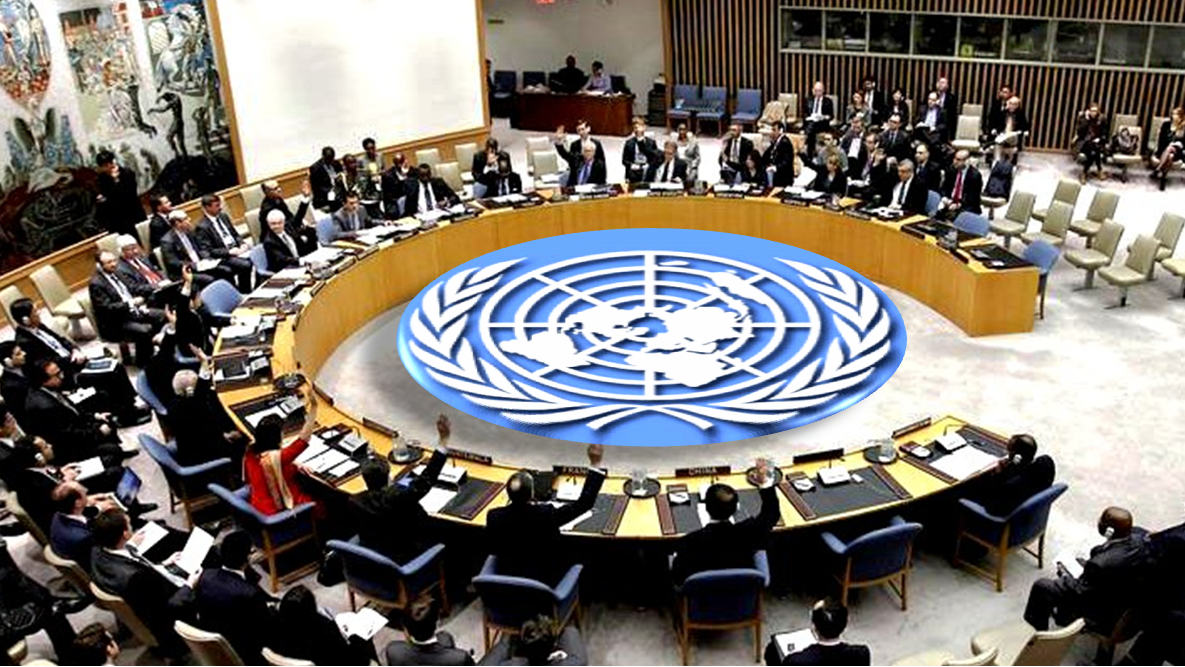
JOHANNESBURG – This week, the UN Security Council is expected to debate a draft resolution on Iran and its spectacular closure of the Strait of Hormuz, a choke-point that continues to devastate the global economy.
The constant rise in oil prices, a result of the Middle East crisis, can be felt far and wide. The closure of the Strait of Hormuz demonstrates just how interconnected and interdependent our international world order has become. Globalisation, based on the available evidence, is indeed holding a grip on the architecture of the global order.
In many ways, the drama around the Strait of Hormuz further proves that no nation is an island. The US might have erroneously thought that the geographic distance from Iran and the rest of the Persian Gulf would insulate the world’s biggest economy from harm. However, economists would tell you, no one is out of harm’s way.
The US has used every trick to pressure Iran to accept terms of peace that favour Washington and its fellow international law transgressors, Israel. The two nations launched an illegal military attack on Iran in the middle of talks in Geneva that were aimed at achieving a common ground for peace between Tehran and Washington regarding Iran’s controversial nuclear program.
The peace deal between the two nations was signed in 2015 before US President Donald Trump unilaterally tore it up in 2018 during his first term of office. Since then, bilateral relations between the two nations have hit rock bottom.
ALSO READ: Ill-Advised War On Iran Shows Trump Is Netanyahu’s ‘Manna From Heaven’
Trump had wanted to carve a new peace deal to replace the previous one he had nullified prior to his return to the White House. But, as I indicated above, Trump unceremoniously threw the spanner in the works, leaving Iran at the negotiating table and proceeded to assassinate Iran’s Supreme Leader Ayatollah Ali Khamenei during day one of military strikes.
Trump, however, had miscalculated. He had thought he would go into Iran – kill and maim – and leave the country in his wake. Also, Trump and Israeli Prime Minister Benjamin Netanyahu had banked on the Iranian masses revolting against a seemingly weakened administration. All those came to nought.
The strategy might have worked in Venezuela when the US military staged a cowboy operation in Caracas, kidnapping President Nicolas Maduro and his wife before whisking them to a New York penitentiary, where they are currently in the process of judicial proceedings on what critics claim are trumped-up charges that include drug trafficking.
But Iran has proven to be a completely different kettle of fish. A country of some 93 million people, sovereignty appears to be utterly non-negotiable to the rulers and masses alike.
Recognising that the Iranian military cannot go toe-to-toe with the joint militaries of Israel and the US, Iran opted to attack US interests across the Gulf region. No Gulf State has been spared the Iranian drone and missile attack.
The consequences have been brutal. Flights to Dubai, the world’s biggest flight connecting airport, had to be cancelled or drastically scaled down due to the unsafe skies. Tourism, the economic lifeblood of the region, is on its knees. The catastrophic bombardment of Iran and large-scale destruction failed to nullify Iran’s military capabilities.
The closure of the Strait of Hormuz became a strategic weapon of war, a lethal one for the matter in Iran’s arsenal. A new tolling system was introduced by Iran, allowing paying vessels to pass through. Instructively, Tehran barred “enemy vessels” from going through.
A war that the Trump administration had envisaged would last a few days morphed into a fortnight, and then a month, and 40 days, and days are still adding up whilst peace remains elusive. The longer the war continues, the greater the likelihood that Trump’s party will be trumped come the Midterm elections in November. Iranians are aware and are determined to help trounce Trump at the polls.
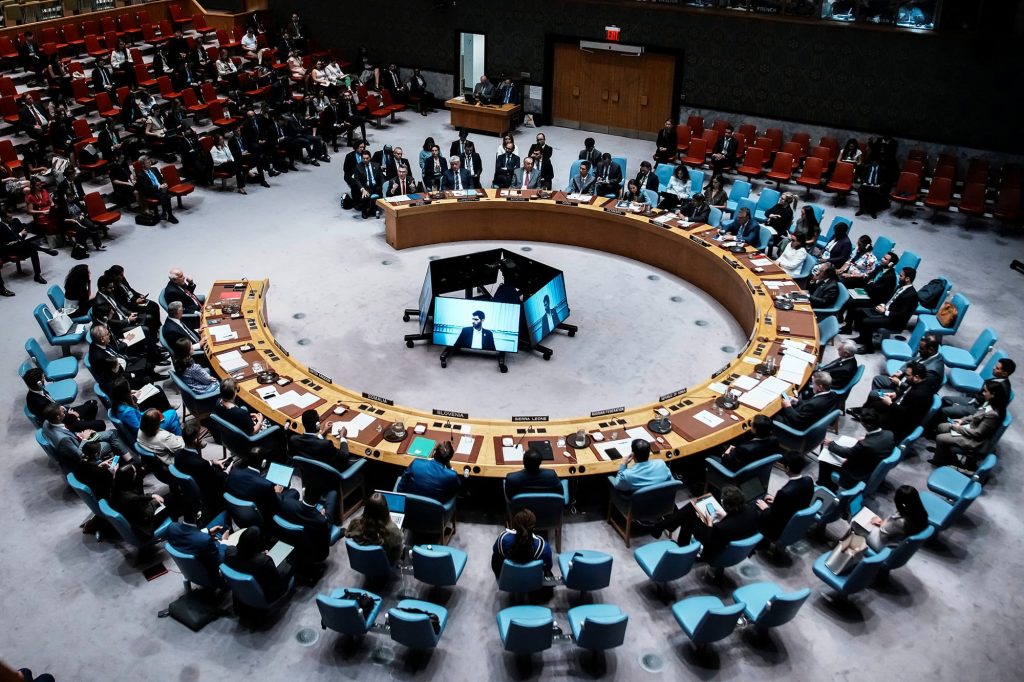
Recently, Washington’s attempt to pass a UN Security Council (UNSC) resolution ordering Iran to reopen the Strait of Hormuz failed after both Russia and China vetoed it. This week, the US, backed by Qatar et al, put together a motion that sought to force Iran’s hand.
Supported by the Gulf States, the US was pushing for the UNSC resolution threatening Iran with sanctions and other measures if it did not halt attacks on ships in the Strait of Hormuz, stop imposing illegal tolls and disclose the location of all mines to allow freedom of navigation.
A vote on the draft resolution will take place in the coming week. However, mark my words, just as was the case with the previous resolution that was vetoed by two permanent UNSC members, Russia and China, this new attempt to pass the latest draft resolution is doomed to fail.
Russia and China are both supportive of Iran, their fellow BRICS member, in insisting that it is too simplistic to expect Iran to cave in and open the Strait of Hormuz, whilst the US has imposed its own additional blockade on the Hormuz, barring Iranian vessels from freedom of movement.
The draft resolution also fails to address the root cause of the conflict, which is Trump’s declaration of his “war of choice” on Iran. Across all six Gulf States currently backing the US at the UNSC, Washington has military bases, which Iran has turned into legitimate military targets.
Tehran argues, with the support of Russia and China, that the US military attacks have been launched from the neighbouring Gulf States. This, Iran argues, makes the Gulf States hostile participants in the conflict and therefore fair game.
ALSO READ: UN Resolution 2797 Causes ANC To Rethink Strategy For Western Sahara
This widening of the conflict is what the Trump administration never foresaw. Almost sixty days later, Iran’s military and navy are still proving to be effective in operation. This is despite Trump’s assertions that the US has destroyed Iran’s military capability and the navy.
Three days ago, the Iranian navy fired toward a US warship in the Strait of Hormuz. The attack was carried out using missiles and kamikaze drones. The US ships fled under fire. In Western Tehran, air defences could be heard firing in the skies.
For far too long, the US has used its veto power to quash adverse resolutions against Israel. Since 2021, the US has vetoed 7-8 UNSC resolutions or critical joint statements directly related to the Israeli-Palestinian conflict. The conflict has since morphed into genocide, according to SA’s papers at the International Court of Justice at The Hague.
In my view, to end the conflict would require mutual civility, if not respect. The US should know by now that it cannot bomb Iran back to the negotiating table. In Iran’s broader strategy, a ceasefire is less desirable at this juncture.
What is required are talks aimed at a permanent peace treaty that would ensure never again will Israel drag or dupe the US into an unnecessary confrontation whose ulterior motive is to weaken Iran in the grand scheme of annexing neighbouring territories as part of the so-called Greater Israel.
Already, as part of this plan, Gaza has been swallowed, so are the Golan Heights of Syria, and now Southern Lebanon. Who’s next? God knows! Yet, the gullible Gulf States seem oblivious to these machinations.
*Makoe is Founder and Editor-in-Chief of Global South Media Network. (gsmn.co.za). Views expressed are his own.