Thirteen children lost their lives, just three days into the 2026 academic year, leaving families, schools and communities devastated.
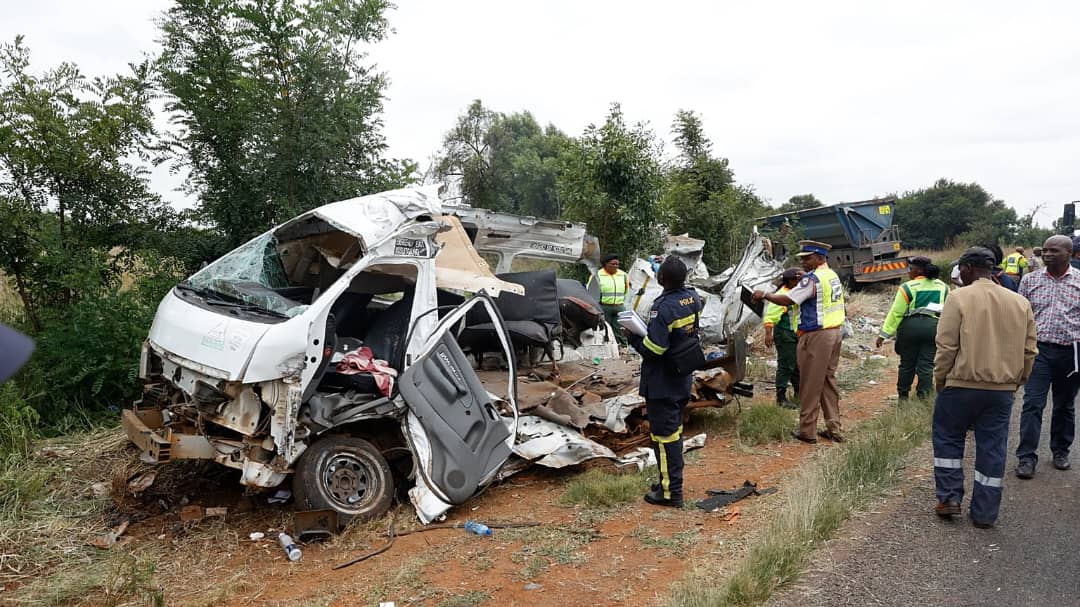
VEREENIGING, Gauteng – A routine Monday morning school run turned into one of South Africa’s deadliest scholar transport tragedies in recent years when a minibus carrying learners from Sebokeng collided with a side-tipper truck on the R42 near Vanderbijlpark. Thirteen children lost their lives, just three days into the 2026 academic year, leaving families, schools and communities devastated.
What began as an ordinary journey to school ended in horror shortly after 7am. According to preliminary information, the minibus and the truck collided with severe force, sending the scholar transport vehicle off the road.
Eleven learners died at the scene amid twisted metal and scattered schoolbooks. Two more died on the way to Sebokeng and Kopanong hospitals. Five learners survived the crash but remain in critical condition.
READ MORE: Two High-Speed Trains Collide In Spain, 21 Killed
Investigators are now examining the circumstances that led to the collision, including the conduct of both drivers and the roadworthiness of the vehicles involved. The minibus driver, who was injured and hospitalised, is under investigation, while police are also questioning the truck driver as part of a culpable homicide inquiry.
A morning of promise turns into mourning
In Sebokeng and surrounding communities, the shock has been profound. Parents rushed to the scene and hospitals, some collapsing in grief as they searched for their children. Others stood silently, struggling to process how a normal school morning had ended in tragedy.
“Packed lunches and new uniforms, and now coffins,” one distraught parent told television reporters at the scene.
The Chairperson of Parliament’s Portfolio Committee on Basic Education, Joy Maimela, said the loss was almost impossible to comprehend, especially so early in the school year.

“With only three school days gone, parents who entrusted their children to be transported safely will never hear their voices again,” she said. “This is heartbreaking beyond words.”
Counselling and psychosocial support are being arranged for affected learners, educators and families as schools grapple with the emotional aftermath.
A system under strain
Beyond the immediate grief, the crash has once again highlighted deep-rooted problems in South Africa’s scholar transport system. Every day, hundreds of thousands of learners rely on private minibuses, taxis and informal operators to get to school, particularly in townships, informal settlements and rural areas where state-provided transport is limited or unavailable.
READ MORE: Russian plane crashes in Russia’s far east, nearly 50 people on board feared dead
Road safety organisations and education unions have long warned about dangerous conditions in the sector. These include overcrowding, poorly maintained or unroadworthy vehicles, and drivers working long hours under pressure, sometimes without adequate training.
Although regulations require scholar transport vehicles to be registered, clearly marked and regularly inspected, enforcement is uneven. The Road Traffic Management Corporation has previously identified minibus taxis as a major contributor to road fatalities, with children among the most vulnerable passengers.
Calls for accountability and reform
Maimela has called for a comprehensive investigation into the crash, stressing that it must result in accountability and meaningful change.
“This tragic loss of young lives underscores the urgent need for stricter oversight and enforcement of road safety regulations within the scholar transport sector,” she said. “We cannot continue to bury children and then move on.”
Transport analysts agree that lasting reform will require closer coordination between the Departments of Transport and Basic Education, stronger enforcement at the provincial level, and greater investment in safe, regulated learner transport programmes.
While some provinces have introduced dedicated learner transport systems, coverage remains limited. Many families are still forced to rely on private operators whose standards vary widely.