By Bheki Dlamini
JOHANNESBURG, South Africa – In the Diinsoor district of Somalia’s Southwest State, the ordeal of childbirth can become a harrowing fight for survival. Aisha*, who gave birth to twins at home, faced a life-threatening hemorrhage just ten days later. The hospital where she once delivered safely was closed, a casualty of funding suspensions that shuttered at least 37 health and nutrition sites across Baidoa’s rural and urban areas.
With scarce medical options nearby, Aisha’s family borrowed money and endured a five-hour night drive to reach Bay Regional Hospital in Baidoa, one of the few remaining facilities offering free, quality maternal and pediatric care supported by Doctors Without Borders (MSF). There, medical teams stabilized her, averting tragedy.
Aisha’s story is far from unique. Women and children in this region face daunting barriers to healthcare. Poverty, insecurity, great distances, and cultural norms severely delay access to lifesaving treatment. Often, mothers like 18-year-old Hawa deliver babies at home without medical support, facing serious complications afterward. “We need a hospital in our area and doctors who can come to us,” Hawa says, capturing the widespread hope for accessible care.
Tragedies like Hassan’s underscore the stakes. After losing his wife in childbirth due to a lack of skilled birth attendants, Hassan struggled to care for his critically ill newborn son. With only local pharmacies nearby and no hospital, the child’s condition worsened until Hassan borrowed $130 and traveled 150 kilometers to Baidoa’s MSF-supported hospital. Now under expert care, the boy’s health is gradually improving.
ALSO READ: Trump’s Sweeping Travel Ban on 12 Nations Takes Effect, Drawing Global Outrage and Legal Scrutiny
Since 2017, MSF has been the lifeline for Bay Regional Hospital, providing emergency obstetric, neonatal, pediatric, and nutritional care free of charge. In 2024 alone, MSF treated over 14,000 children for malnutrition, assisted more than 2,800 births, conducted 38,000 pediatric consultations, and carried out approximately 35,000 reproductive health consultations. Yet the healthcare situation remains critical, made worse by the recent suspension of USAID funding that forced closures across the region.
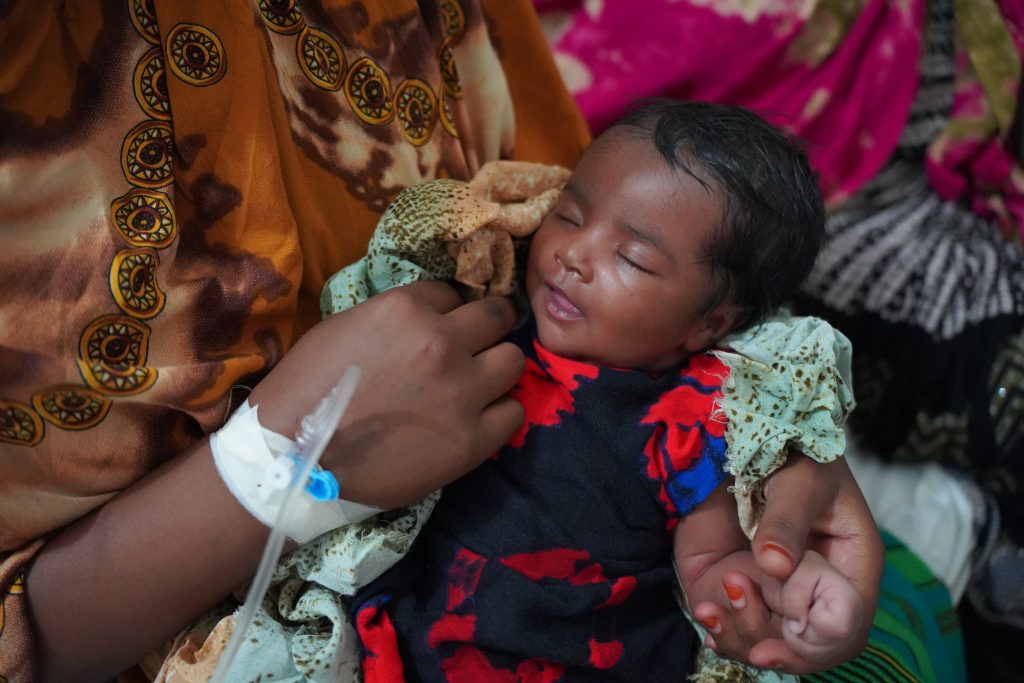
As a result, patient numbers surged at surviving centers like Bay Regional Hospital. From January to June 2025, MSF admitted nearly 11,900 malnourished children, a 76 percent increase from the previous year, while maternal health complications also rose sharply. The overburdened system strains under the weight of these urgent needs.
Compounding challenges, some families delay seeking medical help, initially turning to traditional healers. Misconceptions about vaccines, fears they cause infertility or disease, hamper preventive care. Building community trust through sustained health education remains vital.
“Maternal and neonatal deaths can be prevented by ensuring pregnant women have timely access to care closer to home. Too often, patients reach us in critical condition simply because healthcare isn’t available nearby,” says Dr. Pitchou Kayembe, MSF’s Head of Program in Somalia.
ALSO READ: Funding for refugees in Uganda will run out next month, UN warns
He stresses that while MSF continues to provide essential care, long-term investments and strategic support are crucial to rebuilding Somalia’s fragile health system, especially in remote areas where barriers are highest. Prioritizing the expansion of primary and emergency maternal and pediatric healthcare could save countless lives.
Inside Bay Regional Hospital’s wards, newborns breathe their first breaths under expert supervision, malnourished children steadily recover, and anguished mothers find relief and hope. This is more than an emergency response, it is the foundation for families to survive, heal, and rebuild with dignity.
The plight of Aisha and thousands like her calls on the global community to close funding gaps, remove barriers, and restore access to quality healthcare for Somalia’s most vulnerable women and children.
*Names have been changed to protect privacy.