At some point, a country must ask whether repeating the same process will yield a different result.



HARARE – Every nation reaches a point where it must decide whether to continue with what it knows or risk something different in pursuit of something better. These moments are rarely comfortable. They demand honesty, not only about where a country wants to go, but about whether its current path can realistically take it there.
Zimbabwe is standing in such a moment. For years, its political system has delivered a kind of consistency. Elections are held. Institutions function, at least procedurally. Power transitions, when they occur, follow a recognisable pattern. On the surface, this suggests stability.
But beneath that consistency lies a more difficult truth. The system has produced continuity without corresponding transformation. The rituals of democracy are intact, yet the outcomes many citizens seek, economic renewal, institutional strength, and broad-based opportunity, remain uneven and, in some cases, elusive.
At some point, a country must ask whether repeating the same process will yield a different result. That is the question now confronting Zimbabwe in the wake of ongoing constitutional reform debates.
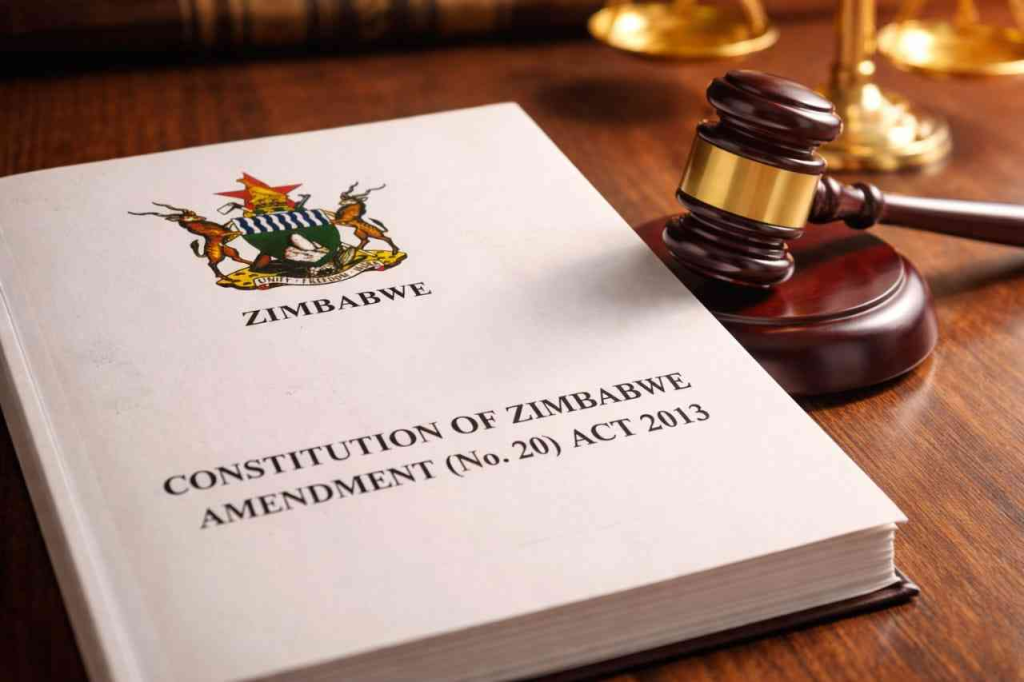
The proposed amendments, including extending the presidential term and shifting towards a parliamentary system, have triggered predictable reactions. Some see risk. Others see necessity. Both perspectives are valid. No structural reform arrives without uncertainty.
READ MORE: The Myth of the Electoral Cure
But what the proposals represent is not perfection. It is an attempt at alignment. A seven-year presidential term is not simply about lengthening time in office. It is about recalibrating political time to match the realities of governance.
Policies, particularly those tied to infrastructure, education, or economic restructuring, do not operate on electoral timelines. They require continuity, evaluation, and adjustment. A longer term creates the space for that cycle to unfold more meaningfully.
Equally important is the question of how leadership is constituted.
A parliamentary system shifts the centre of gravity. It moves politics away from singular, high-stakes contests towards a more distributed form of authority.
Leadership becomes less about individual dominance and more about collective legitimacy. It introduces negotiation into the core of governance and requires that power be sustained through agreement, not just secured through victory.
Across the region, this is not unfamiliar terrain. Countries such as South Africa and Botswana have, through parliamentary systems, demonstrated a degree of policy continuity and institutional resilience that many societies seek to emulate. These systems are not flawless, but they show how structure can shape outcomes over time.
Still, Zimbabwe’s decision cannot be made through comparison alone. Its political, economic and social dynamics are specific. Its history is distinct. Its pressures are immediate. The real test of any reform is not whether it works elsewhere, but whether it responds to the realities on the ground.
And here, the proposed changes speak to two persistent challenges: time and inclusion.
READ MORE: Zimbabwe Gears Up for Big Say on Constitution Amendment Bill No.3
They acknowledge that meaningful reform cannot be rushed, and that legitimacy cannot be sustained without broader participation. They recognise that leadership outcomes are not only a function of who holds office, but of how the system itself is designed.
To reject the amendments is, in effect, to argue that the current framework, despite its limitations, remains sufficient. To accept them is to accept that improvement requires adjustment, and that systems, like societies, must evolve.
This is not a choice between democracy and its absence. It is a choice between different expressions of democracy. One that has delivered predictability but limited transformation, and another that seeks to rebalance stability with adaptability.
There are no guarantees in either direction. Reform carries risk. But so does inertia. In the end, the measure of this moment will not be whether the decision was easy.
It will be whether it was forward-looking. Whether it reflected a willingness to confront uncomfortable questions. Whether it chose possibility over familiarity.
Zimbabwe’s future will not be shaped by how firmly it holds onto existing structures, but by how thoughtfully it is prepared to rethink them.
Mabasa Sasa is a veteran journalist with over 20 years of experience covering politics, governance, and regional affairs in Southern Africa. He has served as Editor of The Southern Times in Namibia and The Sunday Mail in Zimbabwe, and contributor for New African, bringing deep regional insight and a strong track record in shaping cross-border public discourse.


