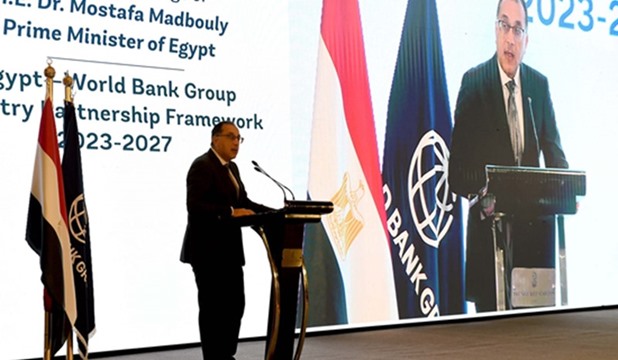
Cairo — The World Bank Group has recently issued a comprehensive report detailing the progress and strategic partnership framework it holds with the Arab Republic of Egypt for the period 2023 to 2027. This partnership is designed to bolster Egypt’s economic and social development through sustainable, inclusive, and resilient growth, aligned closely with Egypt’s Vision 2030 and ambitious national reforms.
At the heart of this collaboration is the Country Partnership Framework (CPF), a renewal of a decades-long relationship dating back to 1959, during which over 201 projects worth USD 27.5 billion have been financed. These projects have targeted key sectors such as infrastructure, human capital development in health and education, private sector empowerment, and economic reforms.
Dr. Rania Al-Mashat, Minister of Planning, Economic Development and International Cooperation and Egypt’s Governor at the World Bank, emphasized, “Our joint strategy with the World Bank is rooted in national ownership and priority areas. It is aimed at fostering economic reform, supporting structural changes, and creating more jobs, especially through an empowered private sector.”
ALSO READ: African Union urges adoption of world map showing continent’s true size
She further noted the importance of improving governance of public investment and enhancing social protection programs like the “Takaful and Karama,” which supports millions of low-income households across Egypt, bolstering resilience against shocks such as climate change and the lingering impacts of the Covid-19 pandemic.
The CPF’s overarching ambition is to create conditions for green, resilient, and inclusive development. It focuses on three high-level goals: job creation in the private sector, human capital enhancement, and strengthened resilience to economic and environmental shocks. These priorities reflect Egypt’s endeavor to build a sustainable future by harnessing innovation and inclusive growth.
In tangible terms, joint World Bank-Government initiatives have benefited millions, including 6.3 million people with improved food security and health services, 3.6 million children accessing quality education, and 750,000 people with extended financial services. Additionally, infrastructure improvements such as enhanced sanitation reached over a million citizens, while rail transport and general services brought safer, more reliable access for more than 30 million people.
One of the CPF’s flagship projects includes “Catalyzing Entrepreneurship for Job Creation,” which has supported over 200,000 beneficiaries, primarily women and youth, and created more than 400,000 new jobs by financing SMEs and innovative startups, essential drivers of Egypt’s economic diversification.
ALSO READ: Africa’s Largest Conglomerate Partners with Intra-African Trade Fair 2025
The partnership extends into climate action with initiatives such as the Feed-in Tariff policy, which the World Bank’s International Finance Corporation (IFC) and Multilateral Investment Guarantee Agency (MIGA) helped establish. This policy unlocked private sector investment for renewable energy projects, exemplified by the Benban Solar Park, a landmark solar generation facility with a capacity of 1,465 megawatts.
The World Bank Group’s Vice President for Middle East and North Africa, Ferid Belhaj, underscored the CPF’s importance in uncertain global economic times, calling it a “strong signal of confidence in the Egyptian economy.” Cheick-Oumar Sylla, IFC’s regional director, remarked, “The private sector’s role is critical in fostering a green, resilient, and inclusive economy. With expanded private investment comes more and better jobs, improving lives across Egypt.”
Looking forward, the CPF portfolio consists of 13 ongoing projects with a combined financing of $6.5 billion, further underscoring the sustained commitment of the World Bank Group to Egypt’s development agenda.
As Egypt faces complex challenges from global crises, environmental risks, and the imperative to accelerate post-pandemic recovery, this partnership offers a comprehensive and flexible platform to support reforms, innovation, and inclusive growth, the beacon guiding Egypt towards its 2030 vision of prosperity for all citizens.