BERLIN — In a global climate marked by trade fragmentation, supply chain anxiety, and rising geopolitical tension, Germany has sent a clear signal about where it sees future growth: East Africa.
The conclusion of the Invest.EastAfrica! – Business and Investment Forum in Berlin this week delivered five new business partnerships between leading German and European firms and East African companies, moving cooperation beyond declarations into deal-making. The partnerships span agri-business, pharmaceuticals, artificial intelligence, carbon markets and tourism, sectors increasingly seen as central to Africa’s next phase of economic transformation.
Hosted by German Development Cooperation (GIZ) in Berlin and preceded by engagements in Frankfurt am Main, the three-day forum brought together more than 350 representatives of German companies and a delegation of 60 East African businesses. Among the European firms involved are Bayer, Melitta and ofi, partnering with East African counterparts to build stronger value chains, invest in processing capacity and develop new digital and climate-linked business models.
For East Africa, the message was just as direct: Europe’s largest economy wants a deeper, more structured economic relationship with the region and it wants it now.
From diplomacy to delivery
Germany’s Parliamentary State Secretary for Economic Cooperation and Development, Bärbel Kofler, framed the forum as a shift from policy intent to practical outcomes.
“The five partnerships between German and East African private sector actors and the BMZ presented today send a clear message,” Kofler said. “Germany and the EAC are driving a form of private sector cooperation that delivers economic growth while creating tangible benefits for people.”
ALSO READ: Tanzania Nears Signing of Landmark $42 Billion LNG Deal
The partnerships are supported by Germany’s Federal Ministry for Economic Cooperation and Development (BMZ) and are designed to prioritise inclusive growth, a key concern as African economies push to industrialise without repeating extractive trade patterns of the past.
Why East Africa, why now?
East Africa is rapidly consolidating its status as one of the continent’s most dynamic economic regions. Inter-regional trade within the East African Community (EAC) has expanded by more than 12 percent, driven by infrastructure investment, market integration and population growth. With a combined market of more than 320 million people, the bloc represents scale that increasingly matters to global investors.
At the same time, the EAC is reviving efforts to finalise the long-delayed EAC–EU Economic Partnership Agreement. That push comes at a moment when the European Union currently ranks only as East Africa’s fourth-largest trading partner, behind China, India and intra-African trade, a reality that has sharpened European concerns about losing strategic economic ground.
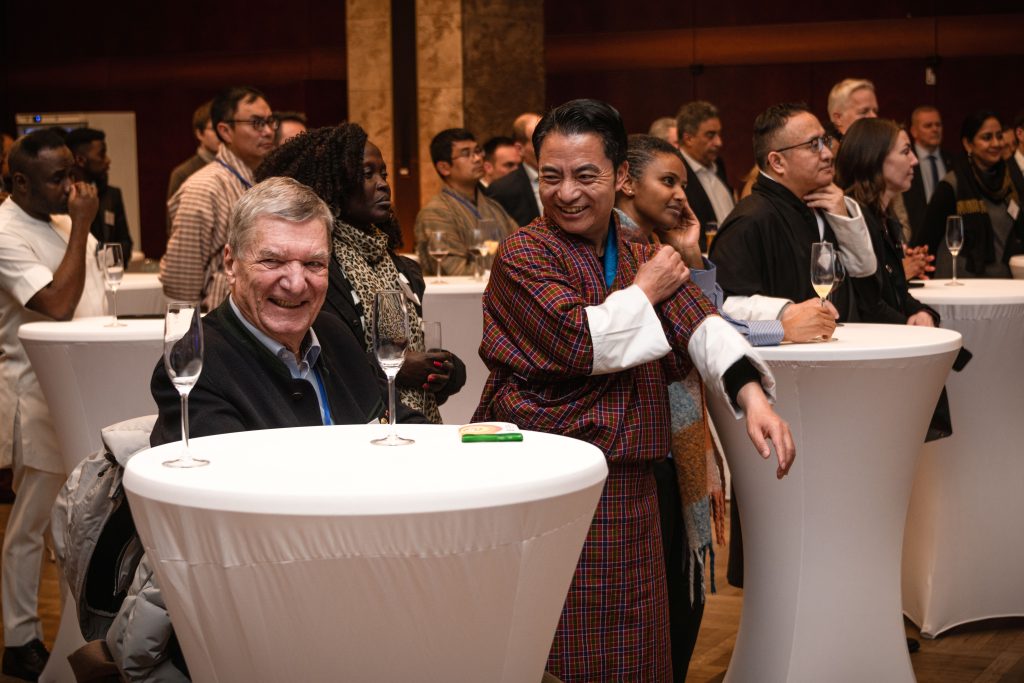
The forum was hosted in the German state of Hesse, itself a major economic hub, home to Frankfurt’s financial centre and a strong industrial base. Hessian State Minister for International Affairs Manfred Pentz described East Africa as “a future market” for German companies.
“At a time when the world is once again turning to isolation, we are sending a clear signal for open trade and the diversification of our economic relations,” Pentz said. “East Africa is dynamic, innovation-strong and strategically relevant.”
Beyond raw materials
A notable feature of the forum was its focus on moving beyond commodity exports. Discussions centred on value addition in coffee and cashew processing, pharmaceutical production, AI-enabled services, carbon credits and tourism infrastructure, areas where East African firms are increasingly competitive and where German companies bring capital, technology and market access.
Christoph Kannengießer, CEO of the German-African Business Association Afrika-Verein, said the forum demonstrated how structured dialogue can turn into investable projects.
ALSO READ: Gazprom Neft Executive Joins African Energy Chamber Board
“Over three days, companies moved from initial interest to structured project pipelines,” he said. “Diversifying markets is a shared strategic objective, and this forum helps turn it into practical collaboration.”
That emphasis reflects a broader recalibration in European engagement with Africa, as governments and companies seek partnerships that are commercially viable while also politically defensible in an era of climate pressure and shifting global alliances.
Ready to Implement
The Berlin forum was not positioned as a one-off. Event partners, including Afrika-Verein, GIZ, the State of Hesse, regional chambers of commerce and the East African Business Council, confirmed plans to support ten additional business cooperations to be launched at next year’s edition.
Those projects are expected to target an estimated €500 million in investment volume and could involve major German players such as Deutsche Bank, Commerzbank, ODDO Bank, Lufthansa and Fresenius, alongside East African firms including Cassava, Bedi Investment, Hormuud and Equatorial Nuts.
Jaswinder Bedi, Vice-President of the East African Business Council, welcomed the outcomes, saying regional businesses were ready to move from agreement to execution.
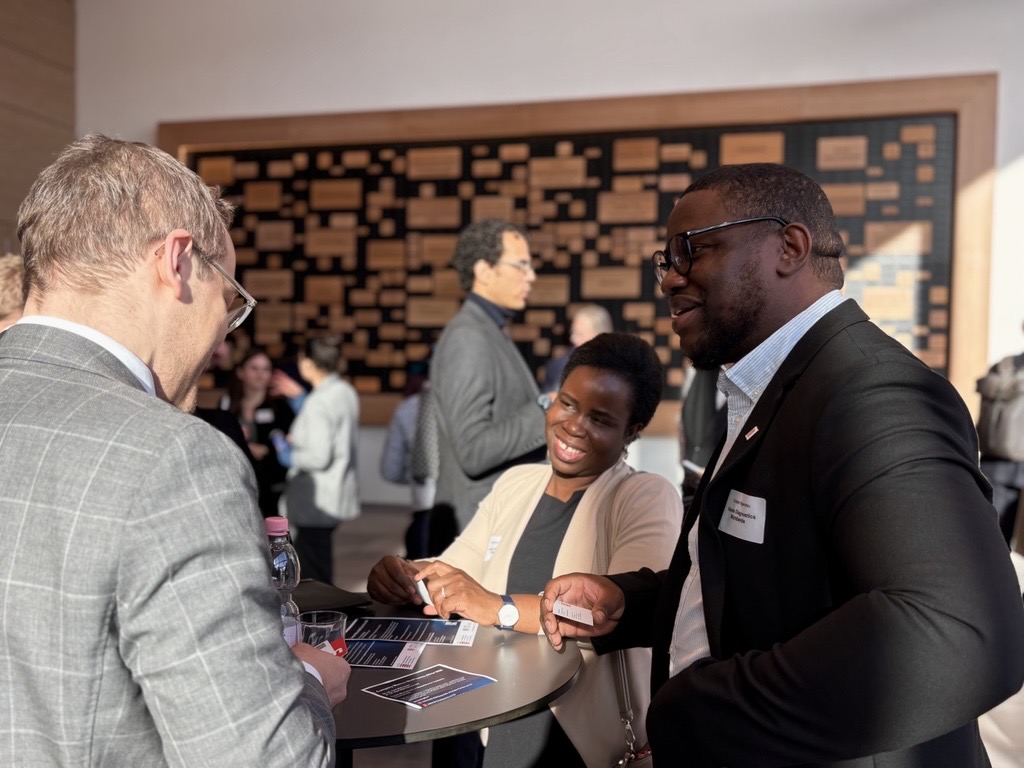
“As the business community of East Africa, we are ready to implement these cooperation projects and more to boost economic ties with Germany,” he said.
For all the optimism, the forum also raises a deeper question: whether Europe’s renewed interest in Africa can translate into long-term, balanced economic relationships, rather than episodic engagement driven by crisis or competition with other global powers.
The answer will depend less on speeches in Berlin and more on whether the announced partnerships deliver jobs, skills transfer and industrial capacity on the ground in East Africa.