Strong winter bookings in South Africa, Egypt and Ghana are driving Emirates’ expansion across Africa, with new aircraft, additional services and upgraded cabins set to increase connectivity to global markets.
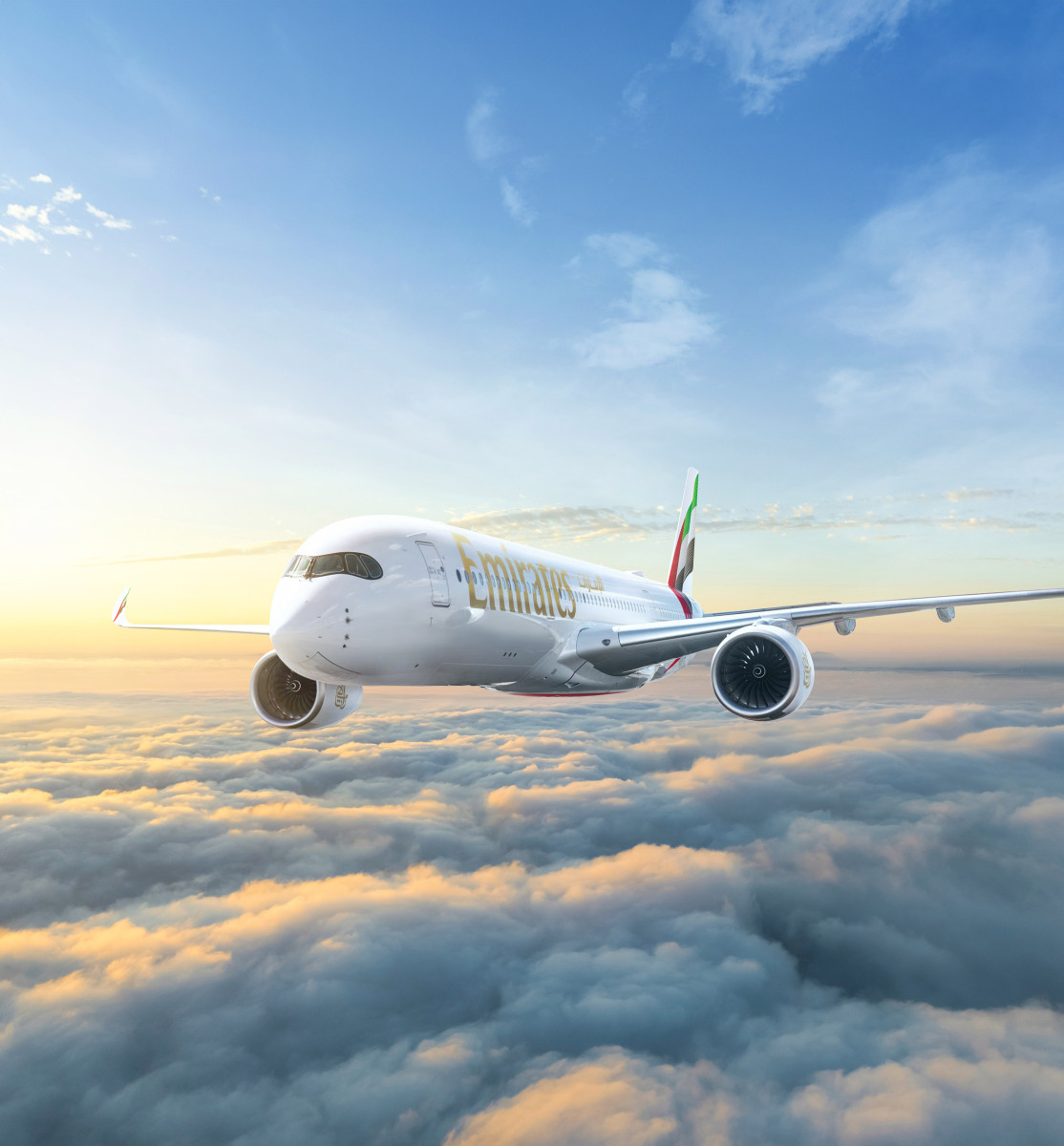
DUBAI, United Arab Emirates – Emirates is entering the winter travel season with stronger-than-expected booking momentum across several African markets, prompting the Dubai-based airline to increase capacity, deploy newer aircraft and expand its route network on the continent.
South Africa, Egypt and Ghana are among the markets where bookings for travel from late October are already ahead of the same period last year, Emirates said. The trend places Africa alongside other strong-performing markets, including Brazil, India, Saudi Arabia and Portugal.
The airline carried more than 8.6 million passengers during July and August, maintaining healthy seat load factors while operating at about 93% of its pre-disruption capacity. Arrivals into Dubai on Emirates flights during the second half of August were also 7% higher than during the same period in 2025.
The strength of African markets is reflected in Emirates’ network decisions for the coming months.
Routes to and from Côte d’Ivoire recorded particularly strong seat load factors during the summer, which the airline said reflected continued demand across West Africa.
Accra will receive three additional weekly Emirates services, increasing capacity in a market the airline sees as strategically important for regional connectivity.
In East Africa, Emirates will deploy its newest widebody aircraft, the Airbus A350, on flights to Nairobi from late October, followed by Mauritius in November. A350 services are also being introduced to Uganda and South Africa this year.
ALSO READ: From R800,000 to R340,000: How electric cars are going mainstream in SA
The airline is also preparing to introduce the A380 on its Paris route, adding to a period of fleet and network expansion that Emirates says will strengthen its African footprint.
For passengers, the changes mean greater access to Emirates’ newer cabin products, including Premium Economy, as well as improved onboard connectivity as the airline continues rolling out Starlink high-speed internet across its fleet.
New aircraft and upgraded cabins
The expansion in Africa forms part of a broader fleet renewal and refurbishment programme.
Since January 2026, Emirates has taken delivery of 18 new aircraft, including 11 A350s and seven Boeing 777 freighters. A further six A350s are expected to be delivered before the end of December.
At the same time, the airline has continued upgrading aircraft already in its fleet. Its retrofit programme has now been completed on 104 aircraft, taking the total number equipped with Premium Economy and Emirates’ latest cabin products to 137.
That figure is expected to rise to 155 aircraft by the end of the year.
Premium Economy, initially available on a limited number of long-haul routes, is now offered on services to 90 destinations. Emirates plans to add six more destinations before the end of the year, including Paris, Delhi and Stockholm.
The airline has also introduced what it describes as the industry’s first U-dream headrest for Economy and Premium Economy seats, incorporating privacy dividers.
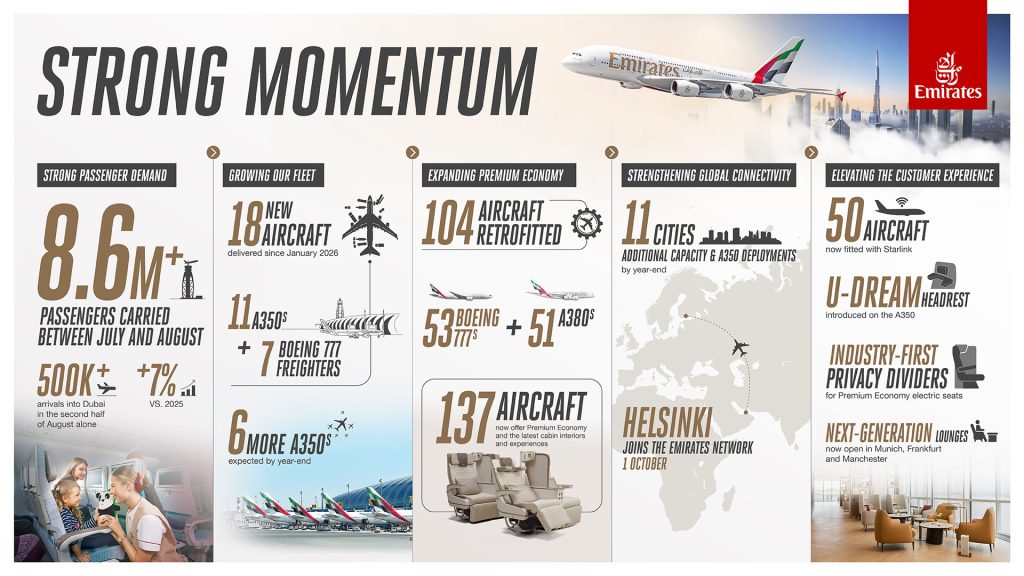
Its next-generation signature lounges are already operating in Munich, Frankfurt and Manchester.
Emirates is also using partnerships with other airlines and transport providers to extend the reach of its network beyond destinations served by its own aircraft.
The airline now has 168 codeshare, interline and intermodal agreements, giving customers access to an additional 1,750 cities worldwide.
Emirates said more than 13,000 customers connect to their final destinations through partner airline services on an average day.
Its partnership with sister airline flydubai remains a central part of that strategy.
Together, the airlines serve more than 214 unique destinations across more than 100 countries and offer more than 4,600 connection opportunities through Dubai. Since the partnership began in 2017, the two carriers have carried a combined 28 million passengers.
ALSO READ: Artisan Entrepreneurs Emerge As New Front In South Africa’s Unemployment Battle
Emirates customers can access more than 100 flydubai destinations, including newer services to Benghazi in Libya and Pokhara in Nepal, while flydubai passengers can connect to more than 140 Emirates destinations.
The network will expand further on 1 October with the introduction of Helsinki as an A350 destination. That will take the number of destinations served by the aircraft type to 30, with the figure expected to reach 36 by the end of the year.
What the expansion means for Africa
For African travellers, Emirates’ expansion is significant because Dubai provides a major connecting point between the continent and destinations across Asia, Europe and the Americas.
Additional frequencies, newer aircraft and expanded access to Premium Economy give passengers in markets such as South Africa, Ghana, Uganda and Kenya more options for international travel.
The expansion also signals continued confidence in African demand as Emirates gradually restores capacity across its global network.
For the airline, the challenge will be to convert that demand into sustained growth. For African markets, the immediate benefit is increased connectivity, more capacity and access to a newer generation of aircraft and cabin products.
As Emirates continues to expand its fleet and partnerships, Africa is becoming an increasingly important part of the airline’s strategy to connect passengers through Dubai to the wider global economy.