South Sudan says the ballot must finally replace the bullets as it prepares for a long-delayed national election in December. But with political tensions rising in Juba, opposition concerns over the transition and international sanctions still in place, President Salva Kiir’s government faces a crucial test of whether the country can move from a fragile …
‘The Ballot Must Replace The Bullets’: South Sudan Pledges December Vote and Calls For Sanctions to Go
NEW YORK – South Sudan has told the United Nations it intends to hold national elections on 22 December, seeking to bring its prolonged political transition to an end while urging the Security Council to lift sanctions and an arms embargo it says are hindering efforts to build professional national security forces.
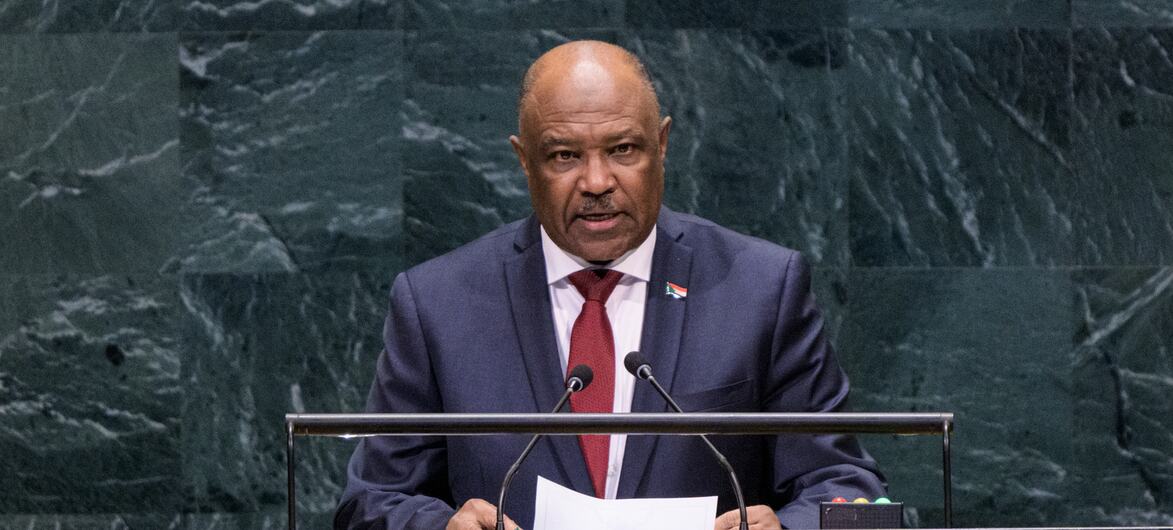
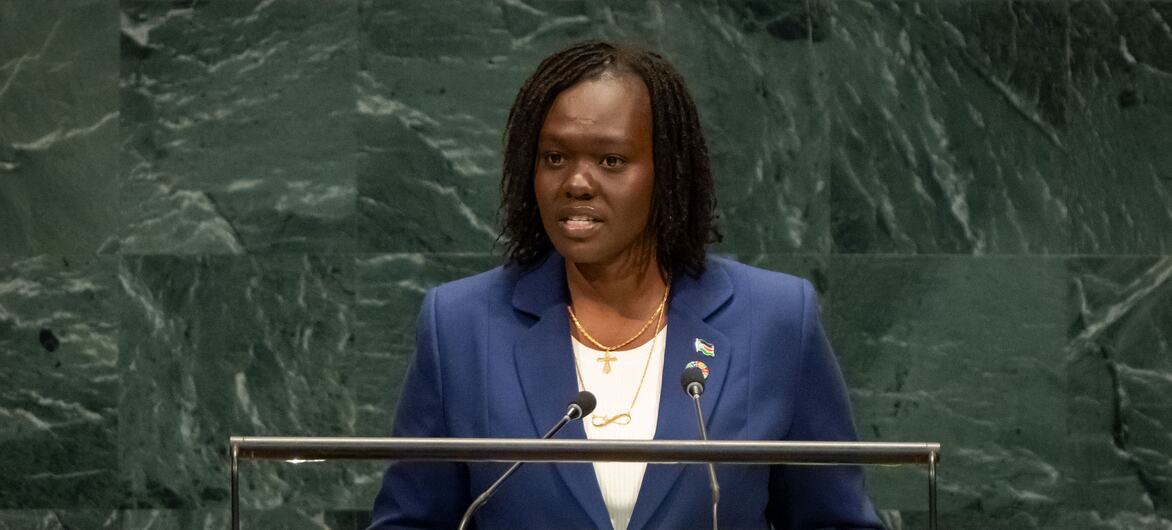
Addressing the UN General Assembly’s annual General Debate on Monday, South Sudan’s Permanent Representative to the UN, Cecilia Adout Majok Adeng, said the election would give citizens their first opportunity in years to choose their leaders through the ballot.
“The people of South Sudan must increasingly speak for themselves, and they must speak through the ballot […] Political competition must never again become armed confrontation. The ballot must replace the bullets,” she said.
The election would be the country’s first national vote since independence from Sudan in 2011.
Originally scheduled for 2015, the elections have been postponed five times amid civil war, weak state institutions and continuing political tensions.
A long road to the ballot box
Adeng acknowledged that major challenges remain before the December vote can take place.
She said electoral institutions require adequate funding, political dialogue must continue, security arrangements must advance and refugees and internally displaced people must be able to participate.
Those concerns have also been raised by institutions overseeing the country’s transition.
The Revitalized Joint Monitoring and Evaluation Commission, which monitors implementation of the 2018 peace agreement, has warned that conditions for credible, peaceful and inclusive elections remain uncertain.
In July, the Political Parties Council and the constitution review commission also raised concerns that funding shortages and insecurity could delay preparations.
The government has taken steps to keep the December timetable intact.
In July, parliament amended the 2018 peace agreement to postpone the national census and adoption of a permanent constitution until after the election. Several opposition groups objected to the move.
There has nevertheless been progress on some fronts. Thirty-nine political parties have been registered, the ruling Sudan People’s Liberation Movement has selected President Salva Kiir as its sole presidential candidate, and the National Elections Commission has begun a nationwide civic and voter education campaign.
Political shake-up in Juba
Adeng’s address came days after another major political shift in Juba.
Last week, Kiir dissolved the transitional unity government and installed a caretaker administration, a day after parliament amended the elections law to allow him to remain in office through the election period and removed the vice presidents appointed under the 2018 peace agreement.
Kiir’s longtime rival, Riek Machar, remains under house arrest and is facing trial on treason, murder and other charges, all of which he denies.
Prosecutors allege that forces aligned with Machar’s SPLA-IO, together with the White Army militia, killed 257 soldiers during an attack on a military garrison in Nasir.
The trial was adjourned last week and is due to resume on Wednesday, when judges are expected to rule on defence concerns over alleged threats to the accused and their lawyers.
The case has drawn criticism from some observers.
When the trial opened last year, International Crisis Group analyst Daniel Akech described it as “a pretext for a political power struggle”.
Despite the political uncertainty, Kiir said at the opening of an inter-party dialogue in Juba last Thursday that the election would proceed without further delay.
‘Not take South Sudan back to war’
Adeng acknowledged the scale of the challenges facing the world’s youngest country.
South Sudan descended into civil war in 2013, only two years after independence, and implementation of successive peace agreements has taken longer than anticipated.
ALSO READ: Burhan Shut Out, Sudan Fights Back
“The government does not deny these realities,” she said, while arguing that the setbacks should not erase the progress made during the transition.
She said Kiir had maintained one central commitment throughout the process: that he would “not take South Sudan back to war”.
The stakes remain high.
The civil war that began in 2013 and was formally addressed by the 2018 peace agreement killed about 400,000 people and displaced an estimated four million.
The fight over sanctions
Adeng linked the success of the elections to security and called for renewed engagement with the Security Council over international sanctions.
“South Sudan’s objective is not militarisation,” she said.
Instead, she said the government wanted professional, unified and accountable security forces operating under civilian authority and the rule of law.
Sanctions, she argued, should remain instruments for achieving peace and should have clearly defined objectives.
The Security Council remains divided over the issue.
In May, it renewed an arms embargo, travel bans and asset freezes on South Sudan until 31 May 2027.
The resolution passed by the narrowest possible margin, with nine members voting in favour and six abstaining. The abstentions included the Council’s three African members, the Democratic Republic of the Congo, Liberia and Somalia, as well as China, Pakistan and Russia.
The African members questioned whether the measures were achieving their intended purpose.
The Council has asked the UN Secretary-General to assess progress against key benchmarks, including security-sector reform and the unification of armed forces, by April 2027.
His latest report described the period from 2025 to 2026 as the most difficult since the peace agreement was signed, citing stagnation and reversals.
Human rights organisations have argued that the embargo should remain in place.
Amnesty International regional director Tigere Chagutah described it as an “important measure to protect civilians”, pointing to escalating violence since early 2025, including a deadly attack on Abiemnom town in Unity State in March.
Amnesty has also accused Uganda of violating the sanctions regime through the deployment of troops and military equipment to South Sudan since March 2025 without notifying the relevant UN sanctions committee.
Beyond peacekeeping
Adeng thanked the UN Mission in South Sudan (UNMISS) and paid tribute to peacekeepers who have died while serving in the country.
But she said South Sudan did not want to remain permanently dependent on international peacekeeping.
Instead, she called for greater investment in the country’s police, judiciary, education and healthcare systems.
She also urged international partners and investors to look beyond South Sudan’s current difficulties.
“Do not ask only what South Sudan needs, ask what South Sudan can offer,” she said.
Turning to the conflict in neighbouring Sudan, Adeng said Juba supported regional and international efforts to find a negotiated settlement.
“Even the longest conflict must eventually reach a negotiated settlement,” she said.
She also reaffirmed South Sudan’s support for the Common African Position on reform of the UN Security Council, noting that Africa currently has no permanent seat on the body.
Her closing message was directed at the international partners who supported South Sudan during its liberation struggle and independence.
“Stand with South Sudan again but let this chapter be a partnership,” she said.
Subscribe to Our Newsletter
Keep in touch with our news & offers
Thank you for subscribing to the newsletter.
Oops. Something went wrong. Please try again later.