Riders who paid for digital plates more than a year ago are still waiting, fees have risen more than fivefold and manufacturers say an exclusive Russian contract is choking the market. As complaints pile up over delays, costs and the system’s security benefits, Ugandan MPs are now asking whether the digital number plate project is …
Uganda’s Digital Plate Monopoly Under Fire
KAMPALA – Uganda’s digital number plate project is facing mounting scrutiny after manufacturers, boda boda riders and business operators accused the Russian company holding an exclusive government contract of causing delays, driving up costs and disrupting the transport sector.
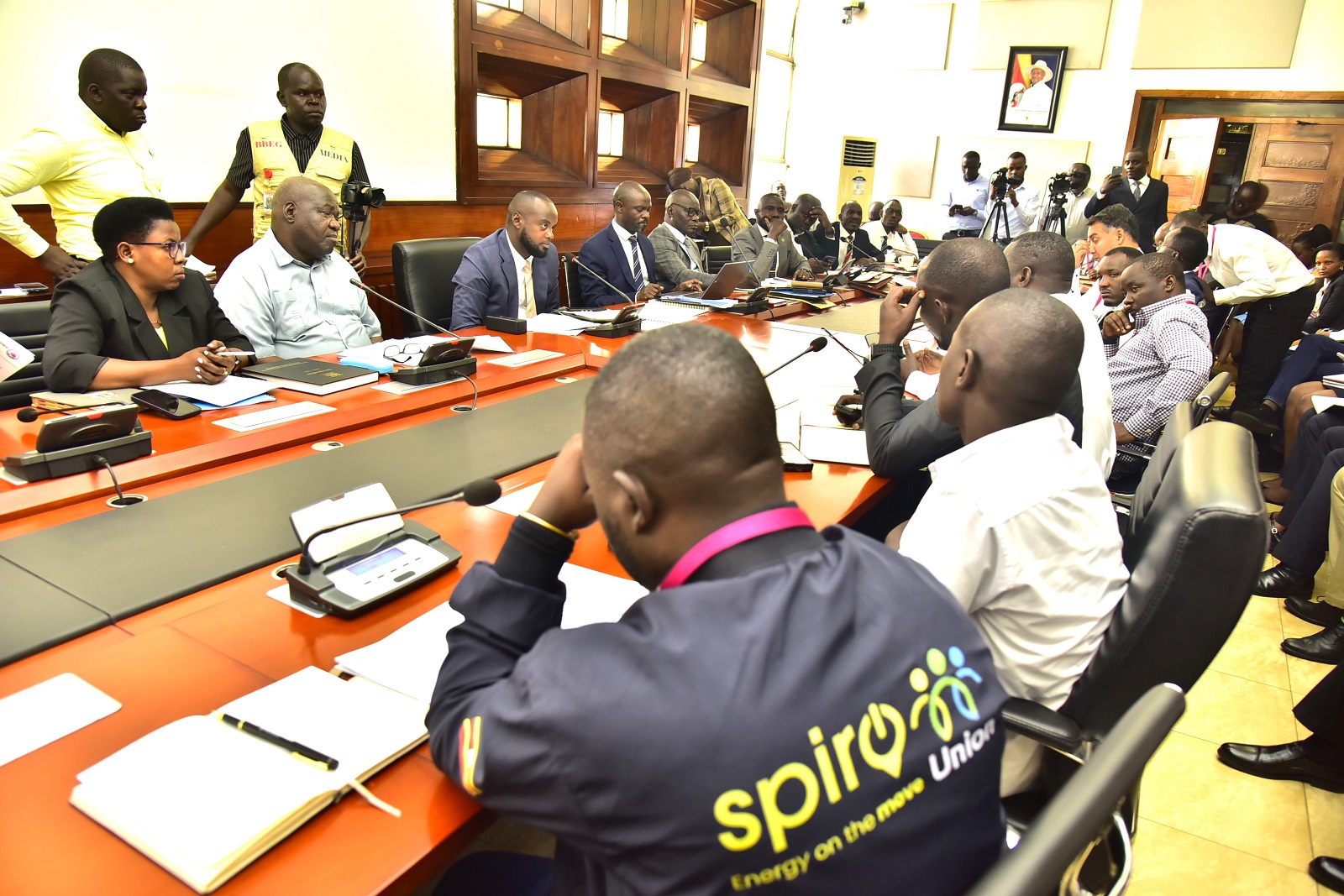
The Uganda Manufacturers Association (UMA) raised the concerns on Monday before Parliament’s Committee on Physical Infrastructure, which is investigating the rollout of the plates under the Intelligent Transport Monitoring System (ITMS).
The committee, chaired by Mwine Mpaka, heard complaints from boda boda riders, freight clearing agents and business owners about months-long delays, escalating fees and questions over whether the system is delivering its promised security benefits.
In 2021, the government signed a 10-year agreement with Joint Stock Company Global Security, making the Russian company the sole manufacturer of digital number plates in Uganda.
‘We have not seen a breakthrough’
UMA board chairperson Richard Mubiru told MPs that digital plates were introduced largely to address the security threat posed by counterfeit number plates.
But, he said, manufacturers had yet to see evidence that the project had delivered the promised breakthrough.
“From where we sit at UMA, we have not seen a breakthrough in that regard,” Mubiru told the committee.
He said the exclusive arrangement had effectively displaced two companies that had previously manufactured number plates in Uganda.
The digital plate project was introduced against a backdrop of security concerns following a series of attacks and assassination attempts involving public officials.
President Yoweri Museveni championed the use of digital number plates and roadside cameras as tools to identify vehicles used in crimes. He reiterated the proposal in his 2021 State of the Nation address.
The plates contain radio-frequency identification chips and QR codes designed to allow vehicles to be monitored through police command centres at Naguru and Nateete.
Paid, but still waiting
For many motorists, however, the immediate issue is not surveillance but simply getting the plates they have already paid for.
Hassan Ssentongo, a boda boda rider, told MPs that he paid for his digital plate on 28 July 2025 and was still waiting.
“I paid for a number plate when I was changing from UBD696N to digital, but I paid on 28 July 2025, on order number S43461 and when I complained, they gave me another assessment that I should pay again,” he said.
Frank Mawejje, chairperson of the National Boda Boda Union, said riders were being given explanations ranging from international conflicts to disrupted shipments.
ALSO READ: Uganda’s Arua Hospital Operating at Just 23% Staffing as Patient Numbers Soar
“When you complain to these people, they tell you that there is a war between Israel and Iran and the consignments have delayed on the way,” he told the committee.
In a written submission, Mawejje said some riders had waited “several months, or even more than a year” after paying for their plates.
He warned that some were still at risk of penalties for not having digital plates despite having already paid for them.
The delays are also affecting vehicle dealers and importers.
Earlier this year, newly imported and locally assembled vehicles were reported to be sitting in bonded warehouses and dealerships across Kampala because they could not legally be put on the road without number plates.
Mpaka has said daily plate production had fallen from about 350 to 100, with the delays costing the country more than Shs4 billion a week.
Fees jump more than fivefold
The cost of the plates has become another flashpoint.
Mawejje challenged the increase from the previous Shs125,000 fee to the current gazetted charge of Shs714,300.
He argued that boda boda riders should not be charged the same rate as private vehicle owners.
The current fee represents an increase of more than five times the previous charge and, according to the union, amounts to more than a week’s earnings for many riders.
Some motorists have also reported being charged above the official rate.
During a recent inspection, the Ministry of Works and Transport found a car bond operator charging Shs850,000 for a digital plate and warned intermediaries against overcharging motorists.
The committee also heard claims that the system’s central security purpose has yet to be demonstrated.
“We have never recovered any motorcycle using a digital number plate. Motorcycles are being recovered using cameras,” Mawejje said.
Kezekia Bwire, vice chairperson of the Uganda Clearing Industry and Forwarding Association, said Global Security had failed to respond to some clients and that several vehicles and motorcycles had never been traced.
Bwire challenged the company to demonstrate the system’s tracking capabilities.
“Hon. Waluswaka [James] has a digital number plate. Can you, as a joint stock company, use your liaison person at police to track the vehicle and tell us where it is?” he asked.
The committee was also told of a case in which a vehicle was deliberately left in a garage so that its digital plate could be tested, but the system reportedly failed to locate it.
Company blames disrupted consignments
Global Security’s project manager for ITMS, Damir Makhmutov, acknowledged that the government had raised concerns with the company over shortages and delays.
He said the company had been pressed to increase the pace of installations and attributed some of the disruptions to international conflicts that had affected consignments.
“We have the technical capability. We have enough staff to perform 1,500 installations per day. But for example, as of the 23rd of September, we have done 1,307 installations,” Makhmutov said.
The figures presented by the company contrast with concerns raised by MPs over falling daily production and the growing backlog.
The controversy surrounding the digital plates extends beyond delays and prices.
The Global Security contract has faced questions since it was awarded.
At the time the company won the contract, it was reportedly facing bankruptcy litigation in a Moscow arbitration court.
Nine MPs also disowned the parliamentary committee report that approved the ITMS project, alleging legal breaches, financial deception and procurement irregularities.
Privacy advocates have separately raised concerns about a foreign company having access to data that could potentially reveal the movements of Ugandan motorists.
The latest challenge has come from a group identifying itself as transport-sector whistleblowers.
This week, the group asked President Museveni and Parliament to halt a planned Shs158 billion Ministry of Works procurement from Global Security.
The group argues that the procurement could result in the government effectively paying the same company twice for elements of the same system.
Those claims have not been independently established.
The committee is expected to complete its investigation and present its findings to Parliament.
At stake is more than the question of when motorists will finally receive their plates.
The inquiry is now examining whether Uganda’s digital number plate system has delivered the security, efficiency and tracking capabilities used to justify the project, and whether the exclusive contract with Global Security represents value for money.
For motorists who have already paid and are still waiting, the question is simpler: where are their plates?
Subscribe to Our Newsletter
Keep in touch with our news & offers
Thank you for subscribing to the newsletter.
Oops. Something went wrong. Please try again later.