PRETORIA: KwaZulu-Natal businessman Clive Naicker has denied paying R2.5 million to have tow-truck operator Bevan Loftus killed, telling the Madlanga Commission that he had never met the man and had no reason to want him dead.
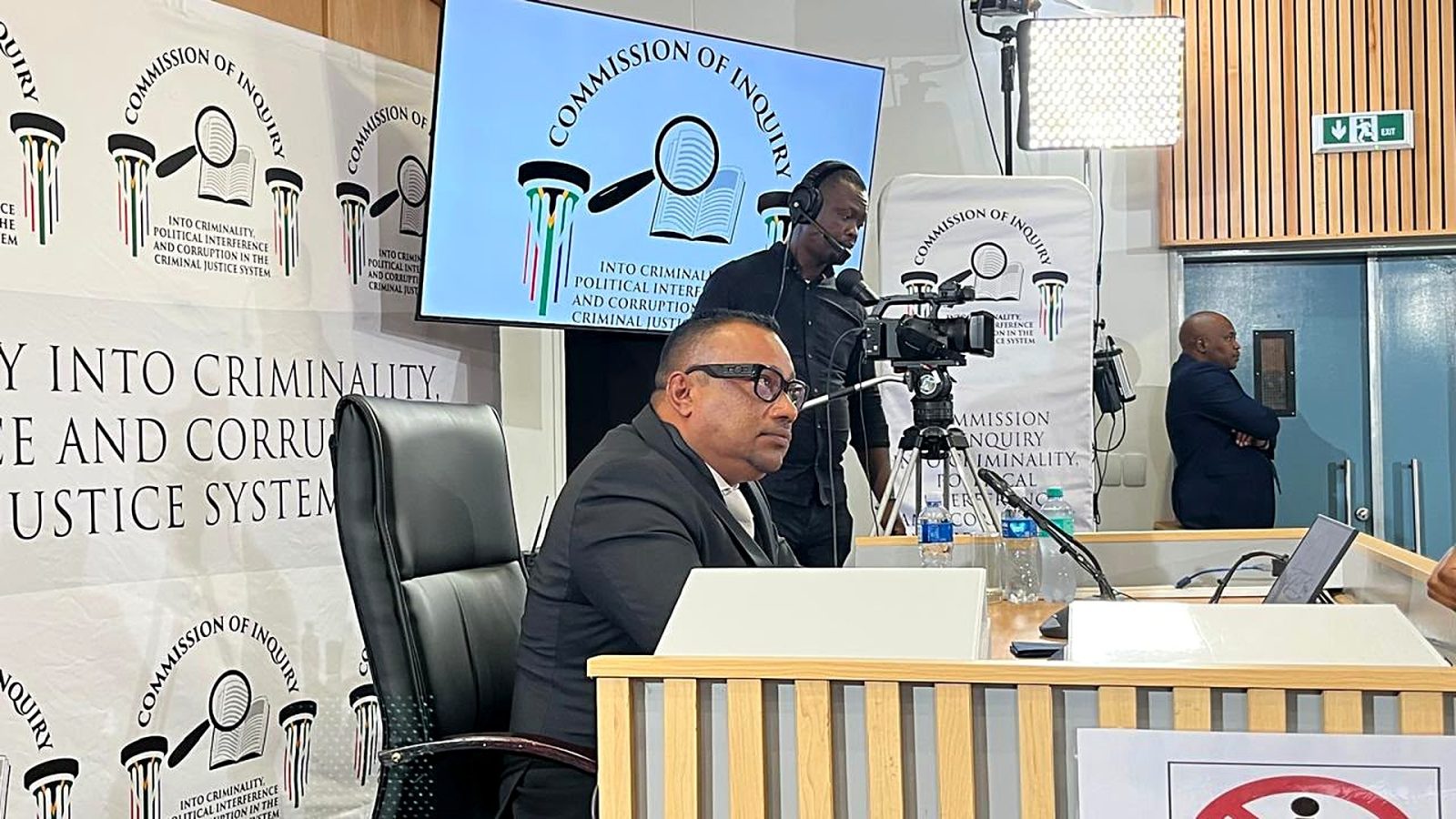
Naicker, a tow-truck operator and association chairperson, testified at the commission at the Bridgette Mabandla Justice College in Pretoria on Monday, 16 November.
“I did not conspire with anyone to murder Mr Loftus,” he told the inquiry, denying that he had offered money or any other reward to anyone, including police officers, to have Loftus killed.
Naicker said he had never met Loftus in person and had no relationship with him.
“I’ve never had a relationship with Mr Loftus,” he said.
Five men killed in Morningside
Loftus, 34, and four other men were shot dead at a rented flat in Morningside, Durban, on 1 April 2023. The other victims were Ryan Santos, 26, Chase Fynn, 22, Michigan Hippolyte, 20, and Sihle Zondi.
The shooting was carried out by a police team led by Lieutenant-Colonel Deenadayalan “Deena” Govender. Police initially described the incident as a shootout and linked the men to a series of gang killings in Durban.
Loftus’s father, Gregory Loftus, a former police detective who attended Monday’s proceedings, has strongly disputed that version of events.
When he testified in August, he told the commission that he believed his son had been murdered by police under the cover of a legitimate operation, allegedly at the instigation of Naicker, whom he described as his son’s competitor in the towing industry.
Gregory Loftus also testified that on 31 March 2023, the day before the shooting, he had approached the High Court in an attempt to interdict Govender and other police officers from killing his son.
Retired police captain Ashley Houston later told the commission that it was highly unlikely the officers had acted in self-defence.
What did ‘2.5’ mean?
Evidence leader Advocate Teboho Mosikili questioned Naicker about a telephone conversation he had with Loftus before the killings.
ALSO READ: Threats against Madlanga commissioner Khumalo spark legal profession alarm
In the recording, which was played to the commission in August, Loftus accused Naicker of putting R2.5 million on his head and arranging for police to set him up.
Loftus ended the conversation with the words, “the fastest lives the longest”. His father interpreted the remark as a warning about who would strike first.
Naicker told the commission on Monday that he had been taken aback by the call and did not understand what Loftus meant by “2.5”.
He said the figure sounded to him like a valuation used in the towing industry rather than an amount of money, whether R2 500 or R2.5 million.
According to Naicker, Loftus ended the call before he could explain what he meant.
“I don’t know what a 2.5 is, and I denied any knowledge of it,” he said.
Mosikili asked why Naicker had not returned Loftus’s call or reported the matter to the police.
Naicker said he had been caught off guard and had not anticipated that the conversation would later become an issue.
Competition over work on the N2
Naicker initially told commission chairperson Justice Mbuyiseli Madlanga that his business and Loftus’s operated in different areas and that there had been no friction between them.
However, when Madlanga pressed him on the issue, Naicker acknowledged that their teams competed for work at a shared point along the N2.
The commission also questioned him about the range of businesses in which he has interests, including towing, taxis, panel-beating, car dealerships, clothing shops and restaurants.
Naicker said several of these businesses operated mainly on a cash basis.
Drug allegations in the towing industry
Madlanga also questioned Naicker about allegations linking the towing industry to drug trafficking.
ALSO READ: ‘A Mafia-Style Execution’: Inside the Murder That Shook the Madlanga Commission
The claims had been raised by a former police officer, who told the commission that the towing, taxi and ambulance industries were connected to the drug trade.
Naicker rejected the suggestion that the industry as a whole was involved in drug trafficking, arguing that it was unfair to generalise about all operators.
He acknowledged that some drivers used drugs between jobs but said this was different from trafficking. He added that he could only speak about what he had personally witnessed.
Commission rejects request for fully closed hearing
Naicker had sought permission to give all his evidence behind closed doors. His legal team argued that public testimony could put his life at risk, saying he had been a registered SAPS informer for more than 10 years.
The commission declined to hold the entire hearing in camera.
It ruled that evidence concerning Loftus, Naicker’s business interests and alleged payments to police officers should be heard in public.
However, evidence relating to Crime Intelligence, the Directorate for Priority Crime Investigation (DPCI) and cases in which Naicker is a state witness will be heard in camera.
The Madlanga Commission
The Judicial Commission of Inquiry into Criminality, Political Interference and Corruption in the Criminal Justice System was established by President Cyril Ramaphosa in July 2025.
Its establishment followed allegations made by KwaZulu-Natal police commissioner Lieutenant-General Nhlanhla Mkhwanazi on 6 July 2025 that a criminal syndicate had infiltrated the criminal justice system.
The commission is chaired by Justice Madlanga, with Advocates Sesi Baloyi SC and Sandile Khumalo SC serving as commissioners. It has submitted interim reports to the President in December 2025 and May 2026.
In August, the inquiry began hearing evidence relating to alleged police hit squads in KwaZulu-Natal, including the deaths of Loftus and the four other men in Morningside.
Naicker’s in-camera testimony is scheduled to continue in Pretoria on Tuesday.