Nearly 3,800 people have died in DRC’s largest Ebola outbreak. The virus has spread across seven provinces, there is no licensed vaccine specifically designed for it, and conflict is making patients harder to reach. Stopping it may depend as much on community trust as medicine.
GENEVA – Nearly 3,800 people are dead. Tens of thousands of contacts need monitoring. The virus has reached seven provinces, crossed into neighbouring Uganda and exposed a major weakness in the world’s Ebola defences: the vaccines and treatments that transformed the fight against previous outbreaks were developed for a different species of the virus.
The Democratic Republic of Congo is battling the largest Ebola outbreak in its history, driven not by the better-known Zaire ebolavirus, but by the much less studied Bundibugyo virus.
As of 23 September, DRC had recorded 7,890 confirmed cases and 3,799 deaths, giving the outbreak a crude case fatality ratio of 48.1%, according to the World Health Organization.
Another 1,966 patients had recovered.
The outbreak has spread to 63 health zones across seven provinces, with 48 health zones reporting at least one case during the previous 21 days.
Those figures have already eclipsed DRC’s 2018-2020 Ebola epidemic, which had previously been the country’s largest.
And despite signs that transmission has declined in some areas, WHO says the national number of new cases remains high.
The challenge now is not simply finding and treating patients.
Health authorities must simultaneously trace contacts, expand laboratory testing, prevent infections in hospitals, safely bury those who die, reach communities displaced by conflict and convince people to report symptoms early.
In this outbreak, community trust may prove as important as any experimental vaccine.
A different Ebola virus
The outbreak is caused by Bundibugyo virus, one of the less studied members of the Ebola virus family.
That distinction matters.
The vaccines and antibody treatments that became powerful tools against previous DRC outbreaks were developed primarily against Zaire ebolavirus.
There is currently no licensed vaccine or specific treatment developed and approved specifically for Bundibugyo virus disease, although researchers are examining whether existing vaccines could provide some protection and are studying experimental medical countermeasures.
Bundibugyo virus has caused only a small number of previously documented outbreaks, including the outbreak from which it took its name in western Uganda in 2007 and another in DRC in 2012.
That relative rarity meant considerably less research had been conducted on vaccines, treatments and diagnostics before the current crisis.
WHO now describes Bundibugyo virus as one of the least studied orthoebolaviruses.
The consequences have become painfully clear.
An outbreak that moved with extraordinary speed
The outbreak was declared by DRC authorities on 15 May after cases emerged in northeastern DRC.
On 17 May, WHO Director-General Dr Tedros Adhanom Ghebreyesus determined that the epidemic constituted a Public Health Emergency of International Concern, triggering heightened international coordination.
The virus then expanded at a pace DRC had not experienced in previous Ebola epidemics.
By 17 June, there were already 896 confirmed cases and 232 deaths in DRC.
By 15 July, cases had climbed to 2,124.
On 12 August, WHO reported 4,665 confirmed cases and described the epidemic as the largest Ebola outbreak ever reported in DRC, expanding faster than any previous Ebola outbreak.
By 23 September, the figure had reached 7,890.
The virus had spread into 63 health zones across Ituri, North Kivu, Tshopo, Haut-Uélé, Bas-Uélé, South Kivu and Sud Ubangi.
Ituri remains the epicentre
No province has suffered more than Ituri.
As of 23 September, the province had recorded 6,032 confirmed cases, accounting for more than three-quarters of DRC’s total.
Twenty-eight of Ituri’s 36 health zones had reported cases.
North Kivu was the second most affected province with 1,480 confirmed cases and had the highest case fatality ratio of the outbreak, at 59.7%.
WHO said investigations were continuing into why mortality was particularly high there.
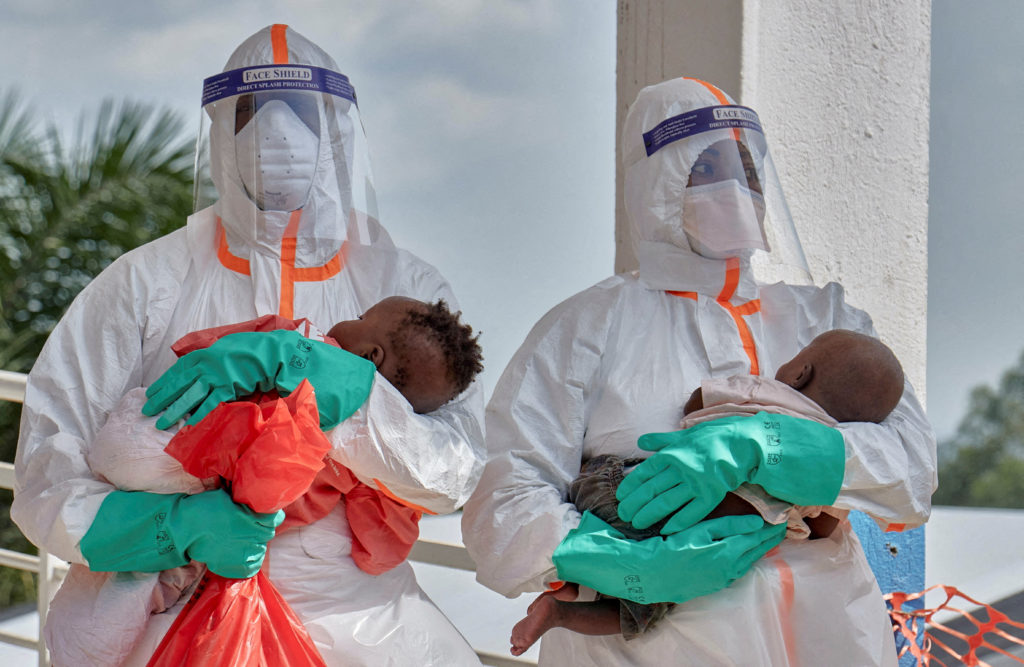
The epidemic is also changing geographically.
Transmission in Ituri has gradually declined from its mid-August peak, but North Kivu experienced a sharp rise through mid-September. Haut-Uélé continues to report sustained transmission, while Tshopo has experienced renewed activity.
New cases have also pushed into previously unaffected areas.
Sud Ubangi became the seventh province to record a confirmed case, while Dungu health zone in Haut-Uélé, close to the South Sudan border, has also been affected.
That geographic expansion has increased concerns about further cross-border transmission.
Ebola does not respect borders
The outbreak has already crossed DRC’s borders.
Uganda recorded 20 confirmed cases linked epidemiologically to transmission originating in DRC, including secondary transmission among contacts and healthcare workers.
Cases diagnosed in DRC have also involved patients subsequently treated in Germany, while a case was treated in France.
The international cases have not produced the kind of widespread transmission seen inside DRC, but they demonstrate how quickly an outbreak in a highly mobile region can acquire international consequences.
WHO has strengthened surveillance at airports, ports and official land crossings, while warning that informal cross-border movement remains difficult to monitor.
The impossible mathematics of contact tracing
Stopping Ebola requires breaking chains of transmission.
That means finding not only people who are sick but also the people they may have exposed.
By 23 September, 32,342 identified contacts required follow-up in DRC.
Health teams successfully monitored 26,980 of them during the previous 24 hours, a follow-up rate of 83.4%.
Even that enormous effort captures only known contacts.
Every patient who dies undiagnosed in the community, every infection that is identified late and every area that surveillance teams cannot safely reach creates opportunities for new chains of transmission to go unnoticed.
That is particularly dangerous with Ebola because the virus spreads through direct contact with the blood or other bodily fluids of infected people, as well as contaminated materials.
Finding cases early therefore becomes one of the most powerful tools available.
Fighting Ebola in a conflict zone
This would be a formidable public health operation anywhere.
Eastern DRC makes it considerably harder.
Years of armed conflict have displaced communities, damaged health systems and made some areas difficult or dangerous for response teams to access.
WHO says insecurity, displacement and limited access to basic services are hampering surveillance, case finding, contact tracing, infection prevention and timely treatment.
The conditions in mining communities, informal settlements and camps for displaced people create additional problems.
Overcrowding can accelerate transmission. Poor water and sanitation make infection prevention harder. Mobile populations complicate contact tracing.
And Ebola is not the region’s only health emergency.
The outbreak is unfolding against a wider humanitarian crisis in which communities also face other infectious diseases, malnutrition and disrupted access to routine healthcare.
Inside the treatment centres
For health workers, infection prevention is critical.
People suspected of having Ebola must be identified quickly and separated from other patients while testing is carried out.
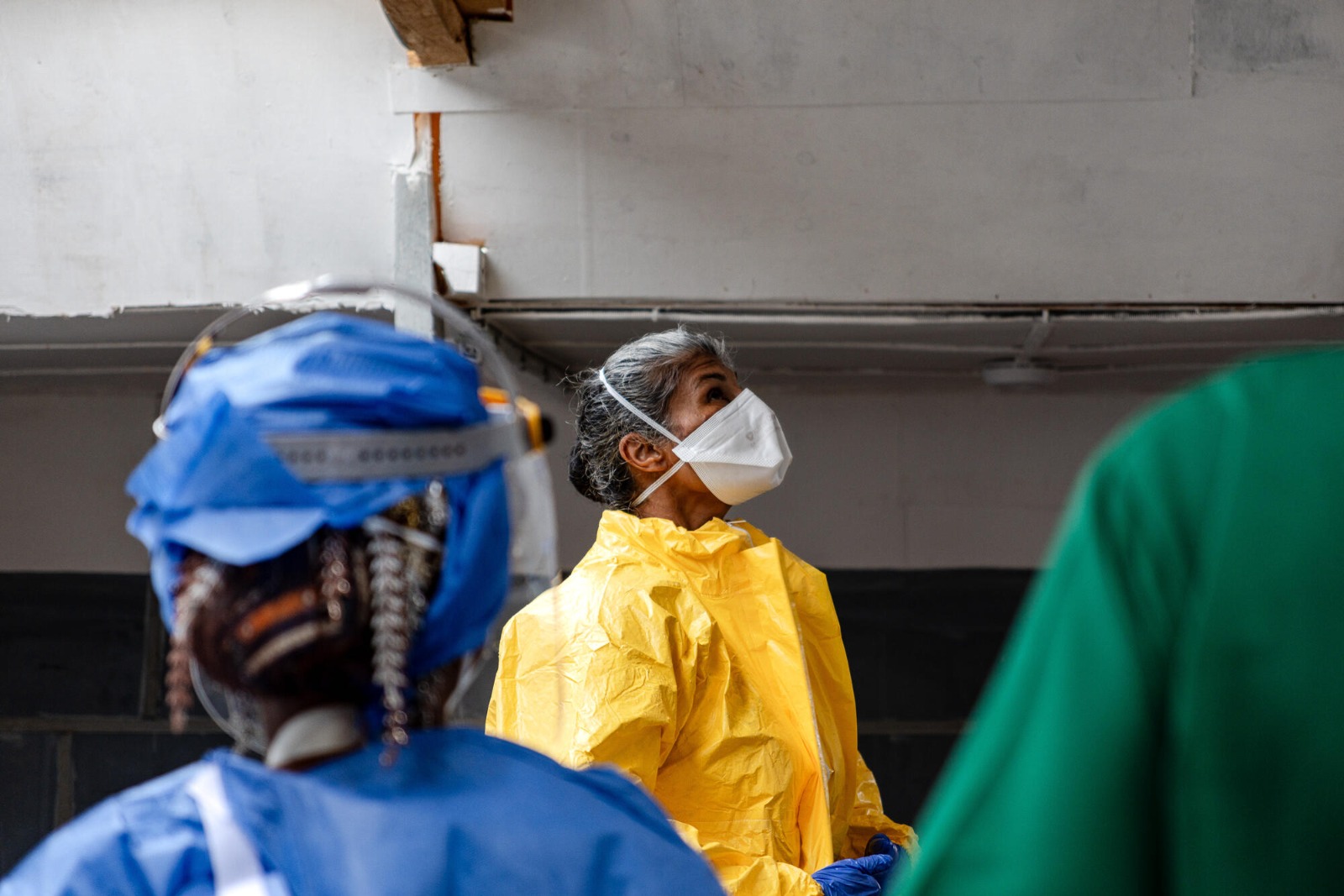
Confirmed patients require dedicated treatment areas, while healthcare workers need personal protective equipment and strict protocols for handling blood, bodily fluids, medical equipment and contaminated waste.
Water and sanitation teams must disinfect ambulances, treatment centres and affected homes.
Safe and dignified burials are another essential part of the response because the bodies of people who have died from Ebola remain infectious.
Médecins Sans Frontières has been expanding its response as the outbreak moves into new areas, including treatment operations in Ituri and Tshopo.
ALSO READ: DRC Ebola Outbreak: Death Toll Surges as UN Warns Epidemic Remains ‘Deadly and Massive’
In Kisangani, the capital of Tshopo province, MSF has been operating an Ebola treatment centre at Hôpital du Cinquantenaire with the Ministry of Health since June.
The organisation warned in September against assuming the epidemic was coming under control simply because transmission had begun slowing in some locations.
While conditions were improving in parts of Ituri, the virus was spreading into new and less prepared areas.
The vaccine problem
One of the most important differences between this outbreak and recent Zaire ebolavirus epidemics is the absence of a vaccine specifically licensed for Bundibugyo virus.
The Ervebo vaccine proved highly important in fighting Zaire ebolavirus outbreaks.
But Bundibugyo is different.
Researchers are therefore trying to determine whether vaccines designed against Zaire ebolavirus could nevertheless offer some cross-protection.
WHO issued emergency guidance in August on the potential use of licensed Ebola vaccine during Bundibugyo outbreaks, while research into vaccines specifically targeting the virus continues.
The treatment gap is similarly significant.
There is no licensed specific treatment for Bundibugyo virus disease.
That means supportive clinical care remains crucial while researchers investigate potential therapies.
What doctors can still do
“No specific treatment” does not mean “no treatment”.
Supportive care can make a major difference.
Patients need fluids and electrolytes to counter severe dehydration caused by vomiting and diarrhoea. Doctors can treat fever and pain, maintain oxygen levels and blood pressure, manage secondary infections and address other diseases such as malaria where necessary.
The earlier patients reach appropriate care, the better their chances.
That makes treatment accessibility part of outbreak control itself.
If patients have to travel long distances, cross insecure territory or fear being separated from their families, they may delay seeking treatment.
Those delays can cost lives and give the virus more opportunities to spread.
WHO has repeatedly pointed to late detection and inadequate access to early care as factors contributing to the outbreak’s persistently high death rate.
Why trust has become a medical intervention
There is another weapon against Ebola that does not come in a syringe.
Trust.
Health workers need communities to report symptoms, identify people who may have been exposed, cooperate with contact tracers and accept safe burial practices.
That requires communities to believe the people asking for their cooperation.
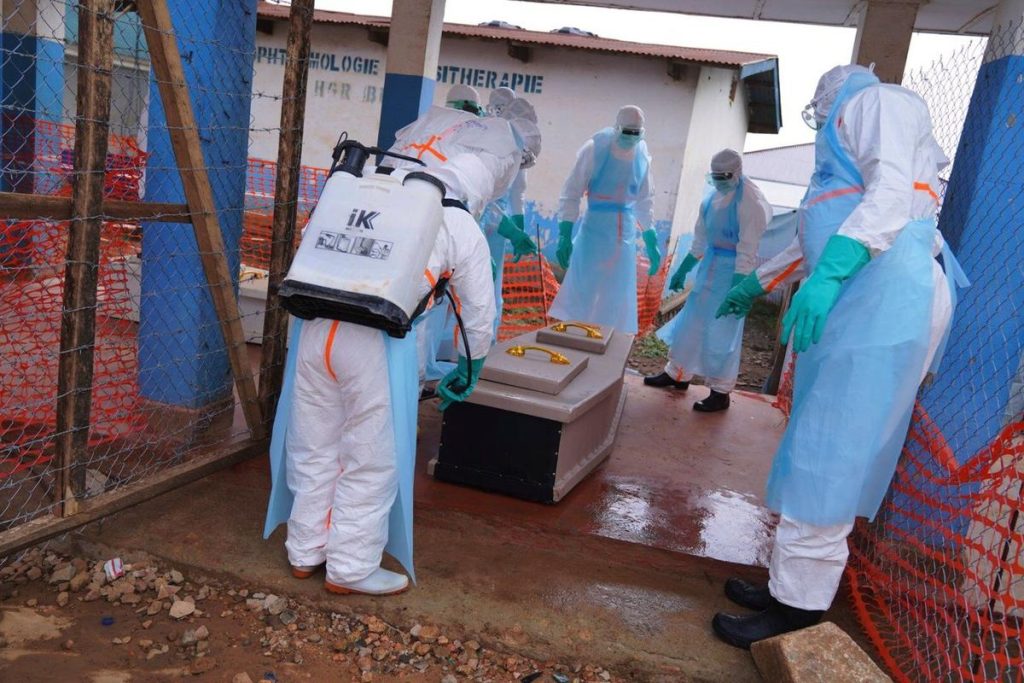
WHO has explicitly identified community engagement as central to controlling the outbreak, particularly in areas where years of conflict, insecurity and limited access to government services have damaged trust.
Community leaders can help explain how Ebola spreads, challenge misinformation and encourage people with symptoms to seek treatment early.
Community-based surveillance can also identify suspected cases before formal health systems do.
In an outbreak involving tens of thousands of contacts, those local networks effectively become part of the surveillance system.
Is the outbreak turning a corner?
There are signs of improvement in some places, but not enough to declare the epidemic under control.
In Ituri, transmission has been declining from its mid-August peak.
North Kivu also recorded a decline after reaching a high point in mid-September.
But WHO’s latest assessment says the national number of new cases remains high, with transmission patterns varying substantially between provinces.
The geographical expansion is particularly concerning.
As recently as August, the epidemic affected six provinces. It now affects seven, and newly affected health zones are appearing in areas with fewer response resources.
MSF warned on 18 September that assuming the outbreak was under control would be a mistake.
The virus may be slowing in one place while gaining ground somewhere else.
The lesson beyond DRC
The epidemic has exposed a weakness in the world’s Ebola preparedness.
The international response to previous outbreaks produced vaccines, treatments and diagnostic tools that transformed the fight against Zaire ebolavirus.
But Ebola is not a single virus.
Bundibugyo remained comparatively neglected because outbreaks were rare.
Then came 2026.
Within four months of the outbreak being declared, thousands of people had been infected and DRC had suffered its largest Ebola epidemic on record.
WHO has now identified research priorities specifically for Bundibugyo virus, including work on vaccines, treatments and diagnostics.
But those scientific advances will take time.
For the communities living through the outbreak now, the tools available are more immediate: finding cases early, tracing contacts, preventing infections inside health facilities, providing supportive treatment, ensuring safe burials, improving sanitation and convincing communities to work with health teams.
None of those measures is sufficient on its own.
Together, they offer DRC its best chance of breaking the chains of transmission.
The science matters enormously.
But in an outbreak spreading through communities already scarred by conflict and displacement, ending it will ultimately depend on whether people trust the response enough to become part of it.