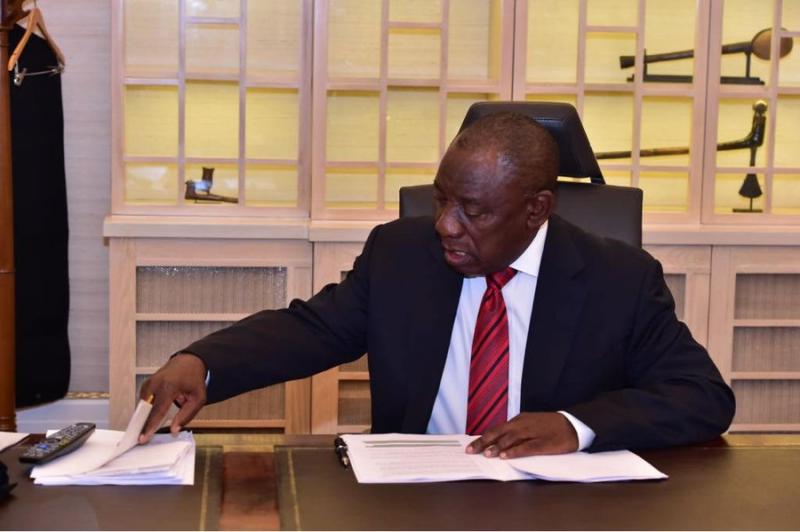
PRETORIA: President Cyril Ramaphosa has received a confidential investigation report into how Iranian warships became involved in a multinational naval exercise off the Western Cape coast in January, despite his explicit instructions that Iran should not participate.
The report, compiled by an independent panel chaired by retired Judge Bernard Ngoepe, is expected to shed light on whether the President’s orders were disregarded, who was responsible and what action should follow.
However, South Africans may have to wait to learn what the investigation uncovered.
The Presidency confirmed on Tuesday that the panel had completed its work and submitted its findings on Exercise MOSI III Will of Peace, but said the report would remain confidential because of national security considerations.
“The President will be processing the report and carefully consider its recommendations,” the Presidency said.
Ramaphosa also thanked Ngoepe and the other panel members “for their dedication and diligence in carrying out their assigned mandate”.
The panel included Justice M.M. Leeuw and Rear Admiral (Junior Grade) P.T. Duze.
Its findings could have significant implications for accountability within the South African National Defence Force (SANDF), particularly given the constitutional authority of the President as commander-in-chief.
At the centre of the controversy is a question that has remained unanswered for months: how did Iranian naval vessels become involved in an exercise from which the President had instructed them to be excluded?
How Iranian warships became the centre of a diplomatic controversy
The controversy began during Exercise MOSI III Will of Peace, a Chinese-led multinational naval exercise that commenced on 9 January in False Bay, near Simon’s Town.
The exercise was presented as part of military cooperation among BRICS+ countries and involved naval vessels from several participating nations.
South Africa deployed the frigate SAS Amatola, while China sent the destroyer Tangshan. Russia participated with the Stoikiy, and the United Arab Emirates deployed the Bani Yas.
Ethiopia, Egypt and Indonesia attended as observers.
Iran also dispatched three naval vessels, including the corvette IRIS Naghdi and IRIS Shahid Mahdavi.
According to Daily Maverick, the Shahid Mahdavi is operated by the naval arm of Iran’s Islamic Revolutionary Guard Corps, an organisation closely associated with Tehran’s military and regional security operations.
Iran’s presence quickly became controversial, particularly as South Africa faced mounting diplomatic pressure over its relationships with countries regarded as adversaries by Washington.
The situation escalated when reports emerged that Ramaphosa had instructed that Iran should not participate in the exercise.
According to Daily Maverick, the Presidency decided shortly after the exercise began that Iranian forces should be excluded from the sea phase, including participation as observers.
On 12 January, a senior official reportedly indicated that the defence ministries of all participating countries, including Iran, had agreed to the arrangement.
Yet the following day, Iranian vessels remained in False Bay, and the IRIS Naghdi reportedly sailed alongside other participating warships.
The development raised questions about whether the President’s instruction had been implemented and whether military commanders had acted contrary to the government’s position.
Defence minister confirms President’s instruction
Defence and Military Veterans Minister Angie Motshekga subsequently confirmed that Ramaphosa had issued an instruction concerning Iran’s participation.
She said the directive “was clearly communicated to all parties concerned and agreed on”.
Her confirmation intensified scrutiny of the military’s handling of the exercise.
However, the precise extent of Iran’s involvement remains disputed.
Some accounts suggest Iranian vessels participated in the naval activities, while others maintain that they were excluded from the coordinated sea operations despite remaining in the area.
The distinction is important.
The presence of Iranian warships in South African waters does not necessarily establish that they participated in the prohibited phases of the exercise.
ALSO READ: Ramaphosa calls for BRICS to break Africa’s Raw-Materials trap
Determining what actually happened, which orders were issued and whether they were followed formed a central part of the investigation.
The Ngoepe panel’s findings are therefore expected to be critical in establishing whether any officials or military commanders failed to comply with the President’s directive.
United States condemns Iran’s presence
The naval exercise triggered a sharp diplomatic response from the United States, which accused South Africa of undermining its stated commitment to human rights by hosting Iranian military forces.
At the time, Iran was facing international condemnation over its violent suppression of widespread anti-government protests.
The United States Embassy in Pretoria criticised the South African government’s decision to welcome Iranian forces while the crackdown was under way.
“It is particularly unconscionable that South Africa welcomed Iranian security forces,” the embassy said.
“South Africa can’t lecture the world on ‘justice’ while cozying up to Iran.”
The Associated Press subsequently reported that more than 7,000 people had been killed during the Iranian government’s crackdown.
The controversy unfolded against an increasingly volatile international backdrop. About a month after the naval exercise, the United States and Israel launched military strikes against Iran.
For Pretoria, the timing of the exercise was particularly sensitive.
Ramaphosa’s administration was attempting to stabilise relations with US President Donald Trump’s government, which had repeatedly accused South Africa of pursuing foreign policies contrary to American interests.
The future of South Africa’s preferential trade access under the African Growth and Opportunity Act (AGOA) was also under consideration in the United States.
Against this background, the appearance of Iranian military vessels alongside South African, Chinese and Russian forces risked deepening tensions with Washington.
Defence analyst Darren Olivier told Daily Maverick that “Iran’s decision to send it was clearly provocative”.
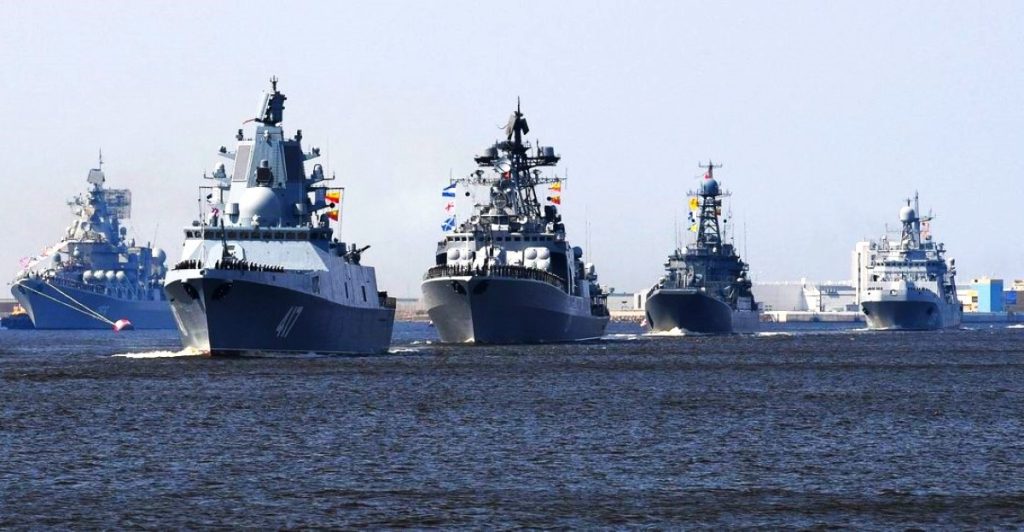
The episode highlighted the difficult balance South Africa faces between maintaining its stated non-aligned foreign policy and managing the diplomatic consequences of military cooperation with countries involved in major international disputes.
Ramaphosa removes investigation from Defence Department
The investigation initially fell under the Department of Defence and Military Veterans, which established a board of inquiry to examine the circumstances surrounding Iran’s participation.
The board was reportedly instructed to submit its findings to the President within seven days.
However, more than a month passed without a completed report, raising concerns about the pace and independence of the process.
In late February, Ramaphosa intervened by transferring responsibility for the investigation from the Defence Department to the Presidency.
He appointed a panel chaired by Ngoepe to conduct a fresh inquiry into the matter.
At the time, presidential spokesperson Vincent Magwenya explained that the decision was intended to strengthen the investigation’s independence and ensure that it was completed without unnecessary delays.
“The relocation of the inquiry from the ministry of defence and military veterans to the Presidency is to ensure an independent and timeous probe,” Magwenya said.
He also emphasised the President’s constitutional authority over the armed forces.
“The president is, in terms of the Constitution, commander-in-chief of the SANDF.”
The move elevated the investigation beyond an internal military matter and placed it directly under the authority of the country’s highest executive office.
It also underscored the seriousness of the allegations that a presidential instruction may not have been carried out.
Panel tasked with identifying those responsible
The Ngoepe panel was given a broad mandate to establish what happened during the naval exercise and whether the President’s instructions had been disregarded.
ALSO READ: Ill-Advised War On Iran Shows Trump Is Netanyahu’s ‘Manna From Heaven’
Its responsibilities included examining the circumstances surrounding the exercise, determining why the directive concerning Iran was allegedly not observed and identifying individuals who may have been responsible.
The panel was also required to recommend appropriate consequences if wrongdoing or failures of command were established.
To carry out its work, it was authorised to summon members of the defence force and public service and obtain documents, including classified material relevant to the investigation.
These powers were intended to enable investigators to examine military communications, operational decisions and the chain of command.
The inquiry could therefore have implications beyond the immediate question of Iran’s participation.
It also concerns the effectiveness of civilian oversight of the military and the extent to which instructions from the commander-in-chief are implemented within the defence establishment.
In February, the Sunday Times reported that South African Navy chief Vice-Admiral Monde Lobese was likely to feature prominently in the investigation.
However, that reporting did not establish wrongdoing, and the panel’s findings concerning any particular individual have not been made public.
Delays fuel parliamentary frustration
Although the independent panel was initially expected to complete its work within a month, the investigation took considerably longer.
Ramaphosa subsequently granted an extension after the panel demonstrated what the Presidency described as “compelling cause” for additional time.
The delay attracted criticism from opposition politicians, who questioned why an investigation into a matter involving the President’s direct military authority had not been concluded sooner.
In July, Democratic Alliance MP Chris Hattingh expressed frustration that Parliament still lacked clear answers about who had authorised Iran’s participation and whether anyone would be held accountable.
The absence of a public explanation contributed to concerns about transparency within the defence establishment.
For opposition parties, the matter raised questions not only about the handling of a multinational military exercise but also about whether the executive could ensure compliance with its own decisions.
The completion of the Ngoepe investigation represents a significant development, but the decision to keep its findings confidential means those concerns have not yet been resolved publicly.
National security secrecy leaves questions unanswered
The Presidency has defended its decision to withhold the report on national security grounds.
Military investigations can involve sensitive operational information, classified communications and details concerning relationships with foreign defence forces.
However, the confidentiality of such material also presents a challenge when an investigation concerns possible failures of accountability within the armed forces.
The public still does not know whether the panel established that Ramaphosa’s instruction was disregarded, whether the reported involvement of Iranian vessels constituted a breach of the directive or whether disciplinary action has been recommended.
It also remains unclear whether the President intends to release a summary of the findings or provide Parliament with information that can be disclosed without compromising national security.
Under the arrangements governing the inquiry, Ramaphosa may consider publishing all or part of the findings following recommendations from the panel and the Defence Minister.
For now, the Presidency has indicated only that the President will study the report and consider its recommendations.
The next decision therefore rests with Ramaphosa.
The investigation has examined a controversy that strained South Africa’s diplomatic relations and raised serious questions about military command and civilian oversight.
Its findings could determine whether those questions result in disciplinary consequences, institutional reforms or further investigations.
But until the Presidency discloses at least the central conclusions, the most important questions will remain unanswered in the public domain.
Who authorised or permitted Iran’s involvement despite the President’s instruction, was that instruction actually breached, and what consequences, if any, will follow?
The report is now on Ramaphosa’s desk. Whether South Africans will learn what it found remains to be seen.