DURBAN: South Africa must rethink how it finances sugarcane farmers, particularly small-scale growers who struggle to secure loans and investment, rather than assume that the industry’s problems can be solved simply by allocating more money.
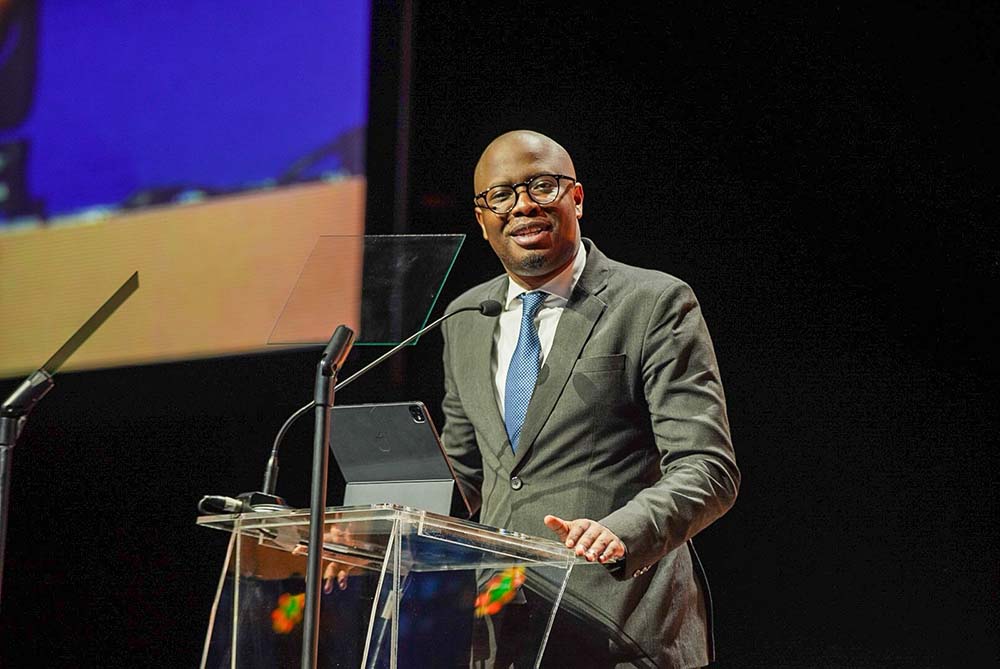
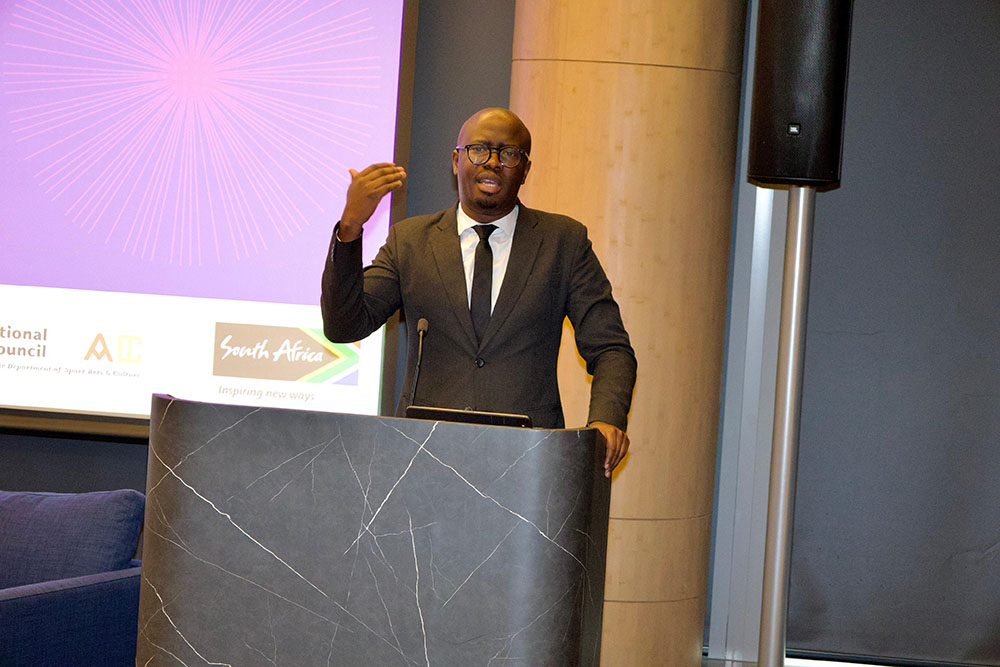
That was the message from Deputy Minister of Trade, Industry and Competition Zuko Godlimpi, who called for greater coordination between government, financial institutions and the sugar industry to remove structural barriers preventing growers from accessing finance.
Speaking at the Sugar Industry Grower Finance and Government Engagement Workshop in Durban on Monday, Godlimpi argued that existing funding could achieve far more if it were better coordinated and supported by practical measures to make growers eligible for financing.
“We need to have a conversation about what are the structural problems that make it difficult for funding institutions to give money to cane growers,” he said.
His remarks come as South Africa’s sugar industry faces mounting pressure from cheaper imports, uncertainty over domestic demand, rising production challenges and financial instability among major sugar producers.
For small-scale farmers, many of whom lack sufficient collateral or the financial records required by lenders, access to affordable finance remains one of the biggest obstacles to remaining competitive.
Godlimpi said addressing these challenges would require a shift from simply identifying funding sources to ensuring that growers could realistically access and use the resources already available.
Making existing funding work harder
Rather than calling for additional allocations, Godlimpi urged development finance institutions, commercial lenders and government agencies to coordinate their financing programmes more effectively.
“My instinct is not to look for new money. My instinct is to try optimise the existing money,” he said.
He argued that fragmented funding arrangements and the financial circumstances of individual growers often make it difficult for lenders to support agricultural businesses, even where funding is available.
One possible solution, he suggested, would be to allow smaller growers to pool their farming operations or holdings to improve their collective ability to secure financing.
Such arrangements could enable farmers who might struggle to qualify individually to approach financial institutions through more commercially viable structures.
However, Godlimpi said these models would need appropriate insurance, credit arrangements and mechanisms to manage the risks associated with agricultural production.
He also called for stronger capacity-building programmes to help farmers become funding-ready.
This would involve supporting growers to meet lenders’ requirements, strengthen their financial management and develop business plans capable of attracting investment.
Closing gaps in agricultural insurance was another priority, particularly where exposure to production risks makes lenders reluctant to finance smaller operations.
Beyond traditional crop financing, Godlimpi encouraged the development of funding models that could support mechanisation, renewable energy, infrastructure improvements and diversification into new products.
The objective, he said, should be to create financing arrangements that respond to the actual operating conditions of sugarcane farmers rather than expecting growers to fit into financial models that do not adequately accommodate their circumstances.
Sugar industry faces mounting pressure from imports
The workshop took place against a difficult economic backdrop for South Africa’s sugar industry, which supports an estimated one million livelihoods, according to the South African Sugar Association (SASA).
Much of the industry’s economic activity is concentrated in KwaZulu-Natal and Mpumalanga, where sugarcane farming and milling provide employment and income for rural communities.
However, increasing volumes of imported sugar have intensified pressure on domestic producers.
According to figures reported by Farmer’s Weekly, South Africa imported approximately 163,000 tonnes of sugar between April and December 2025, an increase of 155% compared with the corresponding period a year earlier.
By the end of February 2026, deep-sea sugar imports for the 2025/26 season had exceeded 197,000 tonnes.
SASA estimates that the increased imports have cost the domestic industry approximately R1.5 billion in lost revenue.
Kulani Siweya, SASA’s national market and trade policy executive, has argued that international subsidies give foreign producers an unfair competitive advantage.
ALSO READ: Energy in Eswatini: The Untapped Power of Sugar Cane Bagasse
“These imports are highly subsidised, allowing foreign producers to export at prices below production costs,” Siweya said.
The industry has consequently called for stronger tariff protection.
SASA wants the dollar-based reference price used to determine protection against sugar imports increased from $680 to $905 a tonne.
The reference price has remained unchanged since 2018, while the International Trade Administration Commission is reviewing the level of protection afforded to domestic producers.
For growers already struggling with production costs and limited access to finance, increased competition from imports places further pressure on their ability to invest, expand and remain commercially sustainable.

Sugar tax remains a source of disagreement
The industry is also continuing its campaign against the Health Promotion Levy, commonly known as the sugar tax, which was introduced in 2018 on sugar-sweetened beverages.
Grower organisations argue that the levy has reduced demand for locally produced sugar and contributed to financial difficulties across the value chain.
“The sugar tax continues to work against us,” SA Canegrowers chairperson Higgins Mdluli said ahead of last week’s mini-budget.
The organisation has cited a study commissioned through the National Economic Development and Labour Council (Nedlac), which found that the industry lost more than 16,000 jobs during the first year after the levy was introduced.
However, the relationship between the levy and employment losses remains contested.
A 2025 study by the South African Medical Research Council and the University of the Witwatersrand found “no statistically significant association between the levy and employment changes” in sugar-related industries.
The researchers concluded that beverage manufacturers had largely responded to the levy by reducing the sugar content of their products rather than making significant employment cuts.
The competing findings illustrate the difficult policy choices facing government as it attempts to balance public health objectives with the economic sustainability of the sugar industry.
The sector has also faced uncertainty surrounding Tongaat Hulett, one of South Africa’s major sugar millers, adding to concerns about the stability of the industry’s production and processing capacity.
Small-scale growers central to industry’s recovery
Godlimpi’s call for financing reform forms part of government’s broader strategy to secure the future of the sugar industry through the Sugarcane Value Chain Master Plan.
In April, he signed Phase Two of the plan in Durban, setting out priorities for industry development and transformation through to 2030.
A central objective is to protect the participation of small-scale growers, particularly historically disadvantaged farmers who continue to face barriers to finance, infrastructure and market access.
Godlimpi previously described keeping these growers in the industry as “a critical element” of the master plan.
“Phase Two will cement this position and ensure their long-term sustainability,” he said at the signing.
According to Farmer’s Weekly, the industry’s transformation commitments include R2 billion over five years to support black and small-scale sugarcane growers.
However, the availability of transformation funding does not automatically mean that farmers can access it.
Godlimpi’s remarks suggest that government wants to address the practical obstacles that prevent funding from reaching intended beneficiaries.
These include limited collateral, inadequate insurance, financial management challenges and the difficulty of financing smaller farming operations individually.
The challenge is particularly significant in rural communities where sugarcane production supports households, local businesses and employment opportunities beyond the farms themselves.
At the signing of the master plan, SASA acting chairperson Rex Talmage emphasised the wider consequences of the industry’s difficulties.
The challenges, he said, “represent the one million livelihoods that depend on this industry”.
For government and industry stakeholders, ensuring that small-scale growers remain commercially viable is therefore both an economic and a rural development priority.
Bioethanol offers opportunities for diversification
Alongside improving access to finance, the master plan seeks to reduce the sugar industry’s dependence on traditional sugar markets.
One of the opportunities under consideration is the production of bioethanol, which can be used as a renewable fuel component.
The proposed expansion into bioethanol forms part of broader efforts to develop higher-value products from sugarcane, create additional markets for growers and strengthen domestic industrial capacity.
Godlimpi has set out an ambition to increase South Africa’s domestic fuel production from 40% to 55%, with bioethanol potentially contributing to the country’s energy diversification efforts.
Industry representatives have also identified changing international energy conditions as an opportunity.
In April, Siyabonga Madlala, chairperson of the South African Farmers Development Association, argued that geopolitical instability could strengthen the case for developing local biofuel production.
“The crisis in the Middle East opens an opportunity for the sugar industry to produce bioethanol for our country,” Madlala said.
Bioethanol production could create additional demand for sugarcane and provide growers with alternative revenue opportunities, particularly during periods of weak sugar prices.
However, turning that potential into a commercially viable industry would require investment in processing facilities, reliable feedstock supplies, infrastructure and appropriate financing arrangements.
Food security must not be compromised
Godlimpi cautioned that diversification into bioethanol could not come at the expense of the country’s food production requirements.
He said the industry would need to demonstrate that it could produce sufficient sugarcane to supply both traditional sugar markets and emerging biofuel operations.
“We need to build this structural capacity to meet demand on both sides of the equation, sustain the tonnage you give to food and have enough feedstock for this thing that we’re talking,” he said.
The warning highlights the importance of expanding agricultural productivity rather than merely redirecting existing sugarcane production from one market to another.
For growers, this would require investment in improved farming methods, mechanisation, infrastructure and the capacity to increase output sustainably.
It would also require financing models that account for the longer-term investments needed to support diversification.
Without those investments, the industry could struggle to take advantage of emerging opportunities while maintaining its existing commitments to food production.
From discussions to practical financing solutions
Godlimpi said the recommendations emerging from the Durban workshop would be taken forward to develop practical financing solutions for the sugar industry.
The engagement brought together government, growers, industry representatives and financial institutions to identify where existing funding arrangements could be improved.
The central challenge is to turn available financial resources into accessible investment that enables growers to strengthen production, improve competitiveness and diversify their businesses.
For South Africa’s sugar industry, the stakes extend well beyond individual farming operations.
The sector remains an important source of rural employment, agricultural production and industrial activity, particularly in KwaZulu-Natal and Mpumalanga.
Its future will depend not only on how government responds to imports, taxation and market pressures, but also on whether farmers can access the capital needed to remain productive.
Godlimpi’s message was that the first step need not be finding additional money.
It is ensuring that the funding already available reaches the growers who need it, under financing arrangements that give them a realistic opportunity to succeed.