A captain was allegedly attacked inside a locked cockpit. Passengers rushed forward. Off-duty pilots took control. And a Saudi airport with no direct ties to Israel became their refuge. The extraordinary survival of flydubai FZ1073 now raises difficult questions about aviation’s defences against threats from within.
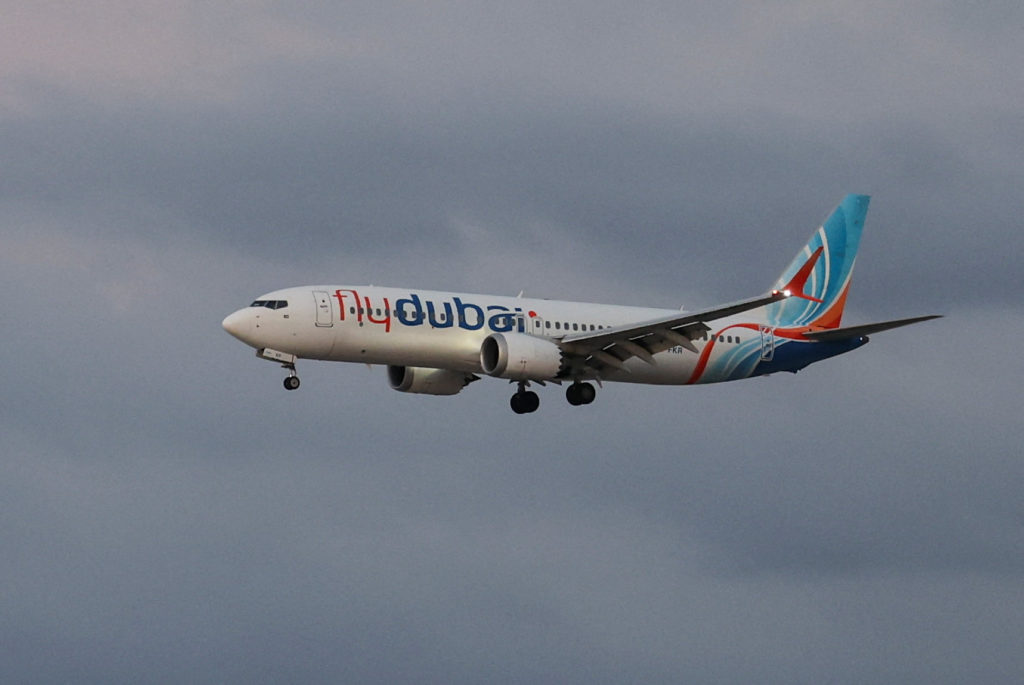
DUBAI – At 34,000 feet over the Middle East, a routine Wednesday morning flight from Dubai to Tel Aviv suddenly became an aviation emergency that exposed one of the industry’s most difficult security vulnerabilities.
The threat, according to Israeli officials, did not come from a passenger trying to break into the cockpit.
It allegedly came from one of the pilots already inside it.
The first officer of flydubai flight FZ1073 allegedly attacked the captain during the flight and attempted to seize control of the Boeing 737 MAX 8, triggering a struggle that ended with passengers entering the cockpit and off-duty pilots taking control of the aircraft.
The plane, carrying 174 passengers including 27 children, eventually landed safely at Tabuk in Saudi Arabia.
Everyone survived.
But the extraordinary sequence of events that reportedly brought the aircraft safely to the ground has opened a much larger debate about aviation security.
For decades, airlines and regulators have concentrated on keeping potential attackers out of cockpits. FZ1073 raises the opposite question: what happens when the potential threat is already behind the reinforced door?
The first sign that something was wrong
Flight-tracking data shows FZ1073 departed Dubai at about 03:05 UTC on 30 September and climbed normally towards its cruising altitude of approximately 34,000 feet.
Then something changed.
At around 05:21 UTC, the aircraft began descending rapidly. It subsequently climbed again before entering another sharp descent and eventually stabilising at a much lower altitude.
The emergency signals from the cockpit were equally alarming.
At approximately 05:28 UTC, the aircraft transmitted transponder code 7700, the internationally recognised signal for a general emergency.
Minutes later, it switched briefly to 7500.
That code has a very specific meaning in international aviation: unlawful interference.
The aircraft subsequently returned to 7700 as it diverted towards Tabuk.
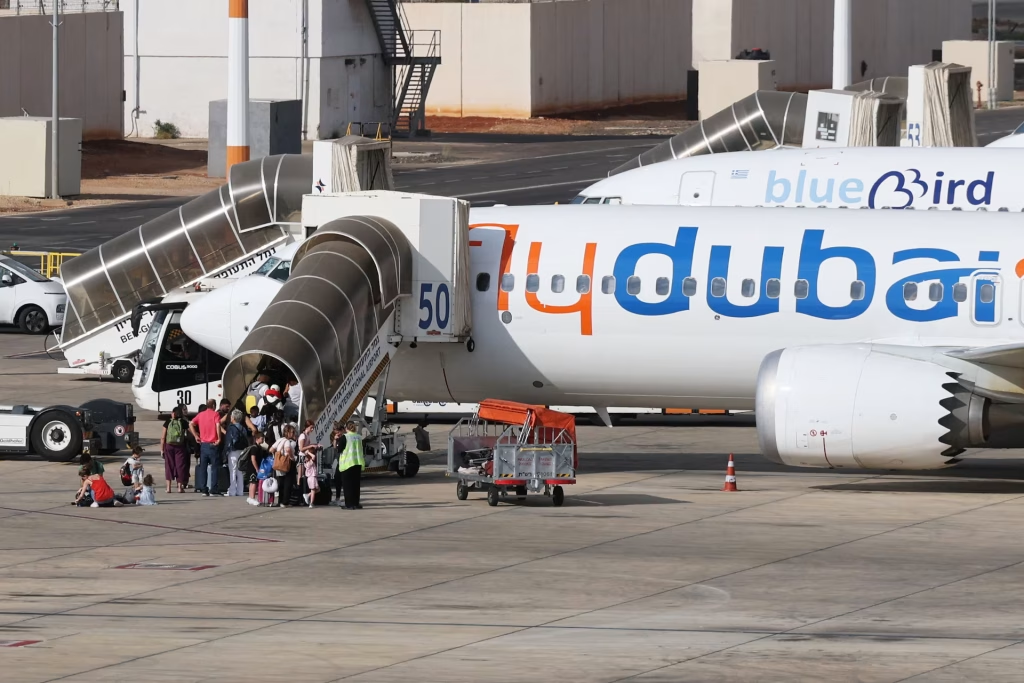
After briefly entering Jordanian airspace, the Boeing turned towards northwestern Saudi Arabia.
The precise severity of the aircraft’s movements remains disputed. CNN, citing flight-tracking information, reported that the aircraft lost about 17,400 feet in less than two minutes. Israeli officials have given a somewhat different account of the descent.
Those differences will be for investigators to reconcile.
For the passengers, however, there was little ambiguity about what they experienced.
“We just felt the plane drop completely and start spinning a little,” passenger Mika Bauman told CNN, describing adults screaming and children crying as the aircraft suddenly lost altitude.
At about 06:45 GMT, FZ1073 landed safely at Tabuk.
Only then did the extraordinary events allegedly unfolding behind the cockpit door begin to emerge.
The captain who reportedly opened the door
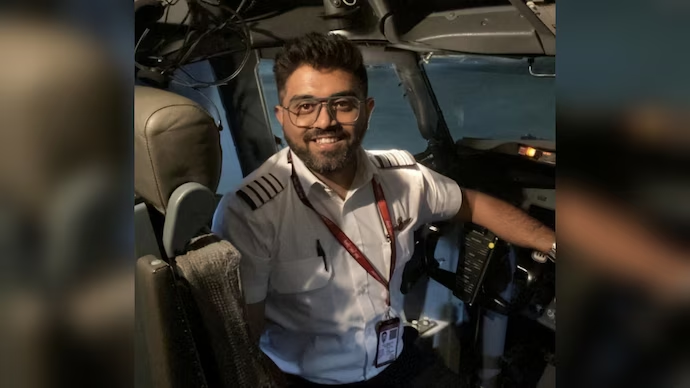
The captain has been identified as Smit Machchhar, an Indian national living in Dubai with his wife and two children.
According to published accounts, Machchhar spent about 11 years with SpiceJet before joining flydubai in 2022 and has accumulated nearly 9,750 flying hours.
Israeli officials allege that the first officer attacked Machchhar inside the cockpit.
Precisely what weapon was used remains unclear.
ALSO READ: South Africa’s Aviation Regulator Sounds Alarm as Fatal Accidents Spike
Israeli Prime Minister Benjamin Netanyahu later told CBS that the captain had been “stabbed or hit with an axe”, but neither flydubai nor Saudi investigators have publicly confirmed the weapon.
What followed appears to have been critical to the survival of those aboard.
Despite being injured, the captain reportedly managed to release the cockpit door.
Three passengers then entered the flight deck and intervened.
Passenger Yaniv Hayun has been identified in media reports as one of those who helped restrain the first officer, reportedly placing him in a chokehold before he was removed from the cockpit.
Then came another extraordinary stroke of fortune.
Qualified off-duty pilots were travelling among the passengers.
They were able to take control of the aircraft and help bring it safely into Tabuk.
Without them, aviation experts have warned, the outcome could have been very different.
Machchhar was taken to hospital in Saudi Arabia, where he has been recovering from his injuries.
Indian Prime Minister Narendra Modi subsequently praised him, saying India was proud of the captain.
A podcast interview recorded in 2025 and resurfaced after the incident offers an eerie insight into Machchhar’s approach to flying.
He said delays mattered far less to him than ensuring passengers left his aircraft safely.
On Wednesday, that principle was tested in circumstances few pilots could ever expect to encounter.
What do we know about the first officer?
Far less has been established publicly about the man accused of attacking him.
An Israeli official identified the first officer as an Omani national. He was detained after the aircraft landed in Saudi Arabia.
CNN, citing an Israeli official, reported that he had been employed by flydubai for about eight months.
There has been no official public disclosure of his flying hours, training history or the circumstances leading up to the incident.
More importantly, no motive has yet been established publicly by investigators.
That distinction matters.
Netanyahu initially said it was too early to determine whether the incident was a targeted attack or whether Iran was involved.
He subsequently alleged that the first officer had undergone “Islamist radical indoctrination”. Other Israeli officials and media reports have also advanced theories about his possible motivations.
US President Donald Trump publicly speculated about whether the pilot was a terrorist or mentally unstable.
None of those characterisations should be treated as an investigative finding.
flydubai has adopted a markedly more cautious position, confirming an altercation in the flight deck while urging against premature speculation.
Until Saudi and UAE investigators establish what happened and why, the alleged motive remains exactly that: an allegation.
How did an Omani pilot end up on the Tel Aviv route?
Another question has quickly moved to the centre of the investigation.
Why was an Omani national allegedly operating a flight into Israel?
Oman does not have diplomatic relations with Israel.
Israeli officials have said foreign airlines operating into the country are subject to security requirements governing flight crews, and authorities are examining whether the first officer was eligible to operate the route and whether he may have held another passport.
Israeli media have reported conflicting claims about the arrangements governing flydubai crews operating to Tel Aviv.
Those questions will require documentary answers from regulators.
The UAE’s General Civil Aviation Authority has primary regulatory oversight of flydubai, including licensing and medical requirements applying to its flight crews.
Commercial pilots are subject to extensive qualification and recurrent assessment requirements, including appropriate licences, aircraft type ratings and medical certification.
But the FZ1073 incident raises a difficult question that aviation has confronted before.
How much can screening actually predict?
A medical examination or security assessment can establish whether someone meets required standards at a particular point in time.
It cannot necessarily predict how that person will behave months or years later.
That is why investigators will be interested not only in the first officer’s qualifications, but potentially in his employment history, medical records where legally accessible, training performance, security vetting and whether any warning signs had previously been reported.
The problem aviation spent decades trying to solve
After the September 11 attacks in 2001, aviation security changed fundamentally.
Cockpit doors were reinforced. Access procedures became stricter. Security screening intensified. Airlines and governments built layers of protection intended to make it extraordinarily difficult for an unauthorised person to seize control of an aircraft.
Those measures addressed an obvious vulnerability exposed by 9/11: attackers gaining access to pilots and taking control of aircraft.
But reinforced cockpit doors create a different challenge when the threat originates inside.
The most devastating example came on 24 March 2015.
Germanwings flight 9525 was travelling from Barcelona to Düsseldorf when first officer Andreas Lubitz locked the captain out of the cockpit and deliberately flew the Airbus A320 into the French Alps.
All 150 people aboard were killed.
French investigators subsequently examined failures surrounding Lubitz’s medical history and the systems intended to identify whether pilots were fit to fly.
The case forced regulators and airlines around the world to reconsider cockpit access, psychological assessment and pilot mental health.
Another extraordinary case occurred in 1994 aboard FedEx Express Flight 705.
An off-duty employee travelling aboard the cargo aircraft attacked the three flight crew members with hammers and a speargun. Despite suffering serious injuries, the crew fought back, regained control and landed the aircraft safely in Memphis.
FZ1073 is different from both incidents.
But the underlying question is familiar.
How does aviation protect an aircraft when someone trusted with access to the flight deck becomes the danger?
A diplomatic puzzle at 34,000 feet
The incident also created an unusual geopolitical problem.
flydubai is based in the United Arab Emirates, which established diplomatic relations with Israel through the Abraham Accords.
The flight was travelling to Tel Aviv.
The alleged first officer is reportedly Omani.
And the emergency ended in Saudi Arabia, a country that does not have formal diplomatic relations with Israel.
Saudi authorities suddenly found themselves responsible for an aircraft carrying a large number of Israeli passengers after one of the most serious aviation-security incidents in recent years.
Passengers subsequently praised the treatment they received from Saudi authorities.
Israel reportedly sought to send military transport aircraft to collect its citizens, but the passengers ultimately returned aboard a replacement flydubai aircraft. Some passengers were initially reluctant to board another flight operated by the airline.
The UAE has also opened an investigation.
Because flydubai is a UAE carrier and the aircraft is registered there, Emirati authorities have a direct interest in determining what happened aboard the flight.
Saudi Arabia, meanwhile, controls the physical evidence, witnesses and suspect immediately following the emergency landing.
Israel wants answers because the aircraft was bound for Tel Aviv and most of those endangered were travelling there.
Three jurisdictions therefore have pieces of the same puzzle.
Why this matters far beyond the Middle East
For African travellers, FZ1073 is not a distant aviation story.
Gulf airlines have become critical arteries connecting African cities with Asia, Europe and the Middle East.
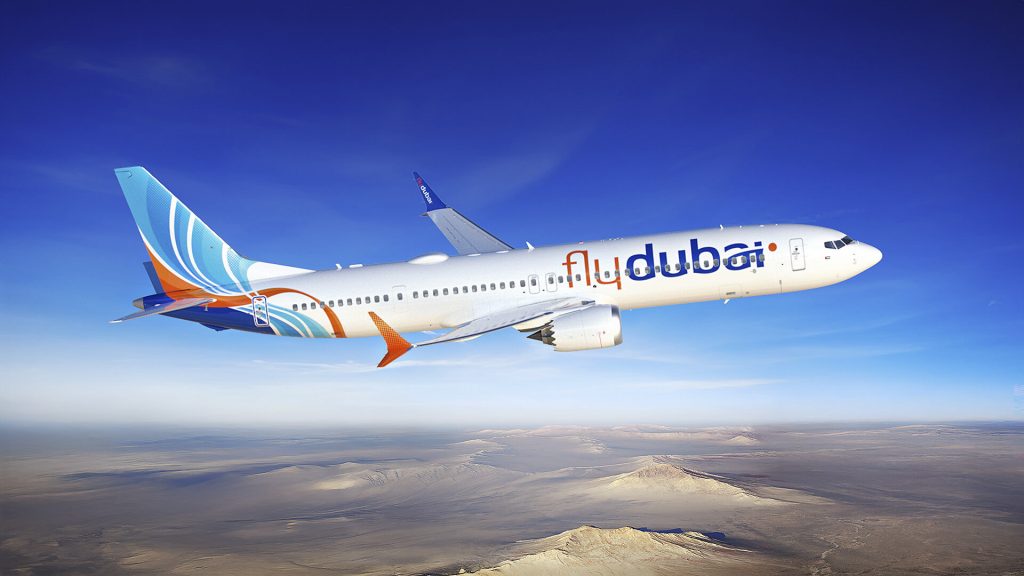
flydubai alone operates a network spanning more than 125 destinations, while its workforce includes people from more than 140 nationalities.
That international workforce is one of modern aviation’s strengths.
Every day, pilots of different nationalities, religions and backgrounds operate safely together across political borders.
The lesson from FZ1073 should therefore not be that multinational crews themselves constitute a security risk.
The more important question is whether aviation’s systems for selecting, monitoring and supporting flight crew remain adequate throughout a pilot’s career.
Initial vetting is only one layer.
Medical certification is another.
ALSO READ: In Africa, The Cost Of Jet Fuel Is Changing Faster Than You Can Fly
Recurrent training, peer reporting, mental-health support, fatigue management, security assessment and a workplace culture in which concerns can be raised safely are others.
The same questions matter to African regulators and airlines.
Africa’s aviation industry operates within the same global system. Its passengers board the same aircraft types, connect through the same international hubs and depend on many of the same regulatory assumptions about the people sitting behind cockpit doors.
The investigation must now separate fact from speculation
There is still much that is unknown about FZ1073.
Investigators must establish precisely what happened between the captain and first officer.
They must determine what caused the aircraft’s violent changes in altitude.
They need to establish why the 7500 transponder code was selected, who selected it and under what circumstances.
They must determine whether the first officer deliberately attempted to endanger the aircraft.
They must establish what weapon, if any, was used.
And they must determine motive.
Until those questions are answered, political statements and media reports should not be confused with investigative findings.
What is already clear is that FZ1073 ended very differently from the worst-case scenario.
The aircraft landed.
The passengers survived.
An injured captain reportedly managed to open the cockpit.
Passengers were prepared to intervene.
And qualified pilots happened to be sitting on the other side of the door.
That combination may ultimately prove to have saved 174 passengers and everyone else aboard.
But aviation safety cannot depend on coincidence.
The reinforced cockpit door was designed to keep a threat out.
Flight FZ1073 has forced the industry to confront the much harder question of what happens when the threat may already be inside.