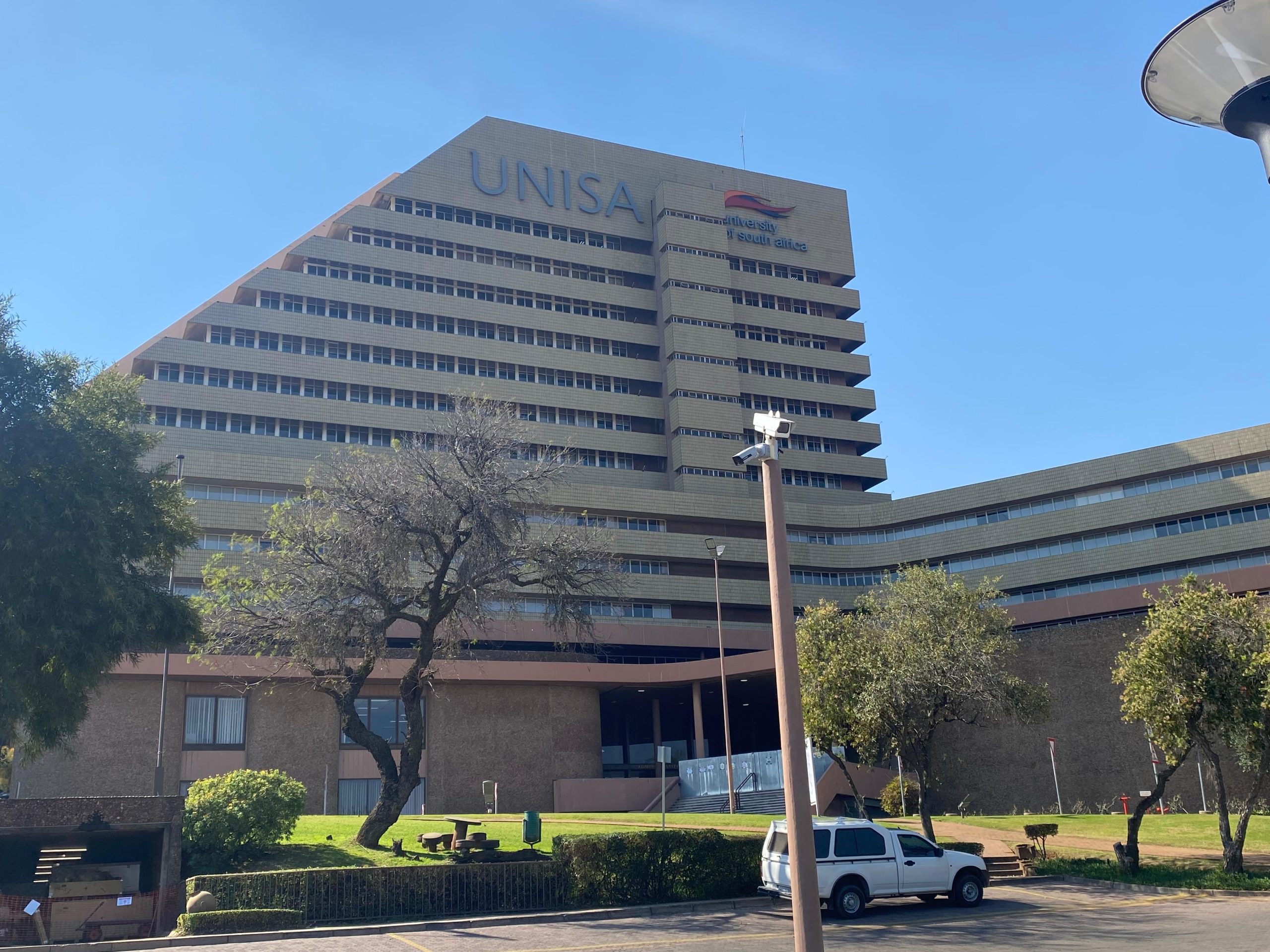
PRETORIA – Perched on Pretoria’s Muckleneuk Ridge, the University of South Africa (Unisa) has grown into one of the world’s largest universities, providing higher education to more than 370,000 students across South Africa, the African continent and beyond.
According to the university’s published figures, Unisa awards nearly 13% of all degrees conferred by South Africa’s 26 public universities and universities of technology, making it the country’s largest producer of graduates.
As Africa’s leading Open Distance and e-Learning (ODeL) institution, Unisa has transformed access to higher education through a network of seven regional campuses, 28 learning centres across South Africa and an international campus in Ethiopia.
Its story stretches back more than 150 years.
Founded in 1873 as the University of the Cape of Good Hope (UCGH), Unisa is South Africa’s oldest dedicated distance education institution and one of the pioneers of correspondence education worldwide. Established through an Act of the Cape Colony Parliament and modelled on the University of London, the institution initially functioned as an examining body rather than a teaching university. It set academic standards and conducted examinations for affiliated colleges, laying the foundations for a higher education system that would evolve dramatically over the following century.
Over time, the institution transformed from a colonial examining authority into a university committed to expanding access to learning for students from every corner of South Africa and, eventually, the rest of the continent.
READ MORE: Government Moves to Take Over Univen as R163 Million Scandal Forces Top Executives Out
Retired Research Professor Andrew Manson says the institution’s transformation into the University of South Africa in 1916 marked one of the defining moments in its history. Following the formation of the Union of South Africa in 1910, the university became a federal examining body supporting teaching colleges across the country before relocating to Pretoria in 1918 under its new name.
Manson notes that the university reflected the realities of colonial South Africa, having been established to meet the Cape Colony’s growing educational and economic needs.
“Numerous colleges, such as the South African College and Stellenbosch Gymnasium, laid the foundations for higher learning in the region, ultimately leading to the establishment of a university that could respond to an evolving educational landscape,” Manson said.
Although Unisa was established to broaden educational opportunities, its history is closely intertwined with South Africa’s political and social evolution. Many institutions it once examined, including what later became the University of Cape Town and Stellenbosch University, eventually gained independence, prompting Unisa to redefine its own role as a teaching institution.
A watershed moment came in 1946 with the establishment of the Division of External Studies. The move made Unisa the first public university in the world to teach exclusively through distance education, revolutionising access to higher learning by enabling students to study regardless of where they lived.
The milestone, however, unfolded during the apartheid era, adding complexity to the university’s legacy. During this period, Unisa regulated syllabi and examinations for racially segregated colleges, reflecting the contradictions of operating within an unequal education system while simultaneously expanding access through distance education.
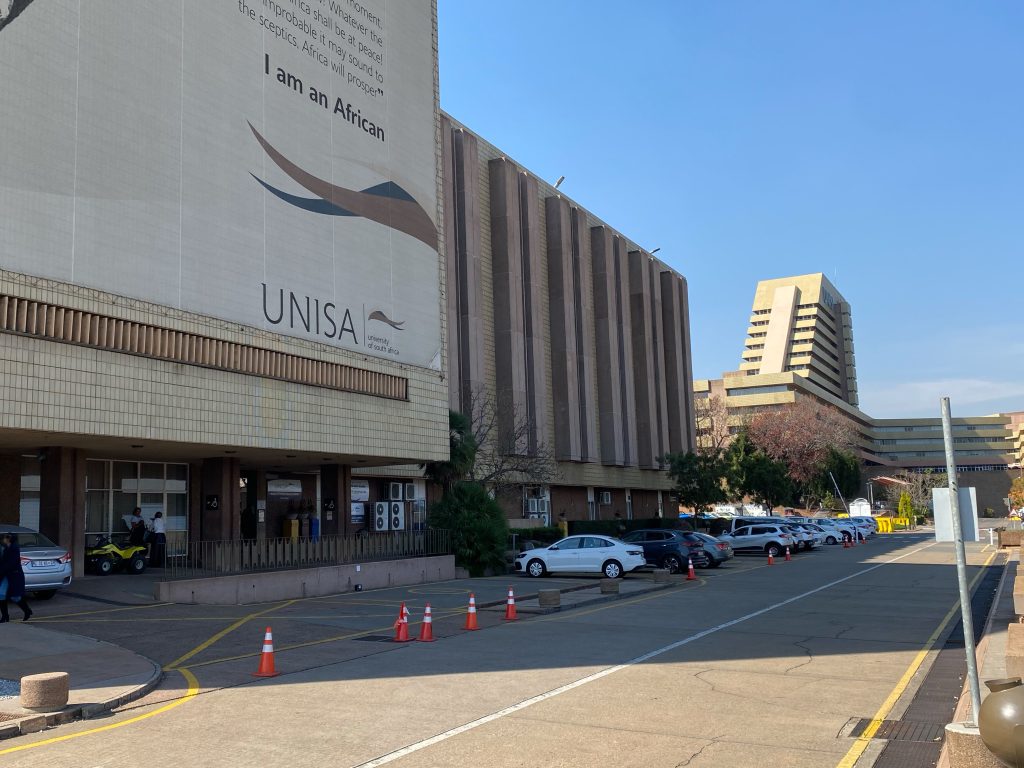
Despite these constraints, historians point out that Unisa remained one of the few South African universities to enrol students of all races throughout apartheid, largely because its distance-learning model operated outside the traditional residential university system.
Over the decades, Unisa continued to adapt as South Africa underwent profound political change, from colonial rule and apartheid to democracy and the transformation of the country’s higher education sector.
One of the institution’s most significant milestones came on 1 January 2004, when it merged with Technikon South Africa and incorporated the distance education campus of Vista University. The merger created the modern comprehensive university known today, bringing together three distinct institutional traditions: a traditional university, a technically focused technikon and a distance-learning institution that had primarily served black township communities.
Manson says the university was also shaped by nationwide student movements demanding affordable and accessible higher education.
“These movements culminated in former President Jacob Zuma’s 2017 announcement introducing fee-free higher education for qualifying students. That decision reignited debate about the history of South African universities and the role they should play in a democratic society,” he said.
Announced on 16 December 2017, shortly before the ANC’s 54th National Conference, the policy committed government to funding tuition, accommodation, meals and study materials through grants for qualifying students from households earning less than R350,000 annually. The decision followed years of #FeesMustFall protests that swept across university campuses from 2015 and came despite the Heher Commission concluding that South Africa did not yet have the fiscal capacity to provide free higher education for all.
READ MORE: UFH Vice-Chancellor Placed on Precautionary Suspension Pending Disciplinary Process
Today, Unisa remains one of South Africa’s most influential higher education institutions under the leadership of Principal and Vice-Chancellor Professor Puleng LenkaBula, who became the first woman to hold the position when she assumed office in January 2021. In December 2024, the university’s Council reappointed her for a second five-year term, effective from 1 January 2026.
The university’s continental footprint also continues to expand. Its Ethiopia Regional Learning Centre in Addis Ababa, established in 2007, had produced more than 1,160 graduates, including over 600 doctoral graduates, by the end of 2025. Unisa has identified the centre as a strategic hub for further growth across Eastern Africa.
More than 150 years after its establishment, Unisa’s history mirrors South Africa’s own journey through colonialism, apartheid, democracy and transformation. From its beginnings as an examining body to its emergence as one of the world’s largest distance-learning institutions, the university has continually reinvented itself to meet changing educational needs.
As it looks to the future, Unisa faces the challenge of preserving its remarkable heritage while responding to the demands of a rapidly evolving higher education landscape. For millions of alumni whose qualifications have unlocked careers, leadership opportunities and social mobility across Africa and beyond, the university’s enduring legacy is one of resilience, transformation and the life-changing power of education.