Under the new policy, Eswatini agreed to receive the men, despite no evidence of previous ties between the individuals and the Southern African nation.

In a controversial turn for U.S. immigration enforcement, the Department of Homeland Security (DHS) this week confirmed that a deportation flight carrying individuals from five countries, Vietnam, Jamaica, Laos, Cuba, and Yemen, landed in Eswatini, a small landlocked nation in Southern Africa.
The flight marks one of the first applications of a newly revived third-country deportation policy, greenlit by a recent U.S. Supreme Court ruling that expands the government’s power to deport individuals to nations with which they have no prior connection.
Who Was Onboard?
According to DHS officials, the flight included five men convicted of serious criminal offences, including child rape, murder, aggravated assault, and robbery. The United States attempted to deport each individual to their respective home countries, but those nations refused to accept them, prompting the U.S. to find an alternative destination.
That destination was Eswatini.
READ MORE: Eswatini Contractors Demand Inclusion in E2.5 Billion AfDB Project
Under the new policy, Eswatini agreed to receive the men, despite no evidence of previous ties between the individuals and the Southern African nation.
The removals follow a 6–3 U.S. Supreme Court decision in late June that overturned previous lower court rulings. Those rulings had required the government to give migrants facing third-country deportation both adequate notice and an opportunity to contest the removal based on potential harm.

With those protections stripped away, the Trump administration is moving swiftly to deport individuals, particularly those with serious criminal records, even if it means sending them to unfamiliar countries.
The administration argues the policy is necessary for national security and public safety. Critics, however, say it erodes fundamental legal rights and could expose vulnerable people to serious harm.
ICE’s New Deportation Guidelines
A July 9 internal memo from U.S. Immigration and Customs Enforcement (ICE) Acting Director Todd Lyons outlines the government’s updated deportation protocol. Under the new rules:
- Deportees must receive at least 24 hours’ notice, although this can be reduced to six hours in “urgent cases.”
- Deportees must be allowed to consult an attorney—but not necessarily to challenge the removal in a full hearing.
- The receiving country must formally state it won’t persecute or torture the individual, but no formal agreement is required before deportation proceeds.
- ICE officers are given broad discretion in enforcing the policy.
| Country of Origin | Conviction | Reason for Deportation to Eswatini |
| Vietnam | Child rape | Home country refused re-entry |
| Jamaica | Murder, robbery, weapons offenses | Refused entry |
| Laos | Murder, drug offenses | Refused entry |
| Cuba | Murder, aggravated battery | Refused entry |
| Yemen | Homicide, assault, abuse | Refused entry |
Why Eswatini?
Eswatini has no history of formal migration or deportation agreements with the United States. Its inclusion as a third-country destination suggests that U.S. authorities are actively expanding partnerships with nations willing or pressured to receive deportees denied by their countries of origin.
So far, Eswatini has not issued a public statement on the matter.
READ MORE: A Country Of Extremes: Do Better To Make Eswatini Thrive
Legal experts and human rights advocates have raised alarms over the legality and ethics of the new deportation framework. They argue it bypasses due process, offers minimal safeguards, and exposes individuals to the risk of mistreatment in countries where they have no ties or support systems.

“This policy removes vital protections and could put countless lives at risk,” said the National Immigration Litigation Alliance in a statement responding to the Supreme Court’s decision.
Critics are especially concerned about the lack of individualised risk assessments and the drastically shortened notice periods, often less than a day, which make legal intervention nearly impossible.
A Broader Debate
The Trump administration has defended the policy as necessary for protecting American communities and reducing costs associated with long-term detention of individuals who cannot be returned home.
Civil rights organisations and immigration advocacy groups are expected to continue mounting legal challenges, arguing that deportations to third countries not only violate international human rights norms but also reflect a broader erosion of immigrant protections under the current administration.
As the first wave of third-country deportations begins, all eyes will be on the U.S. government and on Eswatini to see how this high-stakes policy unfolds, and what it will mean for the people caught in its path.
This is not the first time that a Western country has opted to send undesired individuals to an African nation. The United Kingdom has also found itself at the centre of debate over its plan to send immigrants to Rwanda.
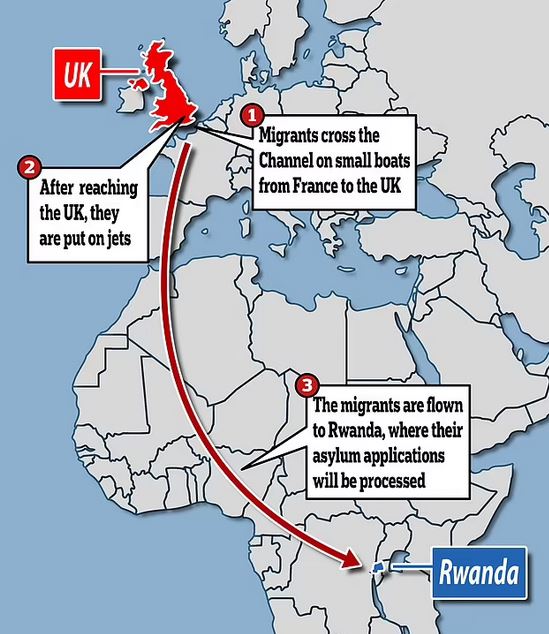
The United Kingdom’s ambitious and controversial plan to deport certain asylum seekers to Rwanda for processing and resettlement has become one of the most debated immigration policies in recent British history.
Announced in April 2022 by then-Prime Minister Boris Johnson, the Migration and Economic Development Partnership (later termed the UK-Rwanda Asylum Partnership) proposed sending migrants who entered the UK “illegally”, particularly those crossing the English Channel, to Rwanda, where their asylum claims would be assessed. The stated goal was to deter dangerous crossings and dismantle smuggling networks.
Under the agreement:
- Asylum seekers relocated to Rwanda would have no right to return to the UK.
- If granted refugee status in Rwanda, individuals could live there permanently; others might be redirected elsewhere or repatriated.
- The UK committed £120 million toward Rwanda’s economic transformation and integration fund, alongside paying relocation and support costs.
- The partnership was signed for an initial five-year term, with accommodations and processing facilities arranged in Kigali.
Legal and Political Challenges
From the outset, the policy faced intense legal scrutiny and widespread criticism. The first scheduled deportation flight in June 2022 was halted by an injunction from the European Court of Human Rights, highlighting concerns about the legality and ethics of forcing people to seek asylum in a third country without direct ties.
In November 2023, the UK Supreme Court unanimously ruled the scheme unlawful, citing Rwanda’s poor human rights record and systemic asylum flaws. The Court expressed concern that genuine refugees could be subjected to refoulement and return to danger, violating both UK and international laws protecting vulnerable individuals.
READ MORE: Africa Must Unshackle Itself from the Chains of Bureaucracy to Thrive
To circumvent this ruling, the former UK government passed the Safety of Rwanda (Asylum and Immigration) Act in April 2024. This legislation sought to designate Rwanda legally as a “safe third country” and limit the ability of courts to intervene in deportation decisions, effectively overriding parts of the Human Rights Act and related protections. However, this move drew fierce backlash domestically and internationally.

Opposition parties, refugee advocates, human rights organisations, and international bodies such as the UNHCR condemned the policy as “dangerous,” “cruel,” and in violation of global asylum norms. Critics pointed out that:
- Rwanda’s designation as “safe” ignored documented human rights concerns.
- The policy risked denying asylum seekers due process and greater protection.
- It failed to address root causes of migration and would merely shift asylum responsibilities.
Proponents in the UK government defended the plan as a necessary deterrent to irregular migration and lifesaving by disrupting people smuggling operations. Yet, the scheme never achieved operational success; no refugees were ever deported to Rwanda due to continuous legal stalemates and logistical hurdles.
International Responses
The UN High Commissioner for Refugees repeatedly warned that the scheme violated international refugee law and undermined global solidarity on refugee protection. Human rights groups highlighted documented reports of maltreatment and systemic challenges in Rwanda’s asylum system.
Following a UK general election in mid-2024, the new Labour government under Keir Starmer swiftly scrapped the Rwanda asylum plan. Labour criticised it as ineffective, deporting less than 1% of Channel arrivals, inhumane and legally flawed. Instead, the party pledged to pursue a fairer asylum system and diplomatic agreements with the European Union for better-managed returns.
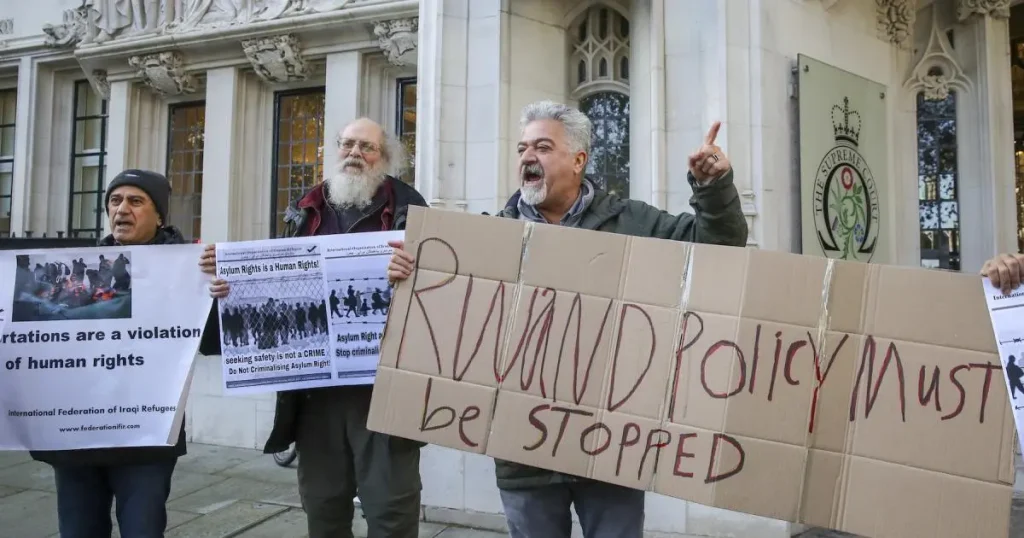
UK legislation formally repealed the Safety of Rwanda Act and corresponding parts of the Illegal Migration Act in May 2025, affirming the government’s break with the previous administration’s approach.
Why Was the Policy Controversial?
| Issue | Explanation |
| Legal & Ethical Concerns | Risk of refoulement, potential violations of international refugee law, lack of judicial safeguards |
| Effectiveness | Failed to deter irregular migration, risked shifting refugee crises elsewhere without resolving root causes |
| Financial Costs | Substantial funds spent without any asylum seeker transfers, raising questions about taxpayer money impact |
| Human Rights | Rwanda’s poor track record raised fears over adequate protection and treatment of asylum seekers |
The UK-Rwanda asylum policy serves as a significant case study in the limits of externalising asylum responsibilities and highlights the complex balance between border control, humanitarian protection, and legal commitments.
While developed to stem irregular migration, it ultimately failed due to legal constraints, ethical challenges, and a lack of political consensus. The debate continues to influence migration policies across Europe and beyond, shaping how wealthy nations engage with global refugee protection obligations.