On Wednesday, July 16, 2025, a volcano erupted once again on Iceland’s Reykjanes Peninsula in the southwest of the island nation, marking the twelfth eruption in the region since geological activity resumed in 2021.
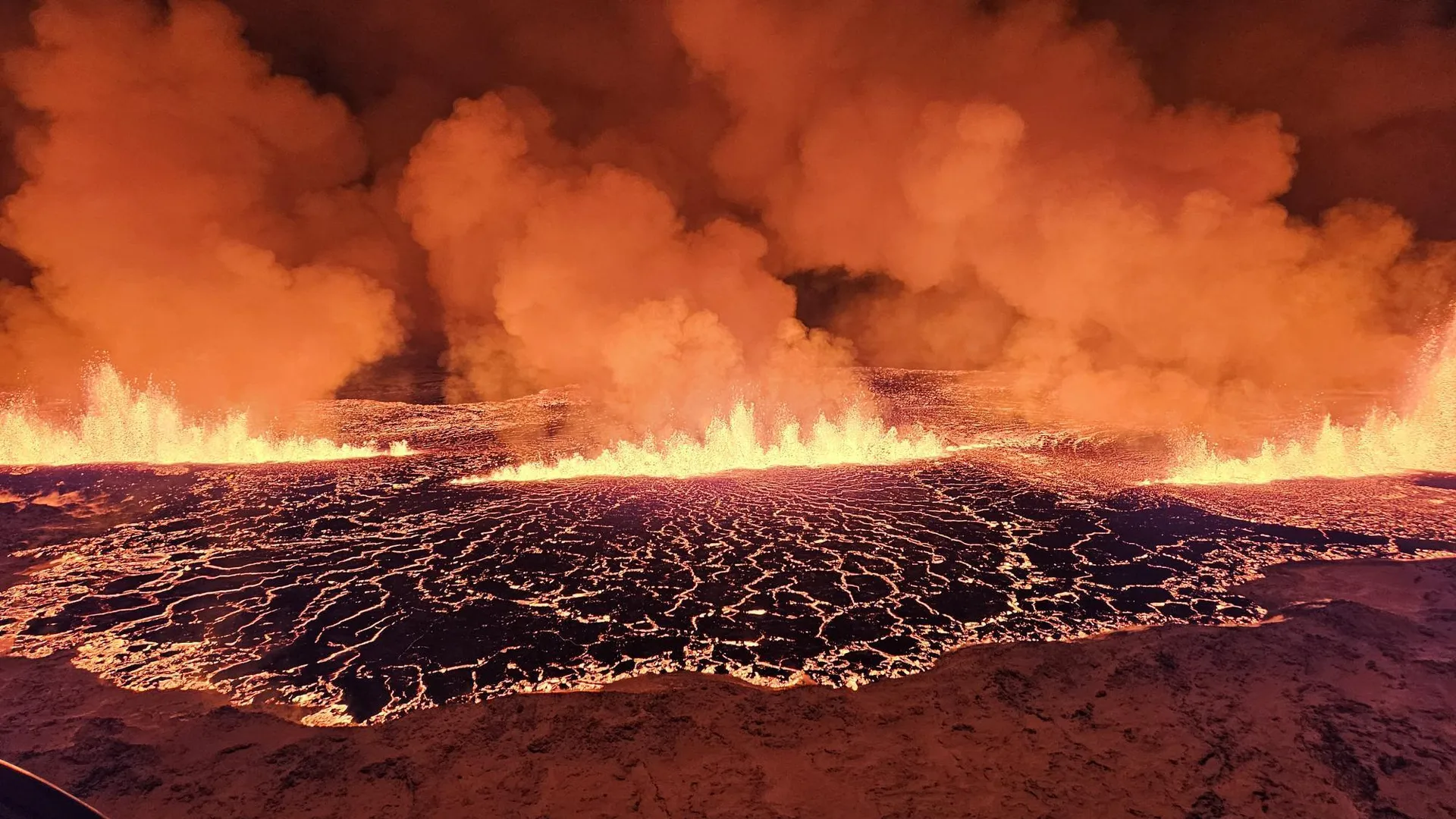
Live footage and reports showed dramatic columns of smoke and glowing lava flows lighting up the night sky, continuing a persistent period of volcanic activity near the country’s capital, Reykjavik.
The Icelandic Meteorological Office (IMO) confirmed that magma pushed through the Earth’s crust, opening a fissure estimated to be between 700 and 1,000 meters (0.4 to 0.6 miles) long along the Sundhnúksgígar crater row near Litla-Skógfell. This fissure eruption, characterised by lava flowing from long cracks rather than a single crater, sent molten rock southeastwards across the barren landscape.
ALSO READ: Texas Floods: A Devastating Disaster
Despite the impressive natural spectacle, authorities reassured that the eruption “does not threaten any infrastructure at this time.” Based on GPS deformation data and surface measurements, the IMO described it as a relatively small eruption. Key infrastructure, including Keflavik International Airport, remained unaffected, and flights continued without disruption.
Precautionary Evacuations and Community Impact
As a precautionary measure, the nearby town of Grindavík, once home to nearly 4,000 people before a 2023 evacuation order due to volcanic threats, remains largely deserted. Authorities also evacuated guests from the internationally renowned Blue Lagoon geothermal spa resort and surrounding hotels, ensuring safety as lava flows advanced.
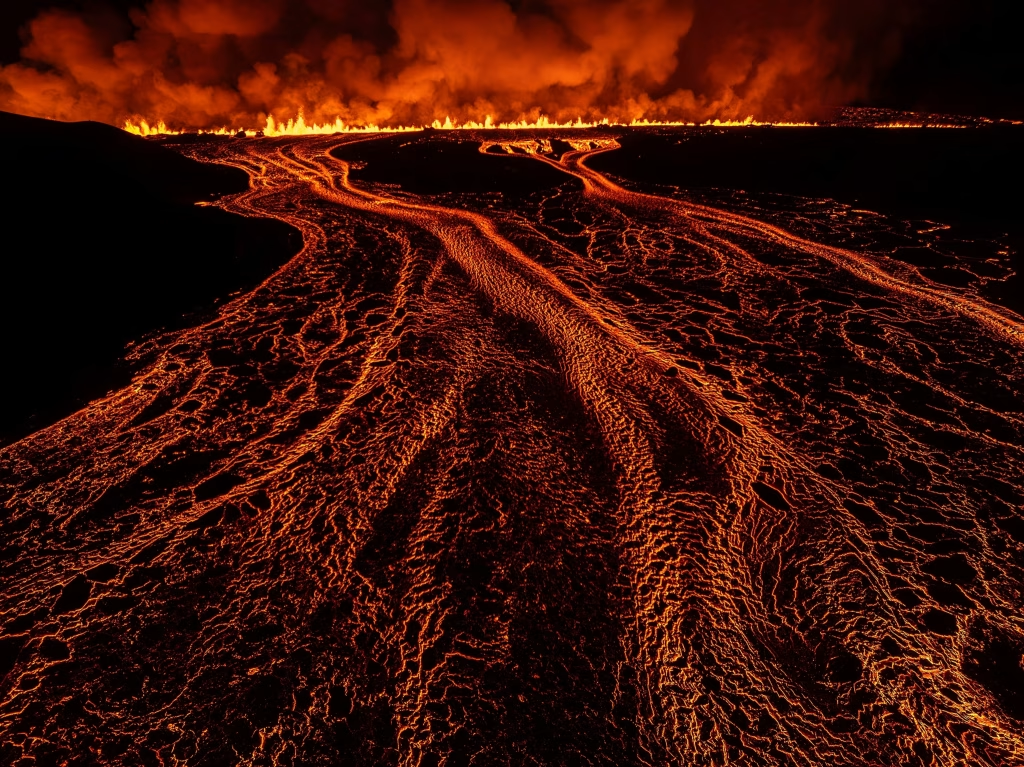
Emergency services continue to monitor the fissure closely, ready to respond to any changes in lava direction or intensity.
Gas emissions from the eruption are drifting northwest, expected to affect areas such as Reykjanesbær, Vogar, Sandgerði, and Garð, with residents advised to take precautions against air pollution.
A Volcanic Landscape in Constant Flux
Often called the “land of ice and fire,” Iceland is renowned for its glaciers and volcanic activity. The Reykjanes Peninsula, dormant for approximately 800 years before 2021, has now produced a dozen eruptions over four years, indicating a prolonged phase of geological unrest. Experts suggest this could continue for decades or even centuries, with episodic eruptions reshaping the landscape.
The recent eruption follows a series of seismic swarms, thousands of earthquakes recorded before the fissure opened, underscoring the complexity of monitoring volcanic hazards in Iceland.
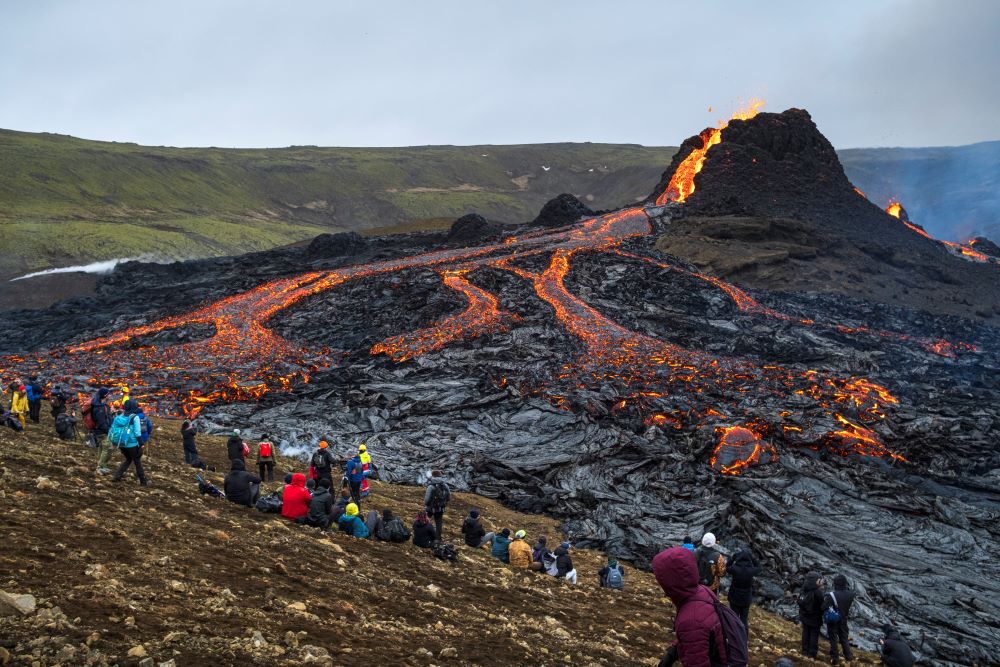
Authorities have emphasised that Iceland remains safe as these eruptions predominantly occur in uninhabited areas. Transport networks, tourism activities, and flights have so far not been disrupted by volcanic ash clouds or lava flows.
ALSO READ: G7 to Impose Tough Sanctions on Migrant Smugglers Amid Mounting Tragedies
The ongoing natural events illustrate the volcanic dynamism inherent to Iceland’s position on the Mid-Atlantic Ridge and highlight the country’s robust emergency preparedness systems that prioritise public safety.
Key Facts:
- Location: Sundhnúksgígar crater row, Reykjanes Peninsula, Iceland
- Fissure length: 700–1,000 meters (0.4–0.6 miles)
- Lava flow direction: Southeast
- Population affected: Nearby town Grindavík evacuated since 2023, Blue Lagoon resort guests relocated
- Flights and infrastructure: Unaffected, no significant ash emissions reported
- Number of eruptions on Reykjanes since 2021: 12
Iceland’s continued volcanic activity serves as a vivid reminder of the island nation’s geological heritage and the resilience of its communities and infrastructure in adapting to nature’s volatile forces.