
In a conference hall in Zambia’s capital last week, government officials from across Africa gathered not to debate policy, but to learn how to use artificial intelligence.
Their goal was to master the tools that could help deliver Agenda 2063, the African Union’s sweeping plan for a prosperous, integrated, and self-reliant continent.
The five-day workshop, supported by the African Development Bank through its Joint Secretariat Support Office, was the fifth of its kind. This year’s focus was on how AI can transform the way countries track and report progress on the Second Ten-Year Implementation Plan of Agenda 2063, which runs from 2024 to 2033.
ALSO READ: AI Job-Hunting App Finds Work—Even While You Sleep
Hosted jointly by the African Union Commission and the African Capacity Building Foundation, the training drew participants from across the Union’s member states. They spent the week experimenting with platforms like Ailyse, ChatGPT, Google AI Studio, Google Gemini, and Perplexity, learning how to apply them to the often complex task of monitoring national development goals.
“This is not just about technology for technology’s sake,” said Abibu Tamu, Lead Programme Co-ordinator at the Bank. “These tools are revolutionising how data is collected, analysed, and reported. They allow for sharper, evidence-based decision-making and more efficient use of resources.”
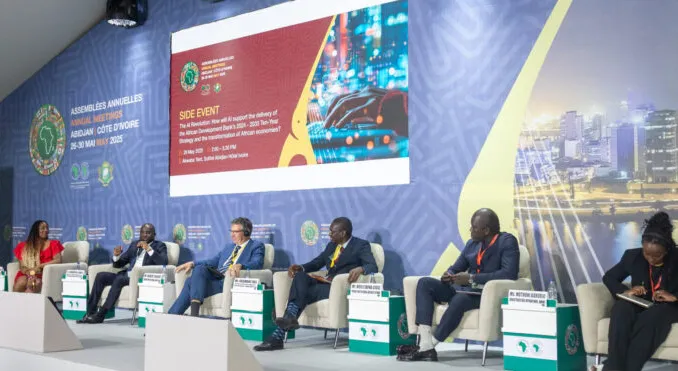
The African Development Bank’s involvement, Tamu said, is part of a broader commitment to strengthening results-based planning and accountability within the AU’s framework. The hope is that better monitoring will not only keep Agenda 2063 on track but also help governments respond more effectively to changing realities on the ground.
In practical terms, that could mean faster recognition of where agricultural programmes are failing and need intervention, or identifying regions where infrastructure projects are stalled and require extra funding. AI tools can scan vast amounts of data in seconds, something that used to take teams of analysts weeks and highlight trends that might otherwise go unnoticed.
ALSO READ: Is There a Digital Afterlife?
For delegates, the workshop was also a chance to compare notes with their peers. Countries shared lessons from their own experiences, from using AI to track school attendance in rural areas to employing machine learning for early-warning systems in disaster-prone zones.
Agenda 2063, launched in 2015, sets out Africa’s long-term development priorities over 50 years. Its ambitions are broad, from boosting trade and industrialisation to ending poverty and ensuring access to basic services for all. But its architects have always stressed that to succeed, it needs not just political will, but accurate, timely data and the capacity to act on it.
The Lusaka training is one step toward building that capacity. As one participant from West Africa put it during a coffee break: “If we want to reach 2063, we have to start by knowing exactly where we stand today and AI can help us see the map more clearly.”