
By Professor Grace Khunou
PRETORIA – As South Africa marks Women’s Month, it is worth reflecting on the position of women in research and knowledge production.
Since 1994, the number of girls and women progressing through the education system has grown steadily. By Grade 12 and into higher education, women now outnumber men. While the declining participation of boys and men in education remains a concern, the progress made by women is encouraging.
Yet this progress is not reflected equally in higher education leadership and research.
According to the 2024 Status of African Women in Research report, women account for only 33.5% of researchers in Africa. Globally, women make up about 33% of the research workforce. These figures raise an important question: why are women still underrepresented in research when they make up more than half of South Africa’s population?
The answer is not simply about numbers.

According to Statistics South Africa, women account for more than 51% of the country’s population. Their representation in research therefore matters not only because women are the majority, but because their experiences and perspectives can shape the questions researchers ask, the knowledge they produce and the solutions they propose.
Women continue to bear a disproportionate share of many of society’s challenges, yet issues affecting them remain under-researched and under-resourced.
UN Women has highlighted growing justice gaps affecting women around the world, including inequalities in legal frameworks, social norms, policy and implementation. When women are not adequately represented among those setting research agendas, their lived experiences risk being overlooked in the development of evidence, policies and solutions.
These inequalities are also reflected within institutions such as universities, where women continue to face barriers to equal participation in knowledge production.
There has been progress, but it remains too slow.
READ MORE: South Africa’s Unemployment Crisis Is A National Emergency
The National Research Foundation’s Breaking the Glass Ceiling report on women’s publication trends shows that the contribution of female authors to scientific articles increased from 31.1% in 2005 to 36.8% in 2020. Yet women hold only about 20% of engineering research capacity, while the increase in the representation of Black female authors in the health sciences has been particularly limited.
To understand why women remain underrepresented, we also need to examine how knowledge itself has historically been defined and who has been regarded as a credible knowledge producer.
In her work on women’s leadership in South African higher education, Tau argues that the colonial histories of African universities continue to influence who occupies key knowledge-development roles. The Western university model, she suggests, was imported into Africa with assumptions that positioned men as the primary occupants of academic and intellectual spaces.

This historical legacy continues to shape contemporary research.
Women remain underrepresented in STEM disciplines, while men continue to dominate among leading scholars, NRF-rated researchers and research chair holders.
This is not a reflection of women’s ability. Rather, it points to structural barriers that continue to favour men.
Workload models, research funding requirements, access to mentorship and institutional research support can all influence who has the time, resources and networks needed to build a successful research career. When these systems do not adequately account for gendered realities, women are placed at a disadvantage.
Women’s experiences of everyday life are also shaped by persistent expectations about gender roles. Responsibilities outside the workplace, including care work and family responsibilities, can affect the time and opportunities available to women to publish, secure funding, attend conferences, build research networks and pursue leadership positions.
Universities and research institutions have introduced various programmes aimed at addressing these inequalities, including targeted funding and initiatives to increase the participation of women in research. These interventions remain important.

As research funding priorities shift towards emerging areas such as artificial intelligence, however, gender mainstreaming must not be treated as an outdated priority.
Investment in new research fields should go hand in hand with continued investment in women researchers. Otherwise, there is a real risk that women will once again be left behind in an increasingly competitive knowledge economy.
There are signs of progress.
READ MORE: Too Few Vets, Too Many Outbreaks: South Africa’s FMD Challenge
According to the NRF, the number of women researchers increased from 673 in 2020 to 878 in 2024. Support for women’s research increased from 1,318 to 1,489 during the same period, while the number of female postdoctoral scholars increased from 280 to 391. South African women also contributed 42% of national research in 2024, compared with 41% in 2023.
These figures are encouraging, but they should not create a false sense of achievement.
The question is not whether progress has been made. It has. The question is whether the pace of change is fast enough.
If South Africa is serious about building a research system that reflects its population and responds to its most pressing social challenges, women must be supported not only to enter research but to lead it.
That requires sustained funding, stronger mentorship and sponsorship, equitable workload policies, greater access to research infrastructure and deliberate pathways into academic and research leadership.
It also requires universities and research institutions to examine the structures that determine who gets opportunities, recognition and resources.
Women cannot simply be invited into research spaces that were designed without them. Those spaces must also change.
The future of South African research depends on who gets to ask the questions, whose experiences shape those questions and who has the resources to pursue the answers.
Women must be at the centre of that future.
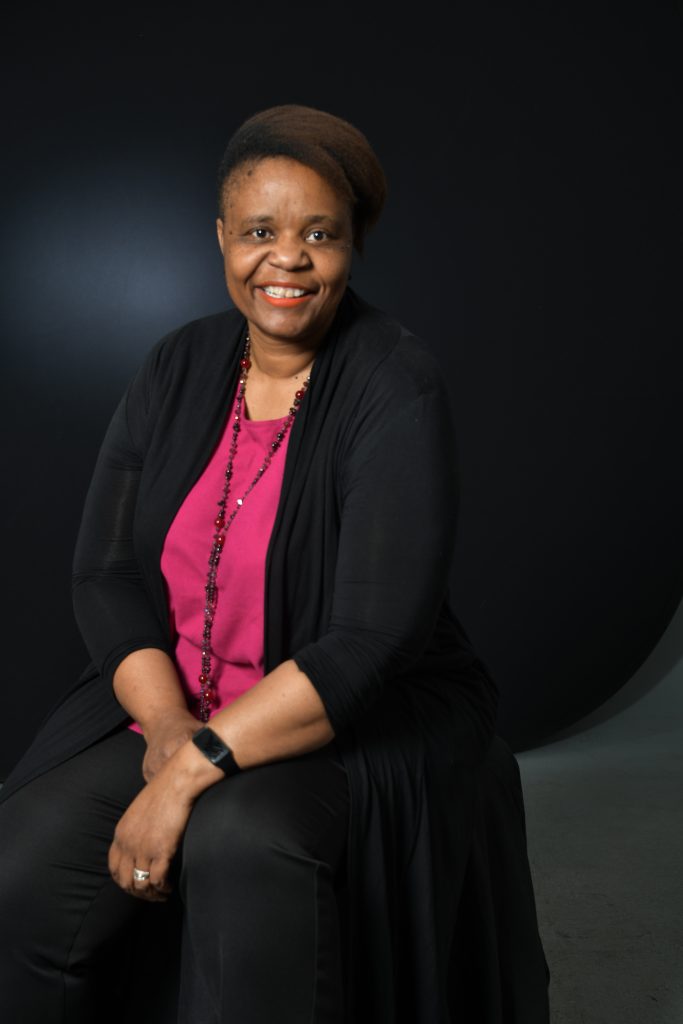
Professor Grace Khunou is Executive Director: Leadership and Transformation at Unisa. The views expressed are her own and do not represent those of the publication.