JOHANNESBURG – The most unsettling aviation-security question arising from the FlyDubai FZ1073 incident is not simply what happened on board the aircraft. It is more fundamental: what happens when the person entrusted with operating an aircraft becomes part of the threat?
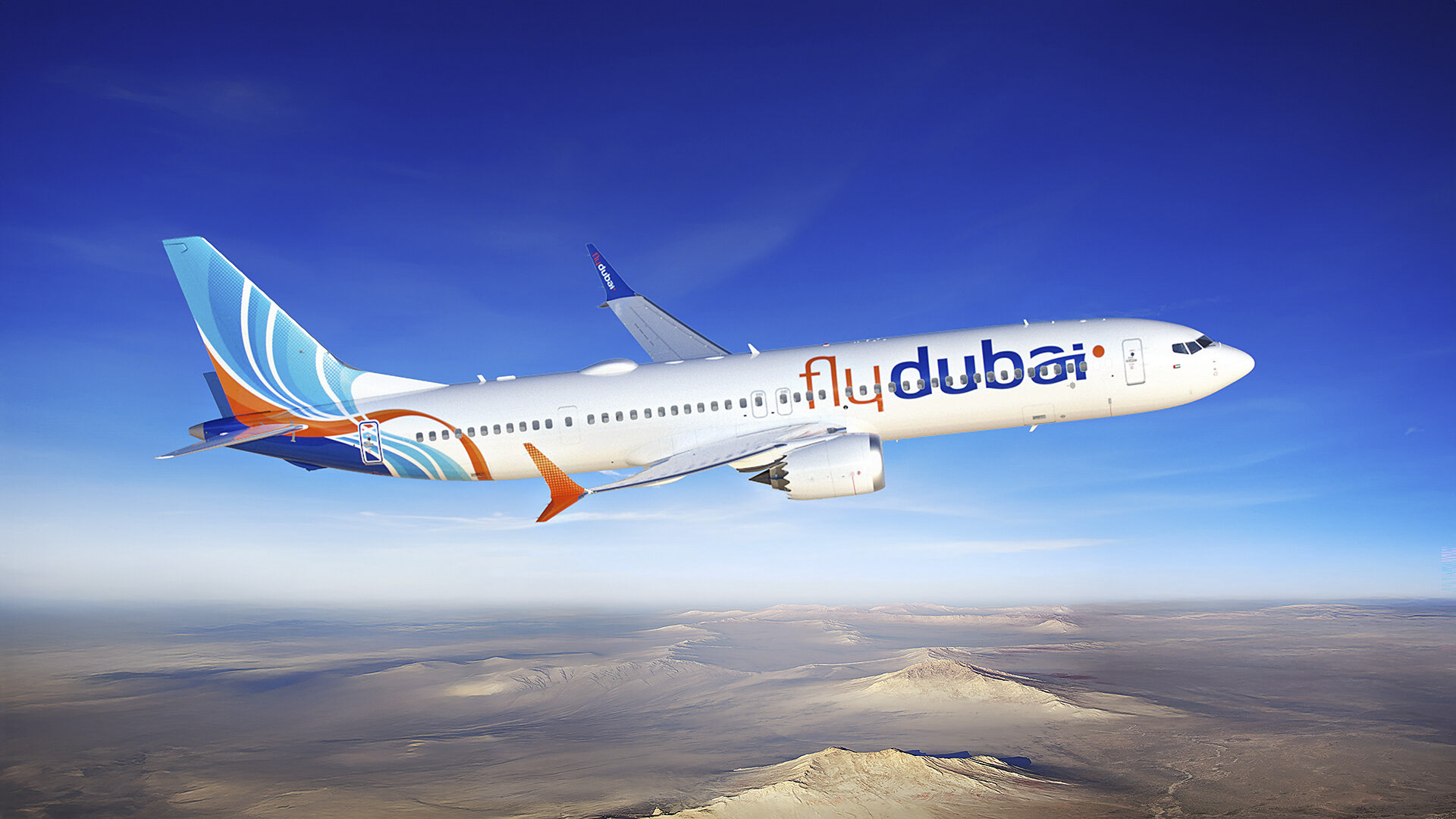
On 30 September 2026, FZ1073, a FlyDubai Boeing 737 MAX 8 flying from Dubai to Tel Aviv, diverted to Tabuk, Saudi Arabia, following an incident in the flight deck.
During the flight, the aircraft transmitted transponder code 7700, indicating a general emergency, followed briefly by 7500, the internationally recognised code for unlawful interference, before returning to 7700.
The aircraft subsequently landed safely.
FlyDubai has confirmed that an altercation occurred in the flight deck and that the crew secured the aircraft before diverting. Fortunately, two off-duty pilots were reportedly travelling as passengers on the flight. Saudi authorities have opened an investigation.
Reports about precisely what happened have varied. Israeli officials have alleged that the co-pilot attacked the captain and attempted to take control of the aircraft, while initial reports described the incident more generally as a confrontation between the pilots.
Those allegations must remain distinct from facts until investigators determine exactly what happened.
But even at this early stage, FZ1073 raises important questions for aviation safety and security.
How 9/11 changed the cockpit
The first concerns how aviation security changed after the attacks of 11 September 2001.
Before 9/11, the prevailing response to hijacking was largely based on accommodation.
The US Federal Aviation Administration’s so-called “Common Strategy”, developed from decades of experience with hijackings, rested on an assumption that hijackers generally had negotiable demands. The priority was therefore to avoid confrontation, accommodate demands where possible, land the aircraft safely and allow authorities on the ground to resolve the situation.
The 9/11 Commission later found that this approach was fundamentally unsuited to suicide hijackings.
September 11 shattered the underlying assumption.
An aircraft could no longer be viewed simply as a vehicle carrying passengers whose safe landing remained the hijacker’s presumed objective. The aircraft itself could become the weapon.
Passengers aboard United Airlines Flight 93 demonstrated that changed reality when they attempted to retake control of the aircraft after learning what had happened to other hijacked flights that morning.
The aviation-security architecture that emerged after 9/11 consequently placed far greater emphasis on preventing unauthorised cockpit access, reinforcing flight-deck doors, improving intelligence and security screening, and preparing crews for threats that could no longer be managed through accommodation alone.
FZ1073 potentially presents a different problem.
What happens when the threat does not have to breach the cockpit door because it may already be on the flight deck?
When decisions must be made in seconds
Based on the information currently available, the people aboard FZ1073 faced an extraordinary situation.
They had to assess a potential threat in real time, with incomplete information, while travelling thousands of metres above the ground.
There was no opportunity to wait for investigators to establish the facts.
Someone had to decide whether the situation was serious enough to justify intervention.
Someone had to communicate what was happening.
ALSO READ: Ethiopia Begins $12.5 Billion Construction of ‘Africa’s Biggest Airport’
Someone had to act.
And those decisions had to be made knowing that an incorrect assessment or intervention could itself have catastrophic consequences.
This is where human factors and crew resource management become central to aviation safety.
Whatever investigators ultimately establish, the safe outcome appears to have depended on people recognising that something was seriously wrong, communicating, responding to the situation and ultimately getting the aircraft safely onto the ground.
That is where procedures, training and human judgement meet reality.
The threat aviation security talks about less
The incident also exposes an important gap in the way we think about aviation security.
The industry has rightly devoted considerable attention to unruly and disruptive passengers. International and national legal regimes have evolved in response to passenger misconduct, supported by regulation, criminal prosecution and litigation.
International Civil Aviation Organization training and guidance also address unruly passengers, threat levels and the legal consequences of disruptive behaviour aboard aircraft.
But what happens when the person creating the safety or security risk is a member of the crew?
That question deserves far greater attention.
This is not an entirely new category of risk. Aviation history contains cases in which the conduct or condition of flight crew members has become central to an accident or serious incident.
What FZ1073 does is bring the question back into focus from a security perspective.
Universities and aviation researchers should be asking difficult questions about the human architecture of flight: mental health and wellbeing among crews, fatigue and stress, early-warning systems for human-factor failures, reporting mechanisms capable of identifying concerns before they become safety events, and legal regimes equipped to respond appropriately when the conduct of a crew member threatens an aircraft.
Crew resource management must also continue evolving to account for circumstances in which the normal assumptions of cooperation and shared responsibility inside the cockpit suddenly break down.
This is not about treating pilots as suspects
There is an important distinction to make.
Recognising the possibility of an internal threat is not an argument for treating pilots or other crew members as potential criminals.
Pilots operate within one of the world’s most heavily regulated professions. They undergo extensive training, medical assessments, recurrent checks and continuous evaluation precisely because aviation depends on exceptionally high standards of human performance.
The overwhelming majority carry that responsibility professionally and safely every day.
But aviation safety is built on identifying risks even when those risks are rare.
People remain at the centre of the system, and people can fail in complicated and sometimes unpredictable ways.
ICAO and the wider aviation industry increasingly recognise the safety implications of fatigue, stress, psychological wellbeing and other human factors among aviation personnel.
The challenge is to develop systems capable of identifying serious risks without creating a culture in which aviation professionals fear seeking help or reporting concerns.
That balance matters.
A punitive system can drive problems underground. An inadequate system can allow warning signs to go unnoticed.
Neither serves aviation safety.
The cockpit door solved one problem, not every problem
One of the most visible security changes after 9/11 was the reinforced cockpit door.
Its purpose was straightforward: prevent unauthorised people from gaining control of an aircraft.
That remains essential.
But FZ1073 raises a different question about resilience.
Aviation security cannot focus only on keeping dangerous people outside the cockpit. It must also ask whether the systems operating inside the cockpit are sufficiently resilient when something goes wrong between those already entrusted with the aircraft.
What procedures exist when cooperation between pilots breaks down completely?
How should cabin crew respond when the threat originates from the flight deck?
When should other qualified pilots travelling as passengers intervene?
How quickly can air traffic control recognise that an aircraft may be experiencing unlawful interference?
And are existing legal, medical and operational systems designed for an event in which a trusted aviation professional suddenly becomes a potential safety or security concern?
These are uncomfortable questions.
That is precisely why they need to be asked.
The role of universities
This is where universities have a particular responsibility.
Our role should not merely be to explain yesterday’s accident after investigators have finished their work.
The academy should be examining tomorrow’s failure before it happens.
That requires aviation law, aeronautical science, psychology, medicine, engineering, security studies and human-factors research to speak to one another.
It requires researchers to examine not only aircraft systems but also the people operating them and the institutional structures surrounding those people.
FZ1073 landed safely.
That matters.
Investigators must now establish precisely what happened inside the cockpit, what triggered the emergency, why the 7500 transponder code was selected, what role each crew member played and which procedures ultimately helped bring the aircraft safely to the ground.
Until that investigation is complete, speculation should not be mistaken for fact.
But the aviation community does not have to wait before asking the larger question.
What must we learn now so that the next crew confronted with an unimaginable situation has better tools, better training and stronger legal and institutional support to bring the aircraft safely home?
That may ultimately be the most important lesson Flight FZ1073 has to offer.
Professor Angelo Dube is a Commercial Pilot and Distinguished Professor in Aviation and Aeronautical Studies at Unisa’s College of Law.