JOHANNESBURG: Rio Tinto’s decision to commit US$250 million towards addressing the legacy of its former mine in Bougainville has reignited pressure on Anglo American to take financial responsibility for historical lead pollution in Kabwe, Zambia.
Action for Southern Africa (ACTSA), a UK-based solidarity organisation, says the announcement demonstrates that mining companies can contribute towards repairing environmental and social damage long after mining operations have ended.
The organisation is now challenging Anglo American to follow Rio Tinto’s example by committing substantial resources to address the devastating effects of lead contamination in Kabwe, where generations of residents continue to face serious health risks.
ACTSA director Rachel Palma Randle said Rio Tinto’s decision had set an important precedent for corporate accountability.
“Rio Tinto’s announcement sends a clear message to the world on what can be done by mining corporations to make reparations to the communities it has impacted through mining operations. It raises a question that Anglo American can no longer avoid,” she said.
“Why should the people of Kabwe continue to live with the consequences of Anglo American’s historical mining operations without a substantial contribution from Anglo American? The people of Kabwe have lived with the consequences of historical mining operations for generations. They should not be left to bear the cost of this legacy alone. Anglo American has both the resources and the moral responsibility to help put things right.”
Rio Tinto commits $250m to address mining legacy
On 16 November 2026, Rio Tinto announced an agreement with the Autonomous Bougainville Government, Bougainville Copper Limited and community leaders to establish a fund addressing the lasting environmental and social impacts of the former Panguna copper and gold mine in Papua New Guinea.
Under the agreement, Rio Tinto will contribute US$250 million over the coming years as a voluntary contribution towards environmental remediation and social programmes for affected communities.
The fund’s structure and governance arrangements will be developed in consultation with communities.
Panguna was operated by Bougainville Copper, which was then majority-owned by Rio Tinto, between 1972 and 1989. Operations were halted following an uprising that escalated into a decade-long civil war.
Rio Tinto subsequently relinquished its stake in the company in 2016.
The latest commitment follows an independent legacy impact assessment of the mine. Rio Tinto agreed to fund the assessment in 2021 after communities in Bougainville lodged a human rights complaint against the company.
Bougainville President Ishmael Toroama described the establishment of the fund as “an important step forward” for affected communities.
For ACTSA, the agreement provides a compelling example of how mining companies can contribute towards addressing the consequences of historical operations, even decades after relinquishing ownership or control.
Kabwe: A toxic legacy affecting generations
The situation in Kabwe has become one of the most serious examples of historical mining pollution in southern Africa.
The town is home to the former Broken Hill Mine, which operated from 1904 until 1994 and was once among the world’s most productive lead mines.
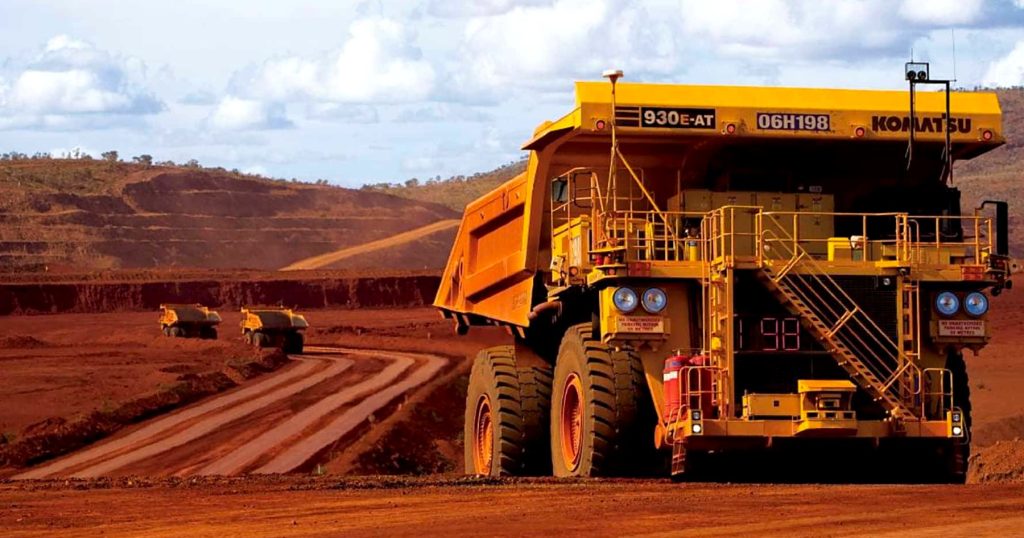
Decades after its closure, lead contamination continues to affect surrounding communities, with pollution found in soil, homes, waterways and agricultural land.
ALSO READ: Hichilema targets economy twice its size under Grow Zambia agenda
According to ACTSA:
- Soil lead levels in Kabwe are 650% above the United States Environmental Protection Agency’s regulatory hazard standard.
- More than 100 000 people continue to live with the effects of lead pollution.
- Contamination affects residential areas, waterways and farmland.
- Children and women of childbearing age face particularly severe health risks.
Lead exposure can cause serious and potentially irreversible damage, including learning difficulties, infertility and brain damage. Severe exposure can also result in death.
There is no known safe level of lead exposure.
The consequences can extend across generations. Lead stored in a woman’s bones can be released during pregnancy and passed to her developing child, exposing children to the effects of contamination even before birth.
The scale and persistence of the pollution have made the question of who should pay for remediation increasingly contentious.
The dispute over Anglo American’s historical role
At the centre of the dispute is a disagreement over Anglo American’s involvement in the former Broken Hill Mine and the extent of its operational control.
ACTSA argues that Anglo American took over the mine in 1925, was appointed its manager in 1937 and retained management and operational control until the mine was nationalised at the end of 1974.
Anglo American, however, maintains that its involvement was limited to an indirect minority shareholding of approximately 10% and the provision of technical services.
The competing accounts have become central to the campaign seeking to establish the company’s responsibility for the environmental damage.
In August 2026, ACTSA published UNDENIABLE: Anglo American’s role in the Kabwe sacrifice zone, a report researched and written by historian Duncan Money.
The organisation says the report draws on previously unpublished records from the Zambia Consolidated Copper Mines (ZCCM) archive in Ndola and presents historical evidence that challenges Anglo American’s account of its involvement in the mine.
Anglo American has previously argued that the mine was not cleaned up when it closed in 1994, approximately 20 years after its nationalisation.
The company has also maintained that ZCCM acknowledged responsibility for the mine’s historical liabilities following nationalisation.
Anglo American has repeatedly told shareholders and campaigners that it does not accept responsibility for the pollution in Kabwe.
Proposed class action puts liability before South African courts
The dispute over Anglo American’s responsibility has also moved into the South African legal system.
A proposed class action involving approximately 140 000 women and children from Kabwe has been brought against Anglo American South Africa, which headed the Anglo American group during the period in which the mine formed part of its operations.
ALSO READ: Zambia Enhances Renewable Energy Integration
The claim was instituted in South Africa because the affected communities argued that they could not obtain access to justice in Zambia.
In December 2023, the Johannesburg High Court refused to certify the proposed class action, finding that it would be unmanageable because individual claimants would have to establish that lead from the mine had caused them harm.
However, in April 2024, the same court granted the claimants leave to appeal.
Judge Leonie Windell found compelling reasons for the appeal, particularly because the law governing class actions in South Africa was still developing.
The Supreme Court of Appeal heard the matter in Bloemfontein on 3 and 4 November 2025.
The claimants’ legal representatives have argued that the dangers associated with lead exposure were known during the mine’s operational years.
They say the mine’s own doctors reported the deaths of several local children from lead poisoning in the early 1970s, alongside widespread poisoning among children in surrounding communities.
The litigation seeks to establish whether Anglo American can be held legally responsible for the harm suffered by affected residents.
ACTSA calls for Anglo American to contribute to remediation
ACTSA wants Anglo American to make a substantial financial commitment towards addressing the environmental and public health consequences of lead mining in Kabwe.
The organisation says Rio Tinto’s Bougainville agreement demonstrates that companies can acknowledge and contribute towards addressing historical mining damage, rather than leaving affected communities and governments to carry the financial burden.
Anele Gcwabe, ACTSA’s Campaigns and Communications Officer, said the organisation wanted Anglo American to engage with affected communities and acknowledge the historical evidence surrounding its involvement in Kabwe.
“We are calling on Anglo American to acknowledge the historical evidence, engage constructively with affected communities and commit substantial resources towards addressing the environmental and public health consequences of mining in Kabwe,” Gcwabe said.
For the people of Kabwe, the issue extends beyond corporate responsibility and historical disputes over ownership and management.
It concerns the long-term health of communities living with contamination, the rehabilitation of their environment and whether companies that benefited from mining operations should contribute towards repairing the damage left behind.
ACTSA believes Rio Tinto’s US$250 million commitment has strengthened the case for Anglo American to take similar action.
The question now is whether the company will reconsider its position and contribute towards addressing one of Zambia’s most enduring environmental and public health crises.