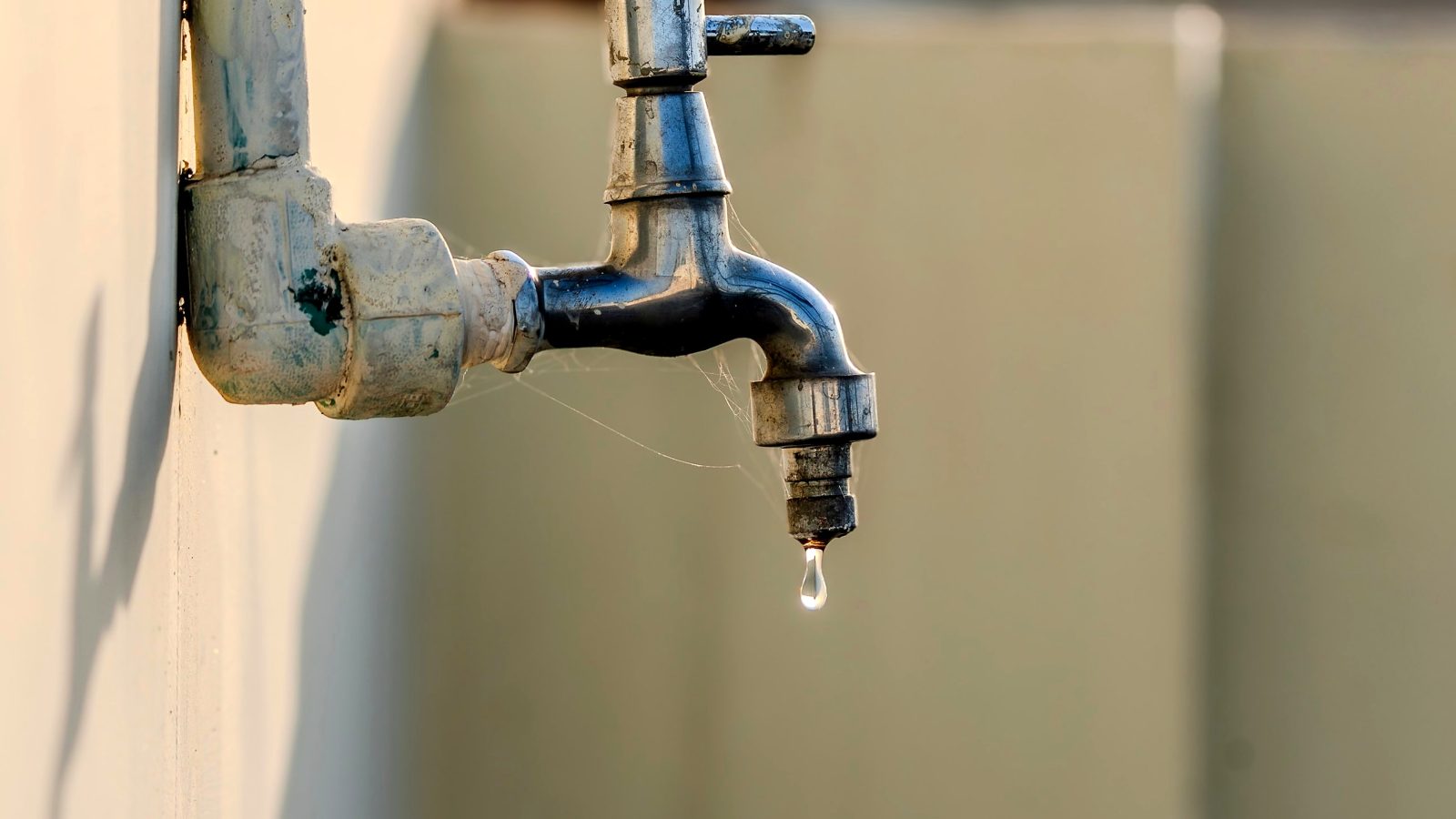
JOHANNESBURG – Gauteng’s two largest metros are tightening water restrictions as summer temperatures rise and household consumption increases, with residents facing an outright ban on garden watering using municipal water and steeper charges for higher consumption.
The City of Tshwane introduced Level 2 water restrictions on Monday, 16 November 2026, while Johannesburg will follow on Saturday, 21 November. Johannesburg’s revised Level 2 tariffs will come into effect on 1 December.
The measures follow directives from the Gauteng Department of Cooperative Governance and Traditional Affairs (COGTA), while bulk water supplier Rand Water has called on both municipalities to reduce consumption by approximately 200 megalitres, or 200 million litres, a day.
The restrictions come as the province heads into its hottest months, when household and commercial water demand traditionally increases.
Why summer puts additional pressure on water supplies
Summer is traditionally the peak period for water consumption in South Africa. Longer, hotter days mean households use more water to maintain gardens, fill swimming pools, wash vehicles and meet increased daily needs.
Businesses also consume more water, particularly for cooling buildings and maintaining outdoor spaces.
Higher temperatures contribute to evaporation from reservoirs and swimming pools, adding to pressure on supplies. When consumption rises simultaneously across thousands of households and businesses, the water system has less opportunity to recover between peak-demand periods.
The Department of Water and Sanitation (DWS) warned earlier this month that a heatwave, then entering its third consecutive week, was driving up water demand across Gauteng.
The department also warned that El Niño conditions could place additional pressure on supplies during the 2026/27 summer season.
The timing of the restrictions is therefore significant, with both metros seeking to reduce consumption before demand reaches its seasonal peak in December and January.
Full dams, but not enough treated water
Both municipalities have emphasised that the current crisis is not the result of insufficient water in the province’s dams. Instead, demand is exceeding the volume of treated water that the supply system can deliver.
Gauteng receives much of its water through the Integrated Vaal River System, a network of 14 interconnected dams.
The DWS determines how much raw water Rand Water may abstract from the system, with municipalities subsequently receiving allocations from the bulk supplier.
When a municipality consistently consumes more than its allocation, its reservoirs come under pressure. Areas at higher elevations, which depend on gravity-fed supplies, are often among the first to experience low pressure or interruptions.
Tshwane reported that its water consumption in September 2026 was approximately 34% above its permanent licence allocation and 19% above its temporary allocation.
The problem is compounded by substantial water losses through leaking pipes and other infrastructure failures.
DWS spokesperson Wisane Mavasa said this month that “non-revenue water is estimated at 47%”, with physical losses accounting for approximately 27%.
This means that a significant proportion of the water entering the distribution system is either lost before reaching consumers or supplied without generating revenue.
A year of recurring water supply problems
The introduction of Level 2 restrictions follows a difficult year for Gauteng’s water supply system.
Between late January and early February 2026, electromechanical failures at Rand Water’s Palmiet and Zuikerbosch pump stations, coupled with a major pipe burst at the Klipfontein reservoir, significantly reduced the supply of treated water.
ALSO READ: Opinion | Tshwane’s water crisis is not a new problem
Reservoir levels dropped sharply, leaving several parts of Johannesburg without water for days.
In response, Water and Sanitation Minister Pemmy Majodina approved an emergency licence on 19 February, allowing Rand Water to abstract an additional 200 million cubic metres of water annually from the Vaal system for four months, until June 2026.
The temporary intervention increased Rand Water’s allocation from 1 803 million to 2 003 million cubic metres a year.
However, the department cautioned at the time that the arrangement was “not a long-term solution”.
Pressure on the system returned as temperatures began rising towards the end of the year.
During late October and early November, residents in parts of Johannesburg, including Sandton, Midrand, Randburg, Roodepoort and Soweto, experienced another round of prolonged outages and low water pressure.
On 28 October, Johannesburg Water proposed tighter Level 1 restrictions, targeting a reduction in consumption of approximately 15%. The utility warned that Level 2 restrictions could follow if demand continued to increase.
Johannesburg Water has also indicated that approximately R30 billion is needed to address ageing infrastructure and water losses.
Johannesburg: What changes from Saturday?
Johannesburg Water announced the introduction of Level 2 restrictions on 18 November 2026.
The measures will be enforced in terms of Section 58 of the City of Johannesburg’s Water Services By-laws, 2023, and will remain in place until formally withdrawn.
The utility said the restrictions would be supported by operational measures, including repairing leaks, managing water pressure and increasing public awareness.
“Reducing unnecessary consumption will be accompanied by operational interventions, including leak repairs, and pressure management. Johannesburg Water will also conduct public education and awareness initiatives,” the utility said.
From Saturday, residents will be prohibited from using municipal drinking water to:
- Irrigate gardens, lawns, parks and public spaces at any time of the day.
- Hose down hard surfaces, including driveways, paved areas and sidewalks.
- Dampen building sand.
The new all-day garden irrigation ban is stricter than the previous Level 1 restrictions, which prohibited watering between 06:00 and 18:00.
Municipal departments will also be required to stop using drinking water to irrigate parks and gardens.
The Johannesburg Roads Agency and Johannesburg Water must use treated effluent instead of drinking water for road construction and jetting operations.
Tshwane: Level 2 restrictions already in force
Tshwane began enforcing its Level 2 restrictions on Monday, 16 November, and reiterated the measures on Tuesday, 17 November.
The restrictions include:
- A ban on watering outdoor landscaping with municipal water.
- A prohibition on filling swimming pools with municipal drinking water.
- Vehicle washing using a hosepipe is permitted only if it has an automatic self-closing device.
- Borehole users are exempt from the restrictions, but properties using borehole water for irrigation must display a clearly visible sign from a public road indicating that a borehole or another alternative water source is being used.
The municipality said the restrictions would initially remain in force for 30 days, after which they would be reviewed.
What will the restrictions cost residents?
Beyond the restrictions on how water can be used, households will face higher tariffs as the municipalities seek to discourage excessive consumption.
ALSO READ: EFF turns on coalition partner as 408 fall ill in Tshwane water contamination crisis
The new pricing structures mean that the more water a household uses, the more expensive each additional kilolitre becomes.
Johannesburg Level 2 tariffs
Effective from 1 December 2026
| Monthly consumption | Tariff per kilolitre |
| 0 to 6 kℓ | R7.80 |
| Above 6 to 10 kℓ | R37.48 |
| Above 10 to 15 kℓ | R41.51 |
| Above 15 to 20 kℓ | R59.82 |
| Above 20 to 30 kℓ | R83.57 |
| Above 30 to 40 kℓ | R90.60 |
| Above 40 to 50 kℓ | R128.72 |
| Above 50 kℓ | R165.41 |
Tshwane Level 2 residential tariffs
Scales A, B and C, already in effect
| Monthly consumption | Tariff per kilolitre |
| First 9 kℓ | Free |
| 10 to 18 kℓ | R43.20 |
| 19 to 30 kℓ | R72.66 |
| 31 to 42 kℓ | R89.72 |
| 43 to 60 kℓ | R108.01 |
Qualifying indigent households in Tshwane will continue to receive 12 kilolitres of free basic water a month.
One kilolitre is equivalent to 1 000 litres.
What could a month’s water bill look like?
Based on the published consumption tariffs, excluding fixed charges, households using larger volumes of water could face significantly higher monthly bills.
The following estimates illustrate the difference between the two municipalities:
| Monthly household consumption | Johannesburg | Tshwane |
| 20 kℓ | R703.37 | R534.12 |
| 30 kℓ | R1 539.07 | R1 260.72 |
The figures show how quickly water costs increase as households move into higher consumption bands.
For families accustomed to using large amounts of water for gardening, swimming pools and other outdoor activities, the financial impact could be considerable.
Enforcement, fines and possible supply cuts
Johannesburg says compliance with the Level 2 restrictions is compulsory and that monitoring and enforcement will be intensified.
Johannesburg Water will also implement a 20% supply reduction in areas with deemed-consumption and prepaid meters through flow management.
The City has indicated that it will seek to protect basic water supply, provide advance notice of planned interruptions and arrange alternative water supplies where interruptions last longer than 24 hours.
In Tshwane, enforcement will involve the Tshwane Metro Police Department and the Integrated Bylaw Enforcement Committee.
Officials will conduct random inspections, particularly in areas identified as having high water consumption.
Residents found violating the restrictions face fines starting at R5 000, with the possibility of criminal prosecution.
What residents can do to reduce consumption
Both municipalities are urging households and businesses to take practical steps to reduce water consumption.
Residents are encouraged to:
- Repair leaking taps, toilets and pipes as soon as possible.
- Take shorter showers.
- Use buckets rather than hosepipes when washing vehicles.
- Avoid filling or topping up swimming pools with municipal water.
- Operate washing machines and dishwashers only when they have full loads.
- Report leaking infrastructure and burst pipes to the relevant municipality.
- Use greywater to irrigate gardens where it is safe and appropriate.
With the hottest weeks of summer still ahead, the pressure on Gauteng’s water supply system is unlikely to ease immediately.
Although the province’s dams may have sufficient water, the challenge is ensuring that enough treated water reaches households and businesses without overwhelming an already strained distribution network.
For Johannesburg and Tshwane, the success of the new restrictions will depend not only on enforcement and infrastructure repairs, but also on whether residents and businesses change their consumption habits before the summer demand peak.