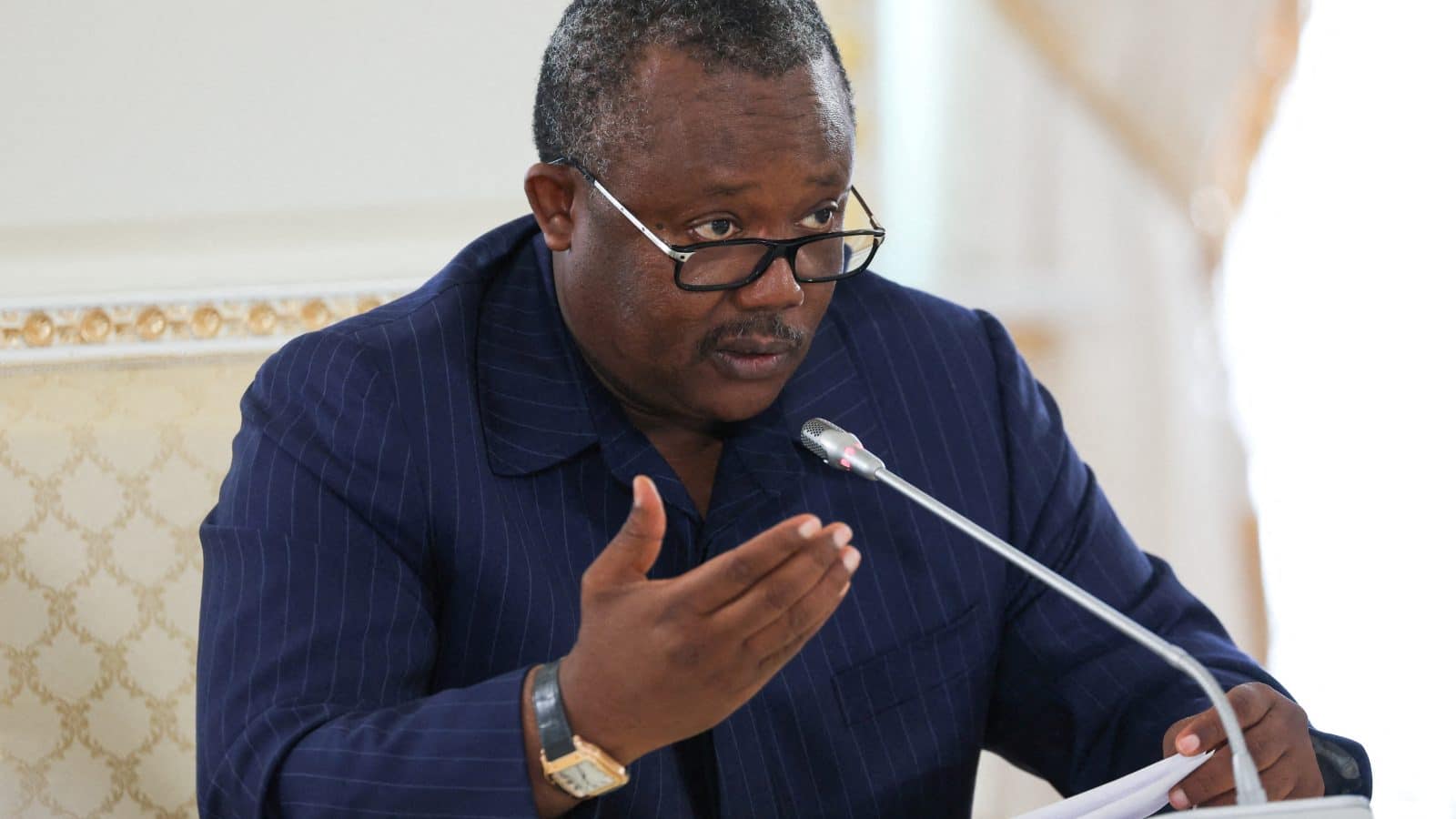
BISSAU, Guinea-Bissau – Guinea-Bissau’s military rulers have barred former president Umaro Sissoco Embaló from returning home, throwing his planned political comeback into uncertainty just over two months before elections intended to restore civilian rule.
Embaló, who has been living in Morocco since the military seized power in November 2025, had planned to return on Sunday, 4 October, and contest the presidential election scheduled for 6 December.
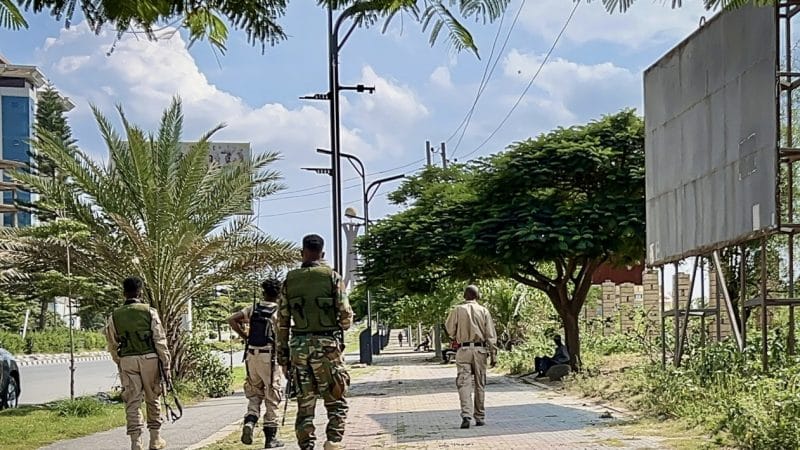
But in a statement issued on Thursday, the military high command said security conditions did not allow his return, citing national security, public order and the risk of instability.
The decision places another obstacle in Embaló’s path as he seeks to reclaim the presidency he lost when soldiers halted the country’s last electoral process before the results were announced.
A comeback under restrictions
Embaló announced his intended return earlier this week, declaring: “I will be a candidate.” He called for his homecoming to take place in an atmosphere of “harmony, tolerance and mutual respect”.
The military authorities also reaffirmed that restrictions on political demonstrations and public gatherings remain in force during the transition, limiting his supporters’ ability to organise a public reception or mobilise openly.
The ban has sharpened questions about who will be allowed to participate in December’s elections and how freely candidates will be able to campaign.
An election interrupted
The dispute has its roots in the presidential and legislative elections held on 23 November 2025.
Embaló was seeking a second term against Fernando Dias da Costa, who had the backing of Domingos Simões Pereira, leader of the African Party for the Independence of Guinea and Cape Verde (PAIGC). The historic liberation party had been barred from fielding its own presidential candidate.
Both Embaló and Dias claimed victory. On 26 November, a day before provisional results were due, soldiers seized power, suspended the electoral process and closed the borders.
General Horta N’Tam was sworn in as transitional president the following day, with the military announcing a one-year transition.
The timing fuelled allegations that the takeover had been staged to prevent the publication of results unfavourable to Embaló.
ALSO READ: Guinea-Bissau’s Transitional Military Adopts Charter Barring Leaders From Elections
Former Nigerian president Goodluck Jonathan, who was in Bissau as an election observer, described it as a “ceremonial coup”. Senegalese Prime Minister Ousmane Sonko called it a “sham”.
Dias and the Popular Front civil society coalition also accused Embaló and the military of engineering the takeover. Embaló denied the allegations.
He left for Senegal on 27 November, travelled to the Republic of Congo and later settled in Morocco.
A constitutional hurdle
Even if the military allows Embaló to return, his eligibility to contest the election remains uncertain.
A new constitution approved in an August referendum introduces a requirement that presidential candidates must have lived continuously in Guinea-Bissau for the preceding five years. His absence since November 2025 could therefore become a central issue when his candidacy is considered.
The charter also expands presidential powers, including authority to appoint and dismiss the prime minister and cabinet, while reducing parliament from 102 seats to 65 and electoral constituencies from 29 to 12.
The electoral commission reported that roughly 70% of valid votes supported the constitution, with turnout of about 60%.
Opposition coalitions PAI-Terra Ranka and API-Cabas Garandi rejected those figures, describing the referendum as fraudulent and claiming that fewer than 10% of voters had participated. They also alleged that restrictions on political activity prevented meaningful opposition campaigning and independent scrutiny.
The dispute leaves December’s polls approaching under electoral rules whose legitimacy remains contested.
ECOWAS faces renewed scrutiny
The Economic Community of West African States (ECOWAS) suspended Guinea-Bissau after the coup. The African Union followed suit.
ECOWAS initially rejected the military’s transition plan, demanded the release of political detainees and called for a short, inclusive transition. It also threatened targeted sanctions against those obstructing a return to constitutional rule.
In January, N’Tam set presidential and legislative elections for 6 December by decree, placing the vote slightly more than a year after the takeover.
By mid-year, the regional bloc was speaking more favourably about the transition. Timothy Musa Kabba, Sierra Leone’s foreign minister and chair of the ECOWAS Council of Ministers, described the election timetable and constitutional and electoral changes as encouraging steps towards restoring constitutional order.
That position drew criticism from opposition coalitions, which accused an ECOWAS mission of engaging with the military authorities while overlooking opposition leaders, including Dias, whom they regard as the winner of the interrupted 2025 election.
December vote approaches
Guinea-Bissau has endured repeated coups and attempted takeovers since independence from Portugal, with disputes between civilian leaders and the military repeatedly disrupting elected governments.
The latest confrontation brings the transition’s central question into focus: whether December’s elections will offer a credible route back to civilian government while political activity remains restricted and candidate eligibility is disputed.
It remains unclear whether Embaló will attempt to travel on Sunday despite the ban or how the authorities will rule on his candidacy.
For now, his immediate route home is blocked, and his proposed return to the presidency depends on both the military’s decision and the interpretation of the new electoral rules.