At least 20 people died after an earthquake of magnitude 7.7 and dozens of aftershocks struck off eastern Indonesia on Saturday, a rescue agency said.




By Dewi Kurniawati and Ananda Teresia
JAKARTA – At least 20 people died after an earthquake of magnitude 7.7 and dozens of aftershocks struck off eastern Indonesia on Saturday, a rescue agency said.
Tsunami waves of less than 1 metre (3 feet) were recorded in several areas of the Southeast Asian nation after the early morning tremor. The tsunami warning was lifted about three hours after the quake.
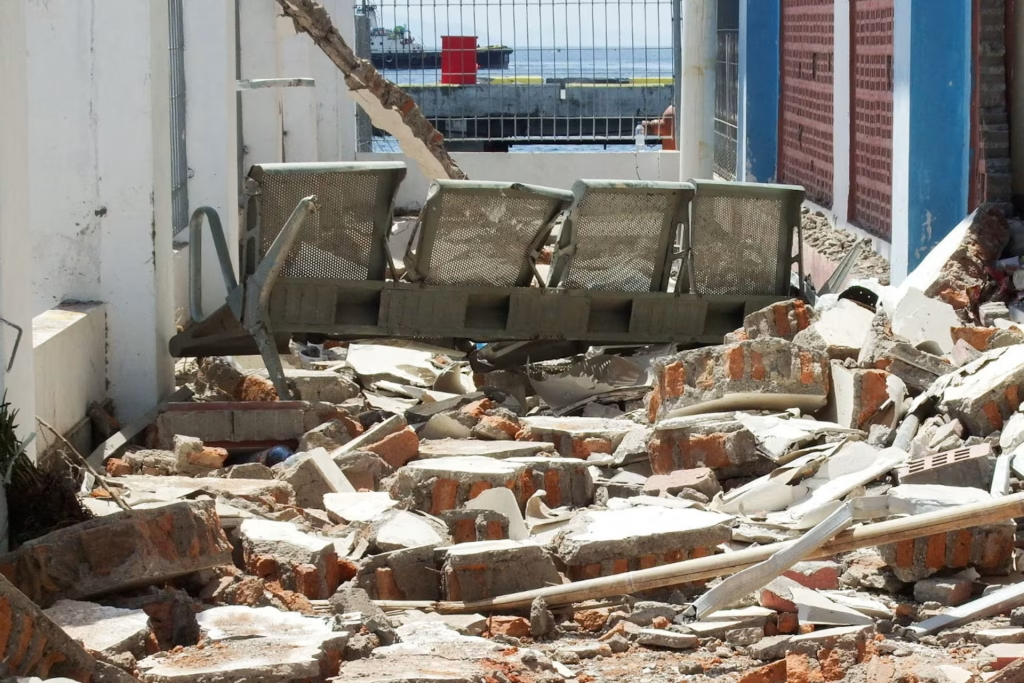
Rescuers around the port town of Maumere found 20 dead, six injured and two trapped under the rubble, said Fathur Rahman, head of the city’s rescue agency. Maumere is the main town in Sikka Regency on Flores Island in the east of Indonesia’s vast archipelago.
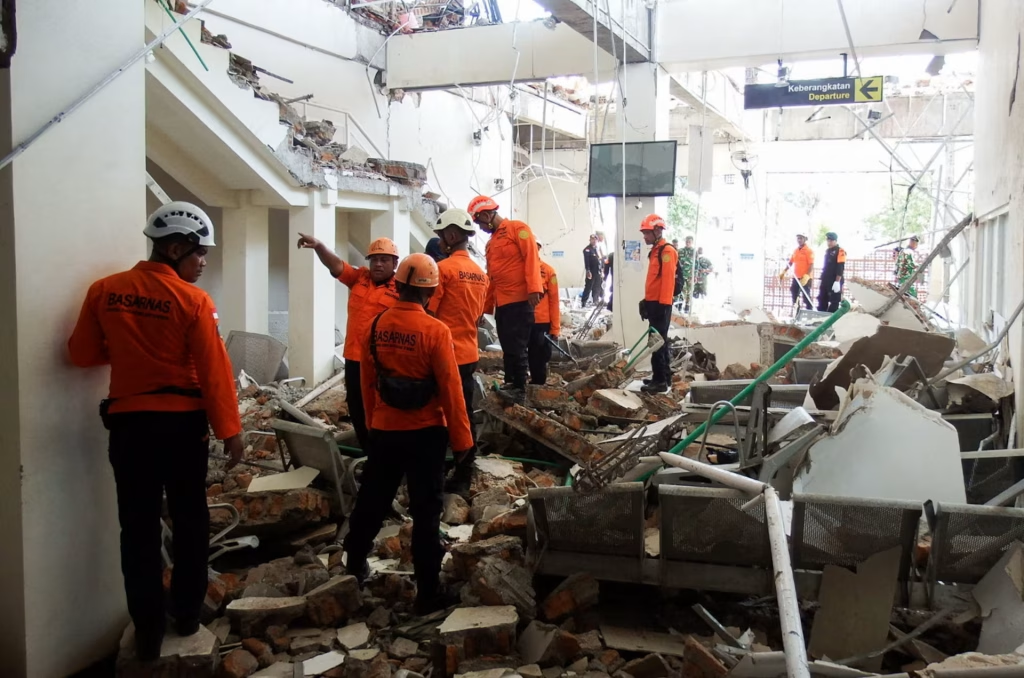
Teams have yet to reach Nagekeo, the region closest to the epicentre, and communications signals there had been affected, Fathur told Reuters. Attempts to reach Nagekeo by car were blocked by landslides, while another team was attempting to go by ferry, he said.
About 2,000 residents in Nagekeo evacuated, and damage was reported to several houses, warehouses and government facilities, national disaster mitigation agency BNPB said. Authorities also reported traffic congestion and power outages affecting parts of the regency, it said.
The governor of East Nusa Tenggara Province, Emanuel Melkiades Laka Lena, told a press conference at least five people died from collapsing rubble as they slept.
READ MORE: Powerful 7.5-Magnitude Earthquake Strikes Japan’s Northeast
The BNPB, which put the quake’s toll at one dead and four injured, said it was still gathering data.
Parts of a building collapsed into dust and rubble as people screamed and ran in the street, a video on Facebook, verified by Reuters as being at a port in Maumere, showed.
“The quake was massive, the shock was so strong, we were resting at home with family,” said Nona, a 51-year-old resident of Talibura, a village in East Nusa Tenggara. “There were 13 of us inside the house and we all ran to save ourselves.”
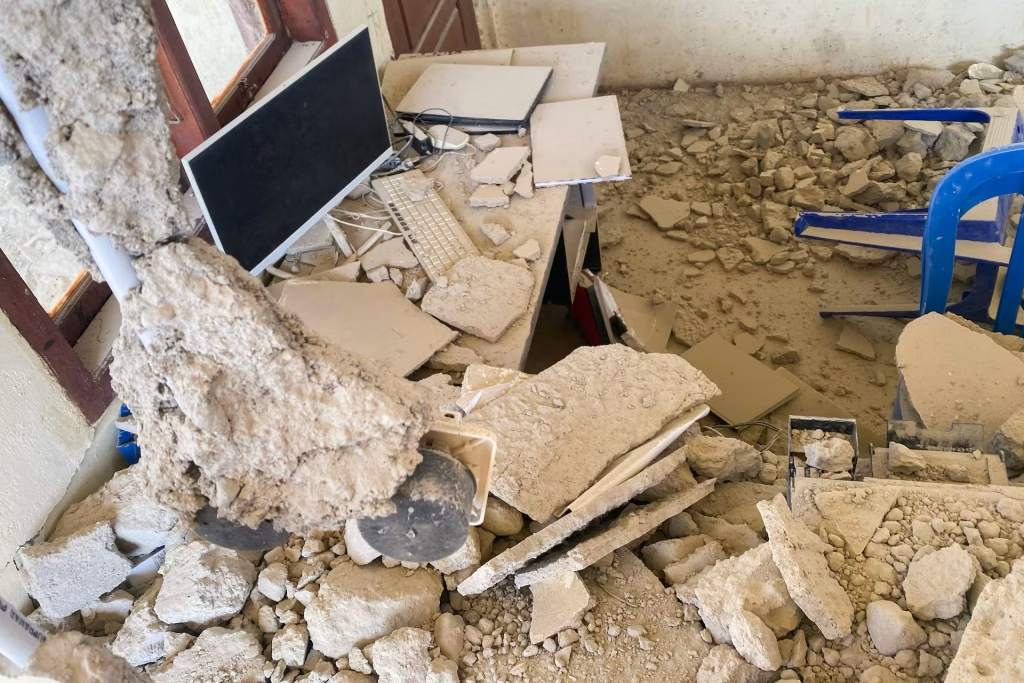
Strong shaking was felt across East Nusa Tenggara, West Nusa Tenggara and parts of South Sulawesi, and residents in several areas reported shaking lasting about one minute, BNPB said in a statement.
“Most of the people felt the shock and scattered out of their homes,” it said.
READ MORE: Afghanistan earthquake kills 800, injures 2,800, Taliban asks world for help
A hospital in the district of Ende in East Nusa Tenggara Province was moving patients outside, Kompas TV footage showed, and Kompas.com reported at least one landslide.
Indonesian geophysics agency BMKG recorded the first quake at 4:58 a.m. (2158 GMT) at a depth of 15 km (9 miles), followed by several aftershocks.
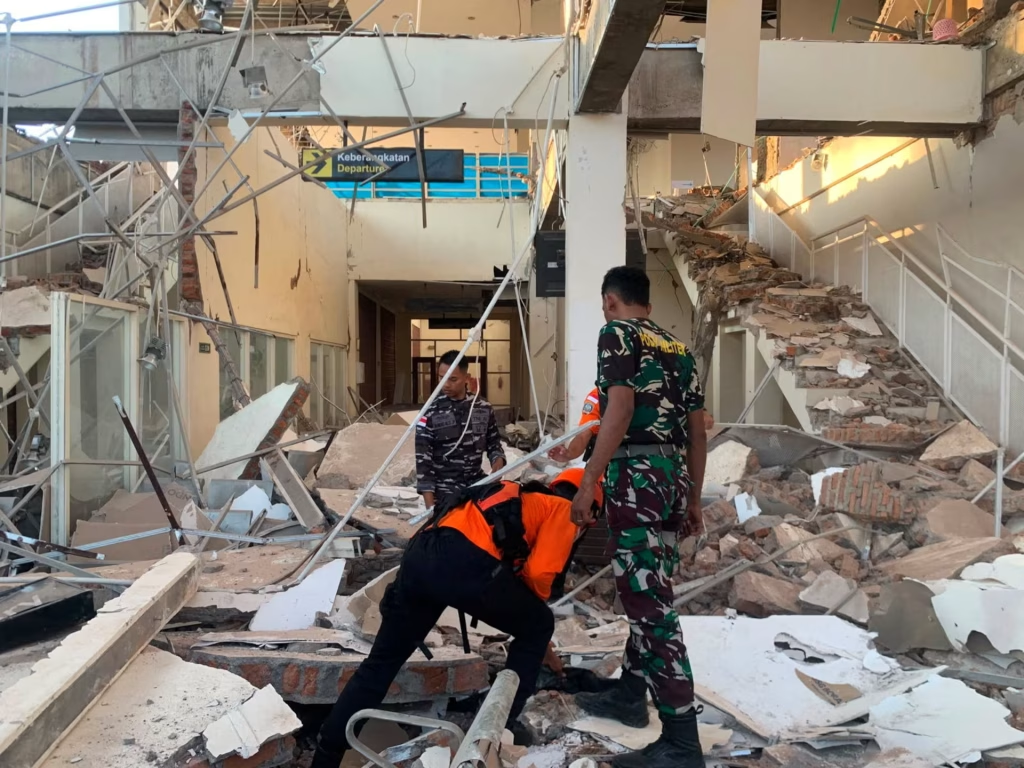
In 1992, the same area was hit by a magnitude-7.5 quake, causing extensive destruction at that time, the agency said.
Australia’s tsunami warning centre said the undersea earthquake would have “no tsunami threat to the Australian mainland, islands or territories”.
Indonesia straddles the “Pacific Ring of Fire”, a highly seismically active zone, where different plates on the earth’s crust meet, creating a large number of earthquakes and volcanoes. (Reuters)