By Kantaro Komiya and Mariko Katsumura
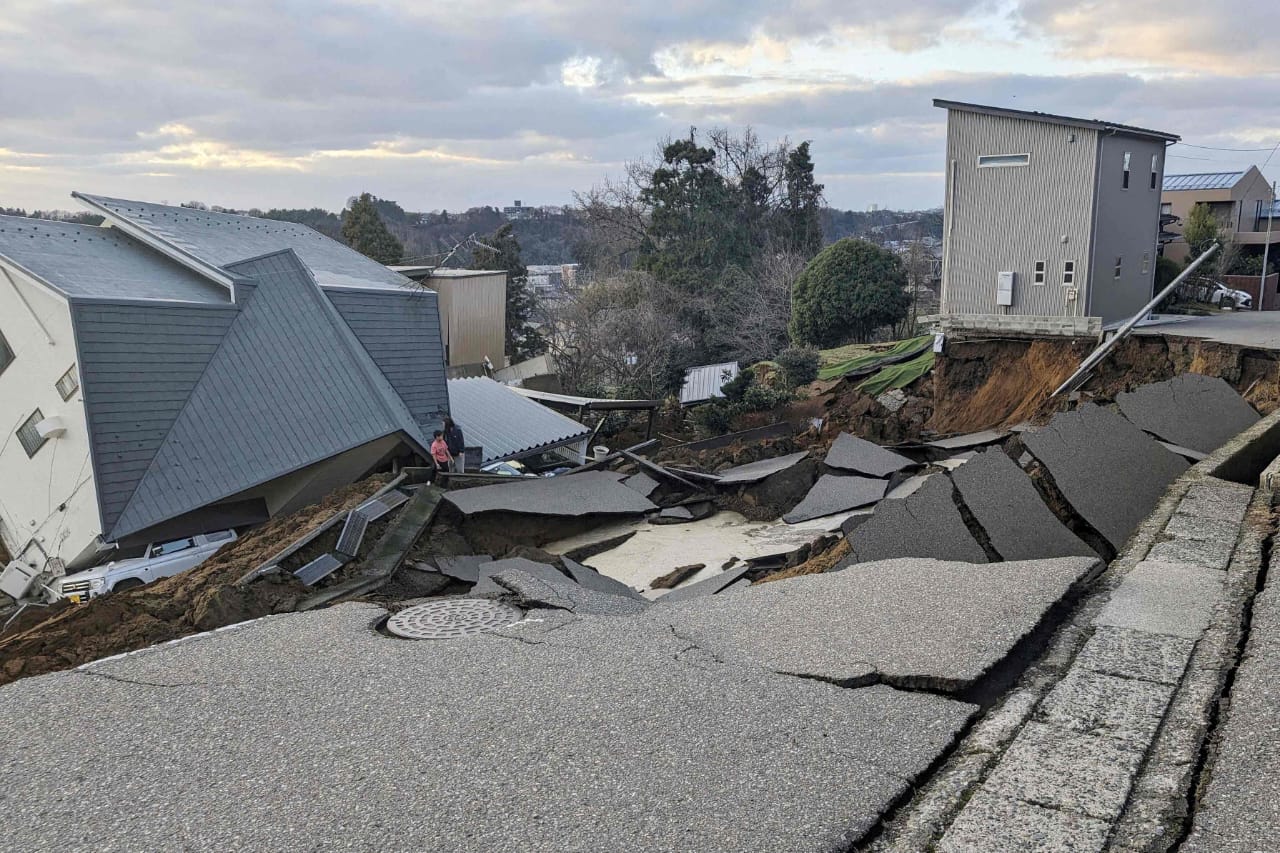
TOKYO – A powerful 7.5-magnitude earthquake shook northeastern Japan late on Monday, prompting tsunami warnings and orders for about 90,000 residents to evacuate.
The Japan Meteorological Agency said a tsunami as high as 3 metres (10 feet) could hit Japan’s northeastern coast after the earthquake struck off the coast at 11:15 p.m. (1415 GMT).
Tsunami warnings were issued for the prefectures of Hokkaido, Aomori and Iwate, and tsunamis from 20 to 70 cm (7 to 27 inches) high were observed at several ports, JMA said.
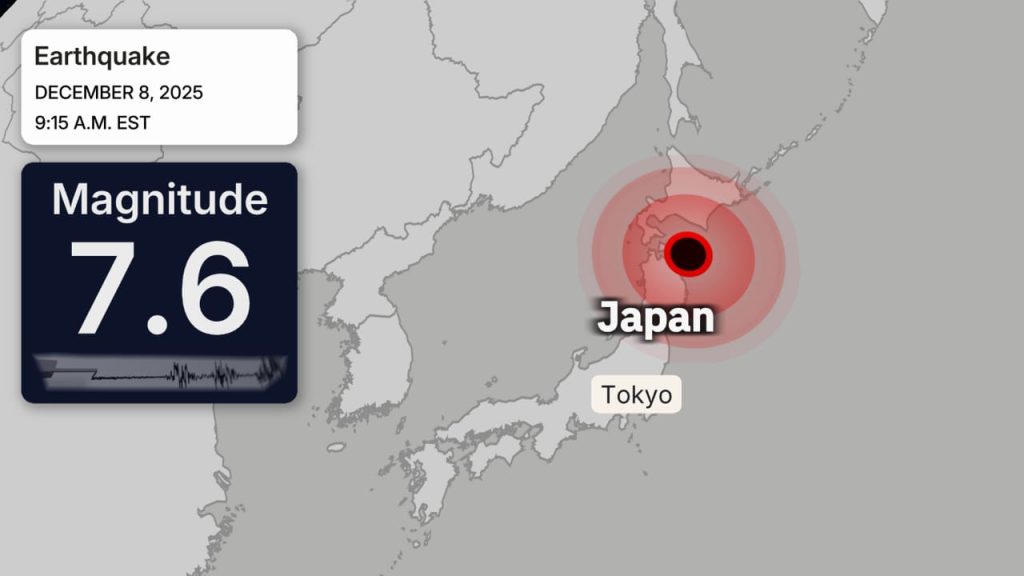
The epicentre of the quake was 80 km (50 miles) off the coast of Aomori prefecture, at a depth of 54 km, the agency added.
On Japan’s 1-7 scale of seismic intensity, the tremor registered as an “upper 6” in Hachinohe city, Aomori prefecture — a quake strong enough to make it impossible to keep standing or move without crawling. In such tremors, most heavy furniture can collapse and wall tiles and windowpanes are damaged in many buildings.
ALSO READ: Afghanistan earthquake kills 800, injures 2,800, Taliban asks world for help
As of 1700 GMT, there was little information on major damage or casualties from public broadcaster NHK. It cited a hotel employee in Hachinohe as saying a number of people were injured and taken to the hospital, but that all were conscious.
“As of now, I am hearing that there have been seven injuries reported,” Prime Minister Sanae Takaichi told reporters early on Tuesday morning.
East Japan Railway suspended some services in the area, which was also hit by the massive 9.0-magnitude quake in March 2011.

“There is a possibility that further powerful and stronger earthquakes could occur over the next several days,” a JMA official said at a briefing.
Following the tremor, the JMA issued an advisory for a wide region from the northernmost island of Hokkaido down to Chiba prefecture, east of Tokyo, calling on residents to be on alert for the possibility of a powerful earthquake hitting again within a week.
ALSO READ: Huge quake in Russia triggers tsunami warnings around Pacific
No irregularities were reported at nuclear power plants in the region run by Tohoku Electric Power and Hokkaido Electric Power, the utilities said. Tohoku Electric initially said thousands of households had lost power but later lowered that number to the hundreds.
YEN WEAKENS BRIEFLY
The yen weakened against major currencies after news of the tremor, before regaining some ground. The dollar touched a session high and was trading at around 155.81 yen around 1533 GMT, while the euro also hit a session high.
Japan is one of the world’s most earthquake-prone countries, with a tremor occurring at least every five minutes. Located in the “Ring of Fire” of volcanoes and oceanic trenches partly encircling the Pacific Basin, Japan accounts for about 20% of the world’s earthquakes of magnitude 6.0 or greater.

The northeastern region suffered one of the country’s deadliest earthquakes on March 11, 2011, when a 9.0-magnitude tremor struck under the ocean off the coast of the northern city of Sendai. It was the most powerful ever recorded in Japan and set off a series of massive tsunamis that devastated a wide swathe of the Pacific coastline and killed nearly 20,000 people.
The 2011 tsunami also damaged the Fukushima Daiichi nuclear plant, leading to a series of explosions and meltdowns in the world’s worst nuclear disaster for 25 years.
Drawing on lessons from that disaster, when a magnitude 7-level earthquake had struck two days beforehand, the government now issues a one-week “megaquake” advisory whenever a significant earthquake occurs in the region. In a similar vein, a megaquake advisory was issued in August last year for the Nankai Trough area in central-southern Japan. (Reuters)