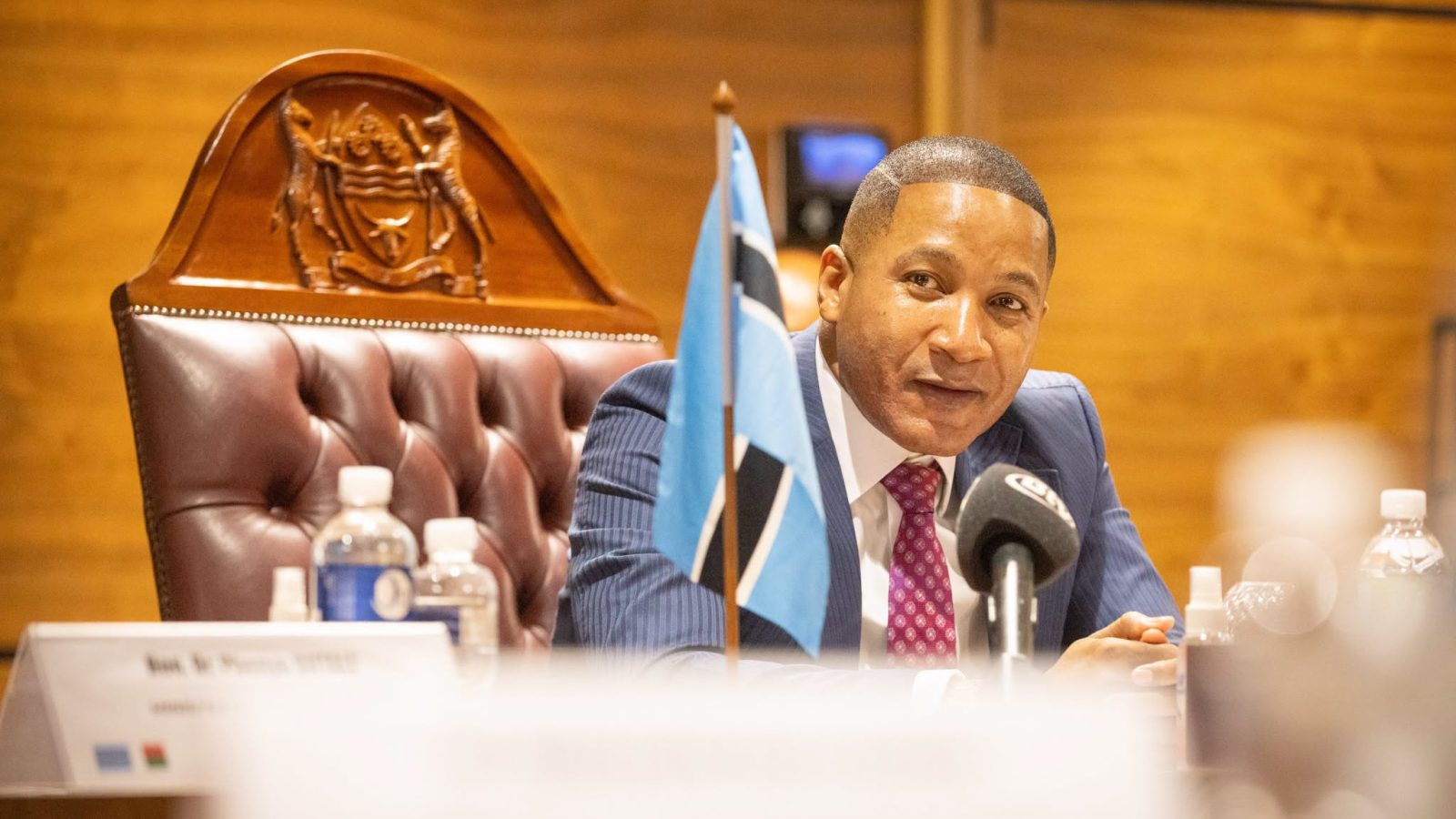
GABORONE, Botswana: President Duma Gideon Boko will make his first state visit to China from 12 to 17 October, with Botswana seeking to turn expanded access to the Chinese market into investment and a broader range of exports.
The Office of the President announced the visit on Friday, saying Boko would hold talks with President Xi Jinping and lead engagements aimed at deepening trade and economic cooperation. China’s foreign ministry separately confirmed the dates and Xi’s invitation.
The trip comes as Botswana faces pressure to diversify an economy heavily dependent on natural diamonds. Its planned business forum in China places that challenge at the centre of the visit: finding buyers and investment for industries beyond the country’s dominant mineral export.
Business forum targets new export opportunities
Boko will officiate at the Botswana–China Business Forum, which is expected to connect businesses and build on a previous forum held in China’s Hunan province in June 2025.
“The Forum will explore ways in which Botswana can leverage China’s vast consumer market and the new zero-tariff arrangement to increase and diversify exports to China,” the presidency said.
China announced zero-tariff treatment across all tariff lines for 53 African countries with which it maintains diplomatic relations, taking effect on 1 May 2026. Botswana is among the countries covered.
In interviews with Botswana media in May, Chinese Ambassador Fan Yong identified beef and citrus as products China hoped to see enter its market. That gives the forthcoming discussions a concrete agricultural dimension alongside the wider investment agenda.
ALSO READ: Botswana marks 60 Years of Independence as Boko opens door to Madagascar
Tariff relief, however, is only one part of gaining access to an export market. The presidency’s reference to an existing Beef Protocol highlights the importance of sector-specific arrangements alongside the wider trade policy.
Diamond dependence gives the visit economic urgency
IMF research published in December 2025 found that declining global demand for diamonds had heightened the urgency of Botswana’s economic diversification. It also identified slower growth, persistently high unemployment and weakened fiscal and external buffers as longer-term challenges.
The practical test for the visit will therefore extend beyond the number of agreements announced. It will be whether businesses can secure orders, attract productive investment and expand activity in sectors capable of generating employment.
Agriculture, tourism, digitalisation and infrastructure feature prominently in the programme. These offer potential avenues for broader economic activity, although the statement does not set export targets or attach financial values to the agreements expected during the trip.
Agreements expected across several sectors
The presidency said the leaders’ discussions would cover trade and investment, agriculture, health, education, digitalisation, defence, tourism and infrastructure development.
“During the visit, a number of bilateral agreements are expected to be signed to further strengthen cooperation between Botswana and China,” it said.
Those agreements would build on existing arrangements, including the Beef Protocol and the Tourism Cooperation Agreement. The announcement did not specify the new agreements or their implementation timelines.
Boko and Xi will also exchange views on global peace and security, sustainable development and other international issues of mutual interest.
The visit follows the two countries’ commemoration of 50 years of diplomatic relations on 6 January 2025. The presidency described it as Boko’s first state visit to China, rather than his first visit of any kind.
Huawei visit forms part of technology programme
Boko will visit sites showcasing China’s economic and technological developments, including the Huawei Beijing Institute. The technology stop comes alongside digitalisation’s inclusion in the bilateral agenda, but the statement does not announce a specific Huawei contract or project.
His official programme also includes a wreath-laying ceremony at the Monument to the People’s Heroes.
First Lady Kaone Boko, International Relations Minister Phenyo Butale, Minister for State President, Defence and Security Moeti Caesar Mohwasa, senior officials and a business delegation will accompany him.
The delegation is scheduled to return to Gaborone on 18 October. Vice-President Ndaba Nkosinathi Gaolathe will serve as acting president during Boko’s absence.
For Botswana, the visit offers an opportunity to move from preferential market access to commercial results. Whether that happens will become clearer when the proposed agreements and business commitments are made public.