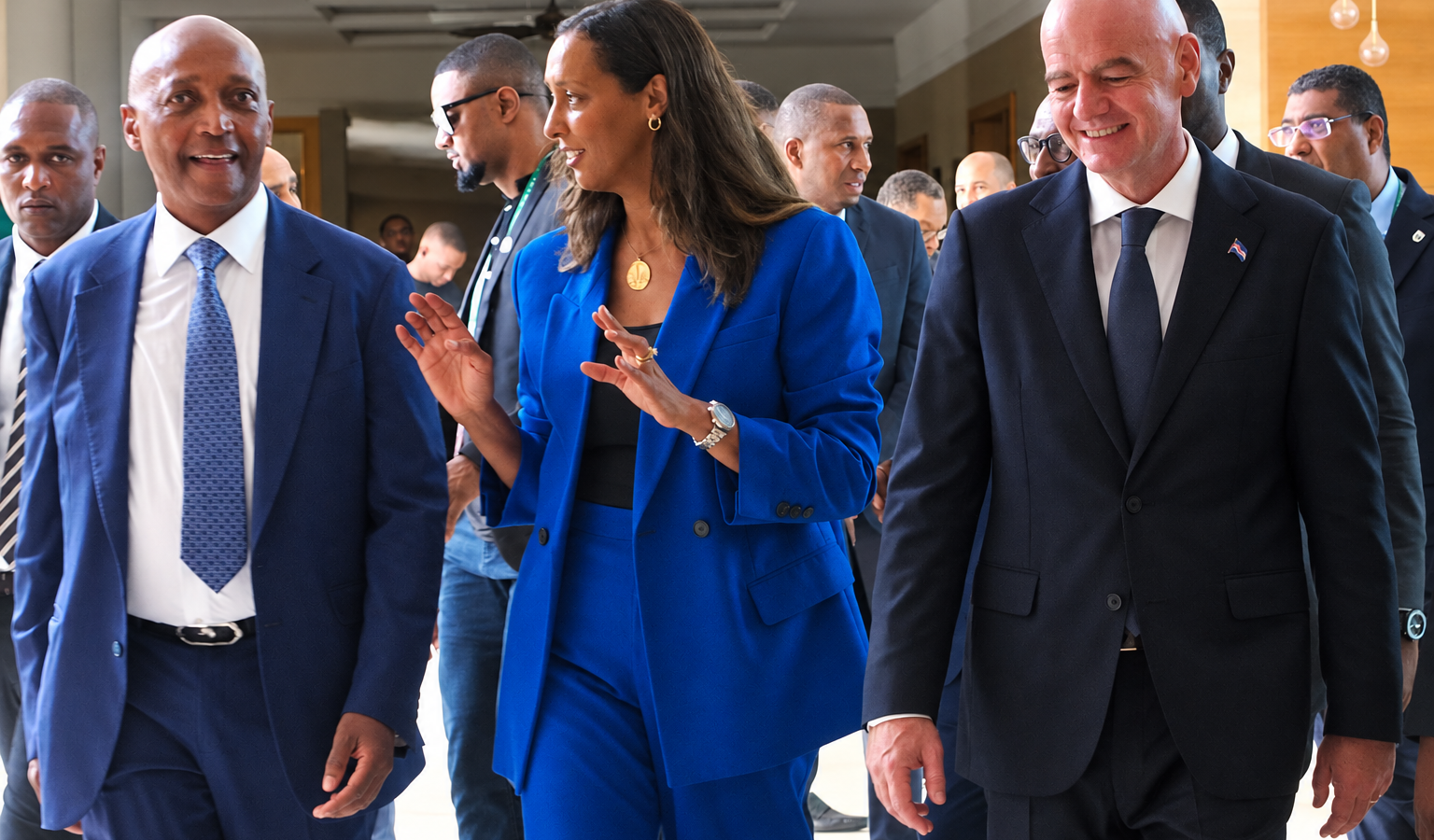
SANTA MARIA, Cabo Verde: The CAF Strategy Conference closed in Santa Maria, on Sal Island, on Friday after three days of high-level discussions aimed at turning Africa’s record FIFA World Cup 2026 performance into a stronger plan for 2030.
Presidents and senior officials from CAF’s 54 Member Associations, national team coaches, technical leaders and international football experts attended. The programme combined football development, institutional strategy and detailed analysis of Africa’s performances at the World Cup.
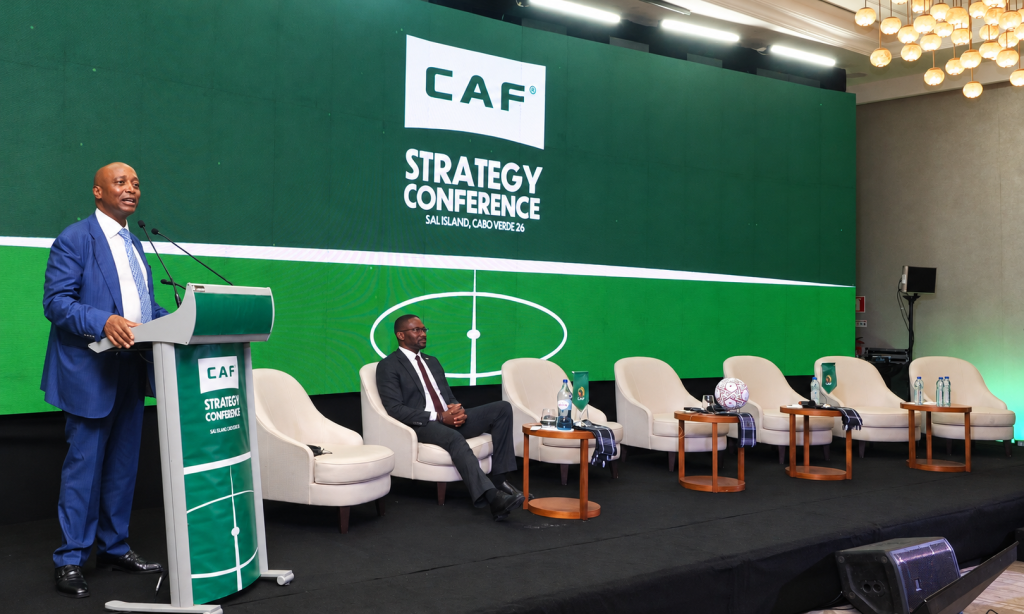
The Conference was convened under CAF President Dr Patrice Motsepe. Cabo Verde Head of State Dr Janira Hopffer Almada and FIFA President Gianni Infantino were among the leading figures who addressed delegates.
Africa came into the Conference after its strongest collective World Cup showing. A record 10 countries took part in the expanded 2026 tournament and nine progressed from the group stage. Morocco reached the quarter-finals for a second successive World Cup, while Cabo Verde went through from the group stage on its tournament debut.
Those results were the central reference point for a Conference designed not simply to celebrate 2026 but to identify what must improve before 2030.
Motsepe Calls For Results, Not Just Plans
Motsepe repeatedly stressed that African football must now turn ambition into measurable outcomes.
“There is a big gap between good plans, good intentions and what we do practically in terms of investments and results. We are judged by results,” he told delegates during the Conference.
“We have to win the World Cup. We are going to win the World Cup. One of the nations from Africa will win the World Cup,” Motsepe said.
CAF said one of the Conference’s key objectives was to make football in each of its 54 Member Associations world-class and self-sustaining, while continuing to improve the quality and global competitiveness of CAF competitions.
The discussions also looked at increased investment in Member Associations, football development, coaching, youth structures, administration and stronger commercial and broadcasting partnerships.
ALSO READ: Nine South Africans appointed to COSAFA bodies as Gomes and Zwane take chair roles
Infantino Highlights Africa’s Rise At The World Cup
Infantino praised the scale of Africa’s improvement and pointed to the contrast between recent World Cups.
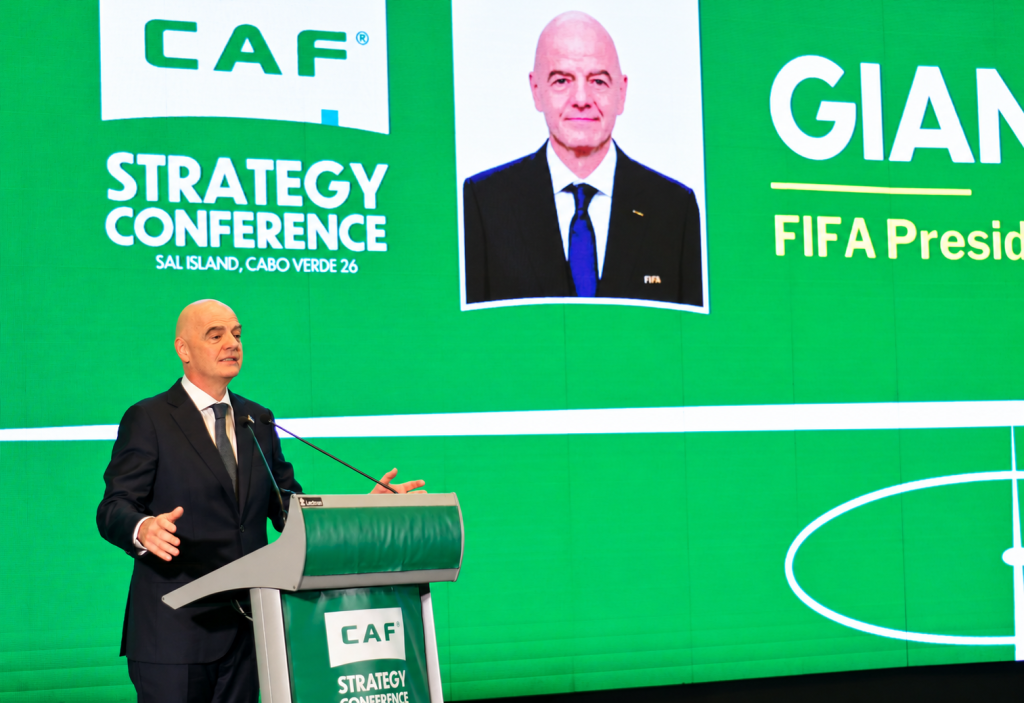
He noted that no African team progressed from the group stage in 2018, compared with nine out of 10 in 2026, a transformation he linked to the work being done across the continent.
The FIFA President also stressed the need to keep investing in opportunity and infrastructure. He told delegates that African talent was already shaping world football and needed better pathways to flourish globally.
His message to the gathering was simple: “The road to 2030 begins now.”
Wenger Says Africa Is Close But Details Matter
FIFA Chief of Global Football Development Arsène Wenger joined coaches and analysts to examine Africa’s 2026 performance in detail, including tactical organisation, chance creation, counter-pressing, transitions and late-game management.
Wenger said one of the clearest improvements was the organisation of African teams.
“In the past, African teams sometimes lost because of a lack of compactness, too much distance between the lines and inconsistent concentration,” he said. “At this World Cup, it was difficult to beat any African team because the discipline and organisation were at the top level.”
“We are very close, but a small percentage can cost you the game. Most of these games were lost by one goal, so every detail in the modern game becomes absolutely vital.”
His message captured the central theme of the Conference: Africa has progressed significantly, but the next level will depend on precision rather than wholesale reinvention.
ALSO READ: Tanzania retain CAF schools football title as Uganda rule CECAFA boys’ championship
Coaches Bring World Cup Experience Into The Room
The final-day discussions included coaches who had worked with African teams at the World Cup, among them Bubista, Emerse Fae, Mohamed Ouahbi and Sébastien Desabre.
Their contributions allowed CAF to move from statistics to practical experience, including how teams prepared, managed international windows, adapted tactically and dealt with the pressures of tournament football.
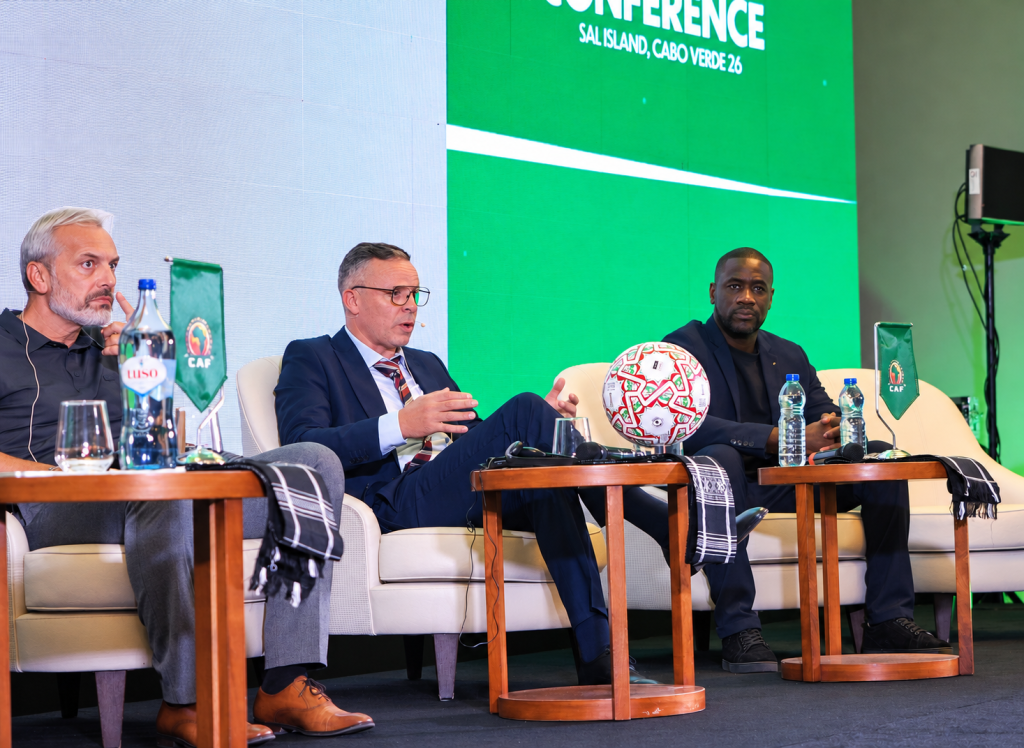
Bubista, who led Cabo Verde during their debut campaign, stressed the value of clear objectives and tactical flexibility.
“We cannot think about only one strategy,” he said. “We have to have more than one strategy, one when we don’t have the ball, another when we have the ball, and another when we cannot attack quickly.”
His experience was particularly relevant because Cabo Verde were one of the standout stories of the World Cup. They qualified for the first time and progressed from the group stage before losing 3-2 after extra time to Argentina.
Cabo Verde Provides A Symbolic Backdrop
The choice of Cabo Verde as host gave the Conference added significance. The country’s rise from World Cup debutants to knockout-stage participants made it an appropriate setting for a gathering focused on development, belief and long-term planning. CAF had identified Cabo Verde’s 2026 campaign as one of the reasons the country was selected to stage the Conference.
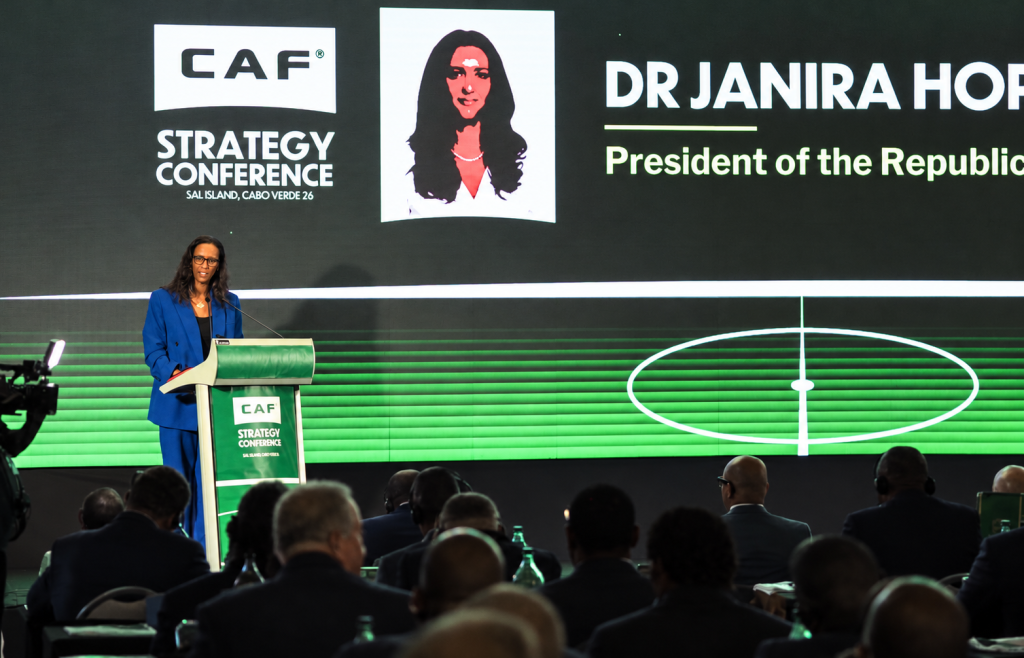
Hopffer Almada used Cabo Verde’s journey as a broader lesson for African football. She argued that talent alone was not enough without structure, organisation and trust in African expertise.
The Conference therefore ended with a message that went beyond the success of one tournament. The task agreed in Cabo Verde was to convert those results into stronger systems, better preparation and more sustainable football structures across all 54 Member Associations.
The three-day gathering opened with development discussions and closed with Africa’s football leaders looking firmly towards 2030. The ambition is to move from record participation and deeper tournament runs to challenging seriously for football’s biggest prize.
Source: CAF website. All photographs: CAF.