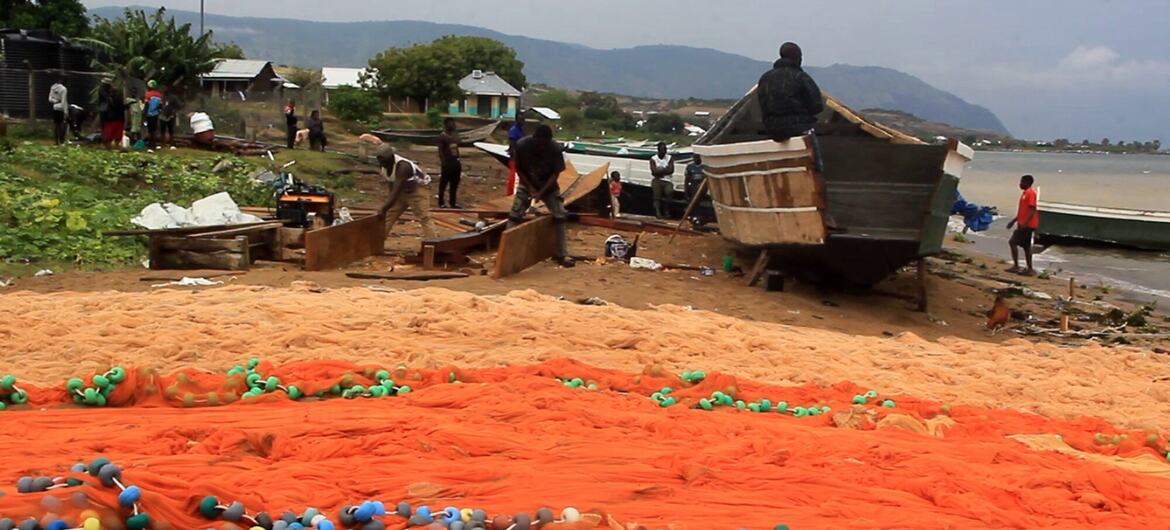
KIKUUBE DISTRICT, UGANDA — Before sunrise, fishers in Nkondo head out onto Lake Albert in search of the day’s catch. For thousands of families living along the lake, the water is more than a source of fish. It is a lifeline.
But that lifeline is under growing pressure.
Communities and local leaders in Kikuube District are sounding the alarm over increasing plastic pollution and other waste entering Lake Albert, warning that the damage could undermine fish stocks, threaten livelihoods and leave future generations facing a depleted ecosystem.
The concerns were raised during activities marking World Lake Day on August 27, when fishers and local leaders used the occasion to call for stronger action to protect one of the region’s most important freshwater resources.
A Lifeline Under Pressure
Solomon Wamara, chairperson of fishers on Lake Albert, said communities could no longer depend on the lake for their survival while allowing it to become increasingly polluted.
He said discarded plastic bags and other waste are finding their way into the water, where they can interfere with areas used by fish to breed and grow.
The problem, Wamara said, is not confined to the lake’s shoreline.
ALSO READ: Life Along the Ubangui: A Cross-Border Project Promises Clean Water, Jobs and Hope
Agricultural activities and poor waste disposal along the Wambaya, Waki and Nguse rivers are also contributing to pollution, with waste carried downstream into Lake Albert. The rivers are important breeding and feeding systems for fish and are also relied upon by communities living along their banks.
For fishers, the consequences could be severe. A decline in fish populations would not only affect food supplies but also the income of households that depend on fishing and related activities.
Lake Albert Reflects a Wider Freshwater Crisis
The concerns emerging from Kikuube are part of a broader global challenge facing freshwater ecosystems.
A 2024 report by the United Nations Environment Programme and UN-Water found that surface water bodies are shrinking or disappearing in areas inhabited by more than 93 million people. The report also found that more than a quarter of monitored surface water bodies are becoming increasingly turbid because of pollution.
Against that backdrop, local communities say protecting Lake Albert requires action before pollution becomes even more difficult to reverse.
Government Turns to Communities
Godwin Angalia, the Kikuube District Commissioner and a former fisher, said the government recognises the importance of lakes to local economies and community livelihoods.
He said authorities are working to address pollution linked to human activity while protecting the rivers and natural systems that feed Lake Albert, including the Nguse and Wambaya.
Angalia also highlighted the role of Bugoma Forest in supporting the wider Lake Albert ecosystem. He said efforts are being made to protect the forest and the rivers that connect the surrounding environment to the lake.
He urged village leaders to remain vigilant and report people involved in pollution or activities that damage the lake’s natural resources to the relevant authorities.
Fishers Become Part of the Solution
Authorities are also looking beyond enforcement, seeking to make local fishers partners in conservation efforts.
Angalia said indigenous community committees are being established to support fisheries management, drawing on the experience and knowledge of people who have depended on the lake for generations.
Wamara said fishers themselves have a strong interest in ensuring the lake remains productive.
ALSO READ: Madagascar Invests $7 Million in Coastal Defence to Combat Climate Change
He said many fishers already avoid catching immature fish and use fishing methods intended to minimise damage to the ecosystem.
But he called on authorities to support sustainable fishing rather than placing excessive financial burdens on fishers.
He also urged authorities to expand monthly lake-cleaning campaigns so that more communities living around Lake Albert can participate.
Protecting the Lake, Protecting the Future
For communities around Lake Albert, the pollution problem is ultimately about more than plastic.
It is about whether the lake will continue to provide food, income and opportunity for generations to come.
Wamara said protecting the lake should no longer be viewed as optional. The choices being made today, he warned, will determine whether future generations inherit a thriving fishery or a degraded water body struggling to sustain the communities around it.
The message from Kikuube is clear: saving Lake Albert will require government, local leaders, fishers and communities to take responsibility for the lake together, before the pollution threatens the very livelihoods that depend on it.