At a New York gathering of more than 3,000 business leaders, investors and policymakers, Africa’s industrialisation challenge came into sharp focus as Aliko Dangote urged the continent to invest its capital at home, while leaders highlighted trade, technology and creative industries as engines of future growth.
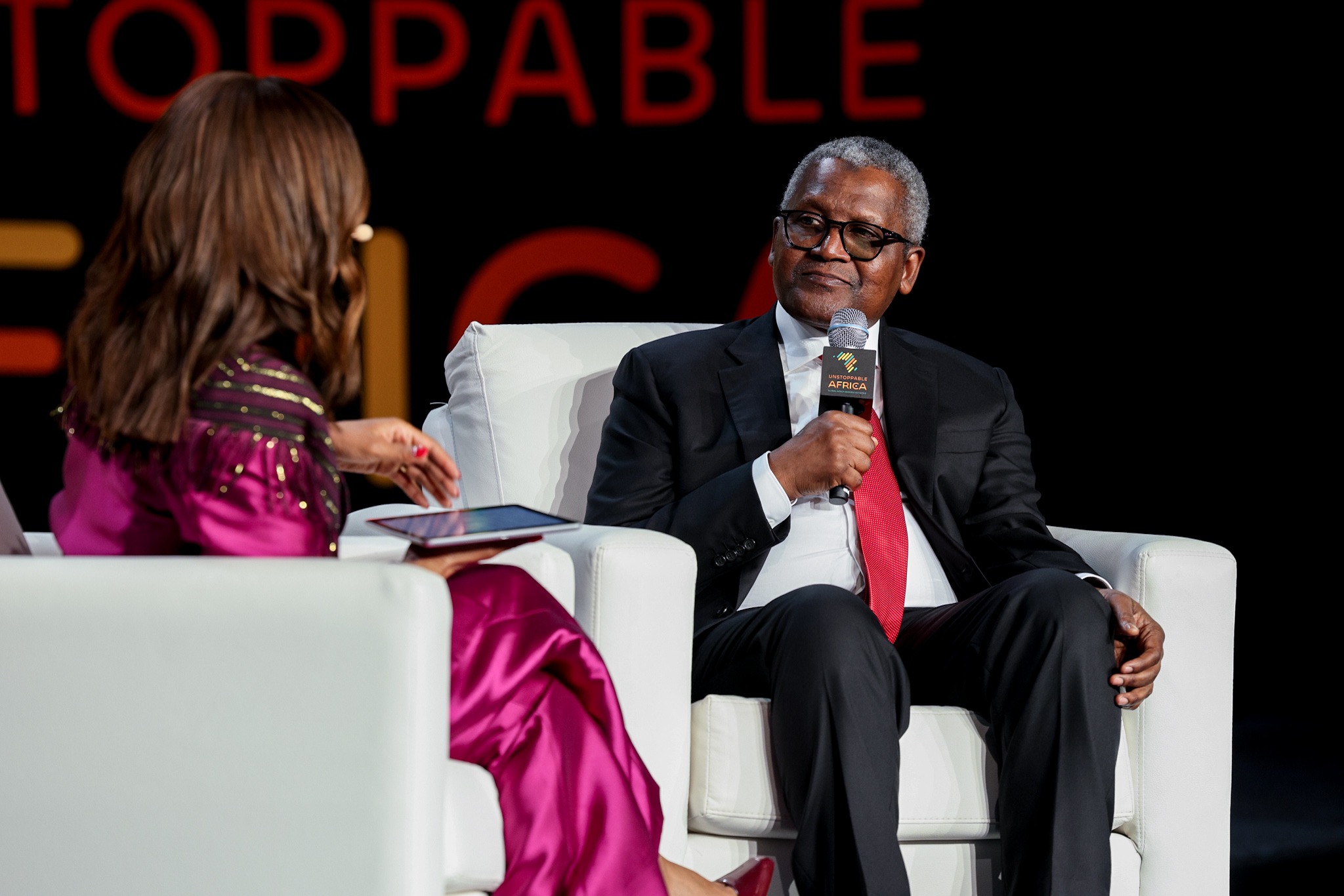
NEW YORK/PRETORIA — Africa will struggle to build the industrial capacity that transformed Asian economies if its capital continues to flow into foreign banks and markets, Dangote Group President and CEO Aliko Dangote told business leaders in New York on Monday.
Dangote was speaking at Unstoppable Africa 2026, where the continent’s investment prospects, industrialisation and economic transformation were central themes during the two-day forum at the New York Marriott Marquis.
Dangote argued that African countries need to develop greater confidence in their own economies and businesses, saying the early stages of building large enterprises are often the most difficult.
“We must believe in our continent,” he told delegates. “Once you start, it gets easier. But the more you don’t do anything, it becomes difficult.”
His remarks came as more than 3,000 African and global business leaders, heads of state, investors and policymakers gathered for the fifth edition of the Global Africa Business Initiative’s (GABI) flagship forum.
The event was held on the margins of the 81st session of the United Nations General Assembly and jointly convened by UN Secretary-General António Guterres and African Union Commission Chairperson Mahmoud Ali Youssouf.
Dangote puts capital and scale at centre of industrial push
Dangote’s argument focused on one of Africa’s longstanding economic challenges: how to mobilise and retain sufficient capital to finance large-scale investment on the continent.
His comments also came against the backdrop of the expansion of his own industrial interests in Nigeria.
The Dangote Petroleum Refinery and Petrochemicals project at the Lekki Free Zone in Nigeria represents an investment of about $20 billion. The refinery has a stated processing capacity of 700,000 barrels of crude oil a day.
The company’s listing on the Nigerian Exchange this month has also drawn attention to the growing scale of African industrial companies and domestic capital markets.
For Dangote, however, the broader issue is whether more African capital can be directed towards productive investment within the continent rather than being held or invested abroad.
He also pointed to the African Continental Free Trade Area (AfCFTA) as a key mechanism for creating the market size required to support major industrial projects.
The United Nations Conference on Trade and Development (UNCTAD) said in its 2024 Economic Development in Africa Report that full implementation of the AfCFTA could create a market worth about $3.4 trillion.
ALSO READ: Museveni Puts Wealth Creation at Centre of Marriott’s Uganda Debut
The agreement is intended to reduce trade barriers and create a single continental market, allowing businesses to reach consumers across national borders and potentially achieve greater economies of scale.
Eine Zeidane, Director of the African Department at the International Monetary Fund, told the forum that structural reforms and deeper domestic financial markets, combined with the larger markets created by AfCFTA, would be important in attracting sustained private investment.
Digital economy adds another growth frontier
The discussion extended beyond traditional industrial sectors to Africa’s rapidly expanding digital economy.
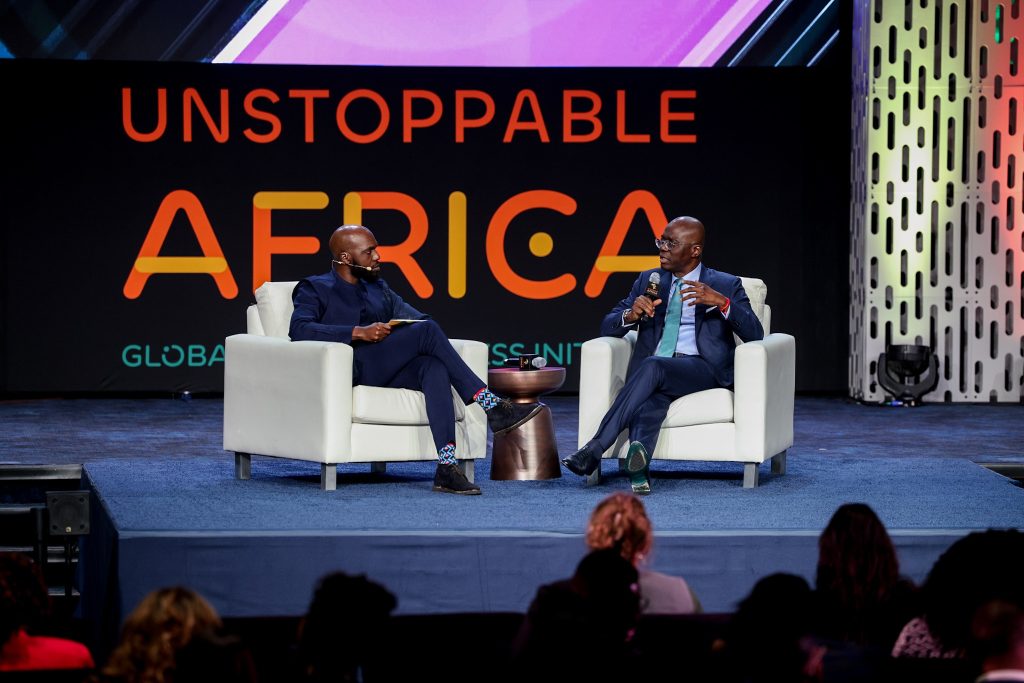
Olugbenga Agboola, CEO of Nigerian fintech company Flutterwave, highlighted the continent’s young and increasingly connected population as a potential foundation for continued growth in digital payments and artificial intelligence.
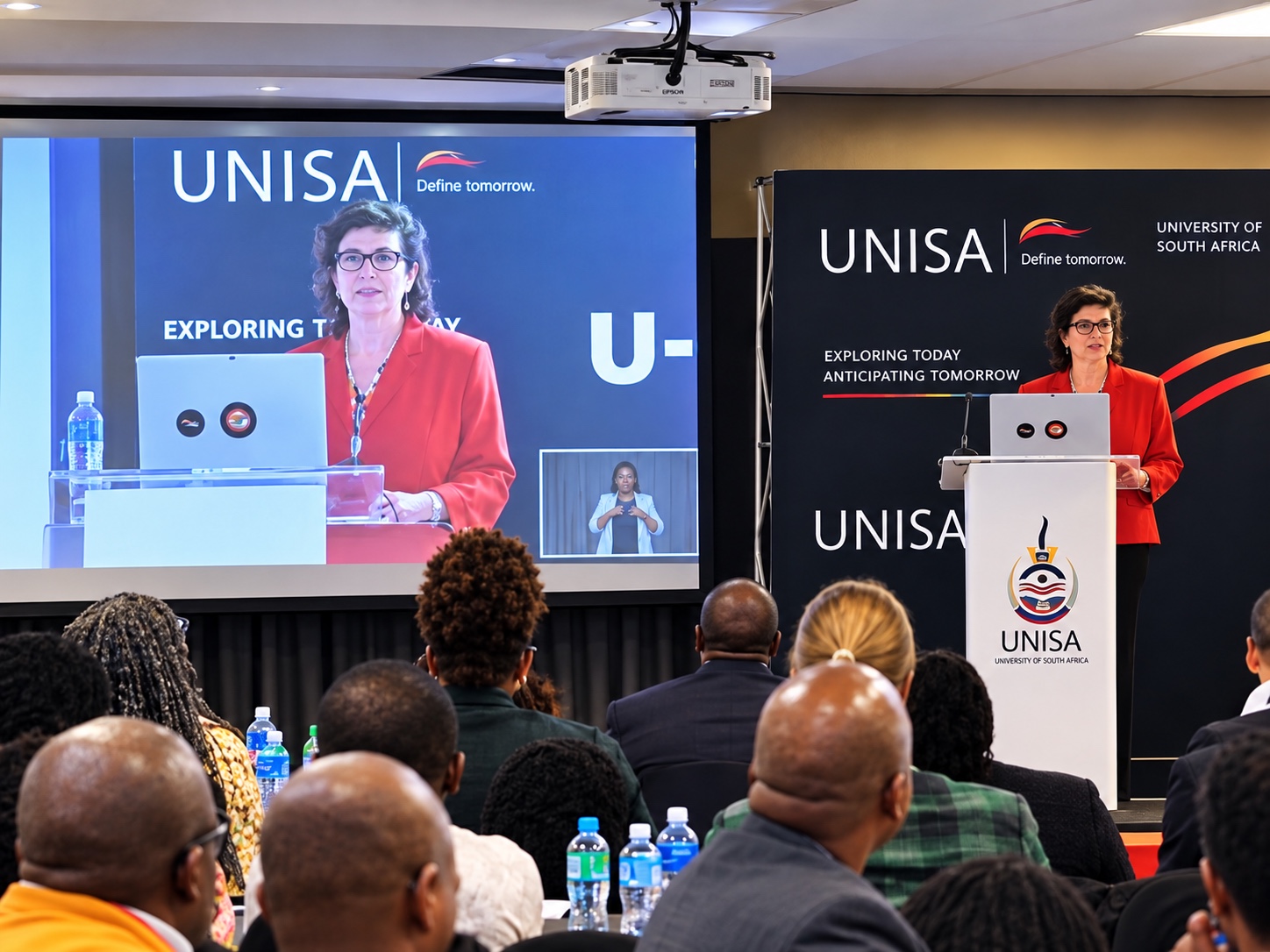
Technology and inclusion were also discussed through the work of Signverse.
Its founder and CEO, Elly Savatia, spoke about using technology to expand access for people who communicate through African sign languages.
The company has developed what it describes as the largest publicly documented dataset for an African sign language. It has received $2 million in funding from Google and plans to expand its work to additional African sign languages.
The forum also featured initiatives focused on young people and women.
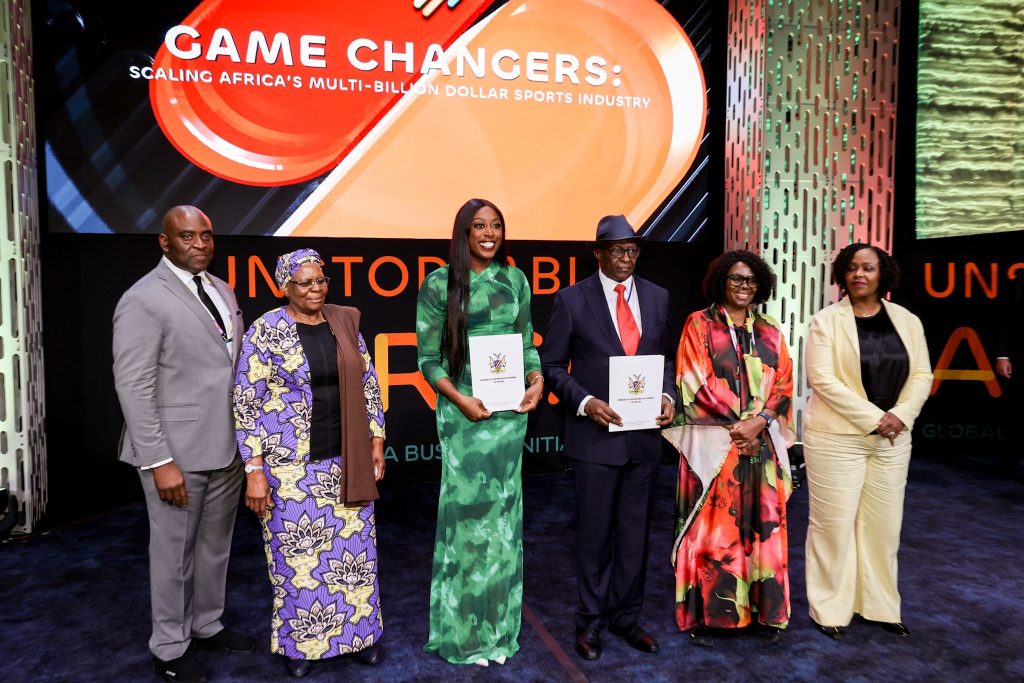
Namibian President Ndemupelila Netumbo Nandi-Ndaitwah signed a partnership between her namesake foundation and the Queens of the Continent Foundation, founded by former WNBA All-Star and ESPN host Chiney Ogwumike.
The partnership is aimed at supporting young people, particularly girls and young women, in Namibia.
Creative industries move further into the investment conversation
Africa’s creative economy was another focus, with Afreximbank highlighting efforts to connect African brands with international markets.
Khanyi Mashimbiye of Afreximbank discussed the bank’s CANEX programme, which has supported African fashion businesses in accessing international buyers through trade platforms in Paris, Japan and New York.
Since 2022, the programme has facilitated more than 120 offtake agreements, while Zimbabwean fashion brand Vanu Vanwerk has expanded its distribution to more than 50 stores globally.
South Africa also used the forum to promote investment opportunities.
The South African Business Initiative for Impact (SABII) sought to connect South African opportunities with international capital represented at the gathering, placing the country within the wider continental investment and industrialisation discussion.
AI opportunity
Artificial intelligence featured prominently in the closing discussions, with UN Deputy Secretary-General Amina J. Mohammed describing the technology as an opportunity for African countries to accelerate development.
ALSO READ: African Businesses Need to Compete on the Global Stage
“Africa has the talent and the ideas,” she said, while pointing to the need for greater access to opportunity, infrastructure and investment to deploy those capabilities at scale.
The emphasis on AI reflects a broader debate about whether African economies can use emerging technologies to overcome some of the infrastructure and industrial constraints that have historically slowed development.
Turning discussion into investment
The central challenge emerging from the forum was not a lack of investment opportunities or ideas, but how to translate them into projects that receive sustained financing and reach implementation.
Dangote’s call for African capital to remain on the continent emphasises that both investors and governments must create conditions that make domestic investment more attractive.
For policymakers, that includes the development of deeper capital markets, regional integration and regulatory frameworks that allow businesses to operate across borders.
For businesses and investors, the challenge is identifying commercially viable opportunities capable of generating returns while contributing to the continent’s broader industrial and economic development.
Those questions will remain central as African governments and businesses seek to turn the investment interest showcased at Unstoppable Africa 2026 into factories, infrastructure, digital businesses and other productive assets across the continent.