As Marriott International opens its first flagship Marriott Hotels and Marriott Executive Apartments properties in Uganda, President Yoweri Museveni uses the occasion to make a broader economic argument: Africa must move beyond importing goods and build wealth through local production, investment and skills.
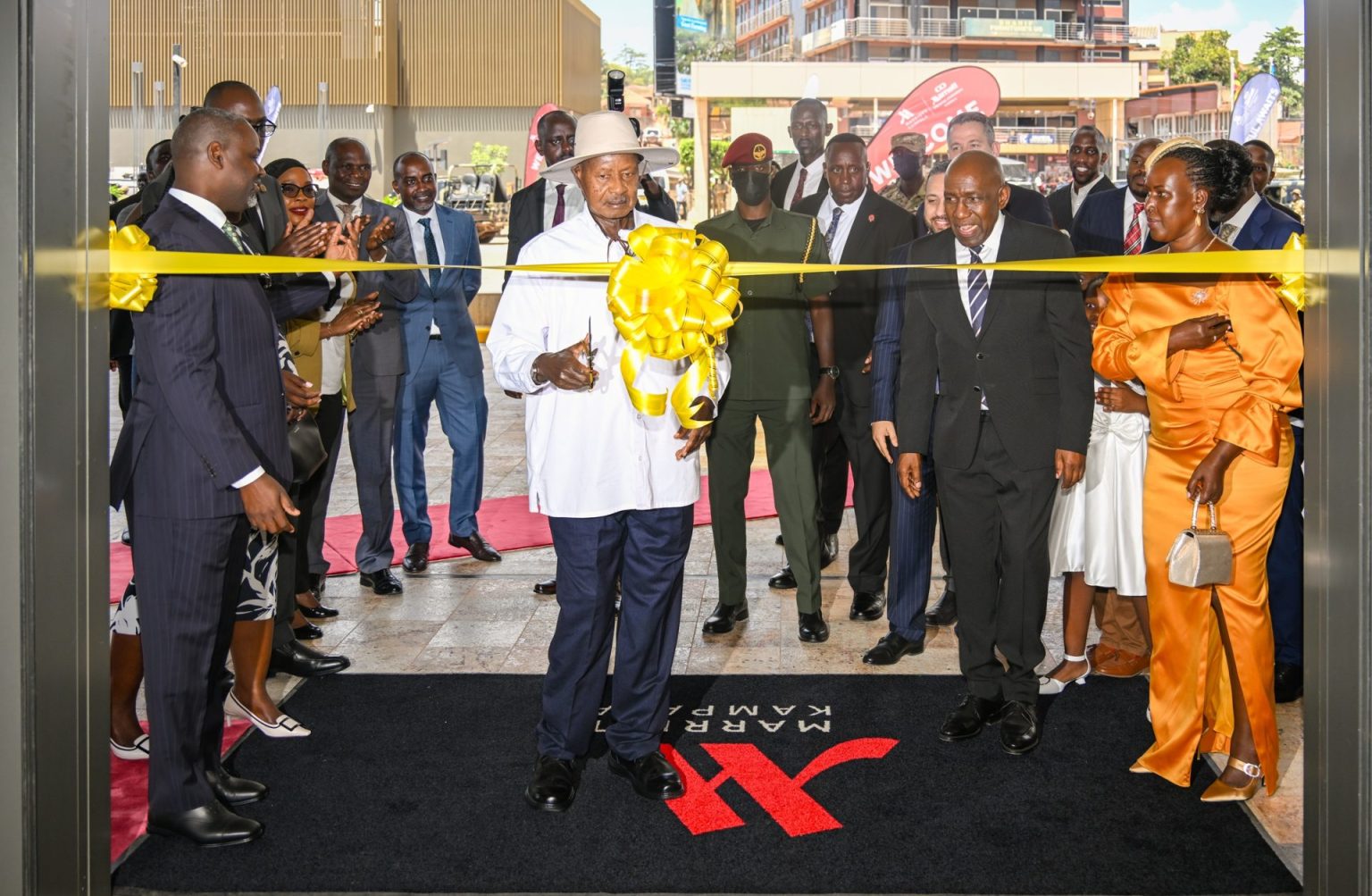
KAMPALA – President Yoweri Museveni used the opening of Marriott International’s newest properties in Kampala to renew his call for Uganda and other African countries to focus on wealth creation, local production and investment rather than remaining dependent on imports.
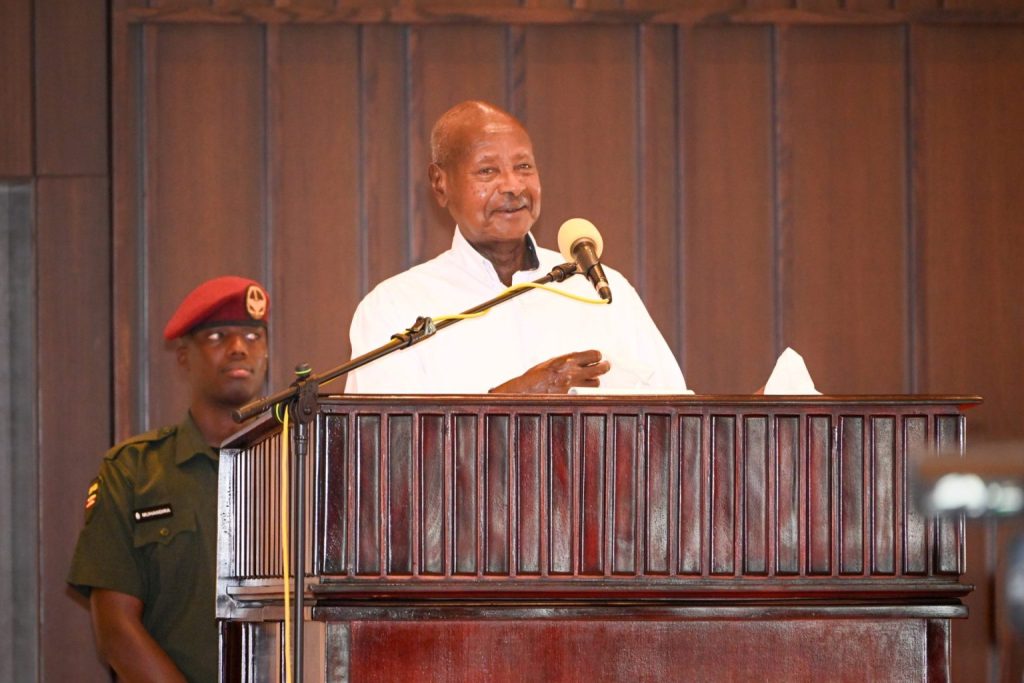
Museveni officially inaugurated the Kampala Marriott Hotel and Marriott Executive Apartments Kampala on Thursday at a ceremony in Nsambya, marking Marriott International’s first entry into Uganda under the Marriott Hotels and Marriott Executive Apartments brands.
The dual-branded development in Makindye Division brings Marriott’s footprint in Uganda to seven properties across five brands and represents a significant new investment in the country’s hospitality industry.
The ceremony brought together government officials, investors and hospitality executives, with the project’s backers presenting the development as a sign of growing confidence in Uganda as a destination for major domestic and international investment.
From a Small Grocery to a Global Brand
For Museveni, however, the significance of the opening extended beyond the hotel itself.
Much of his address focused on the business journey of Ponsiano Ngabirano, Chairman of Capital Shoppers Ltd, whose enterprise began as a small grocery store in Nakasero before expanding into a supermarket chain and eventually partnering with Marriott on the development.
Museveni presented Ngabirano’s journey as an example of the type of economic transformation he wants to see replicated across Uganda.
“Many of the African economies have not grown because of the mistakes of the leaders. They fail to distinguish between development and wealth,” Museveni said, arguing that infrastructure development, including roads, must be matched by efforts to create wealth.
ALSO READ: Uganda Weighs Extending Presidential and Parliamentary Terms to Seven Years
He identified commercial agriculture, services, ICT and manufacturing as four sectors that should drive wealth creation.
The President also praised Ngabirano for moving from importing milk, at a time when Uganda did not have sufficient local production, to distributing milk produced domestically.
He drew a parallel with Nigerian industrialist Aliko Dangote, who began by importing cement before moving into local manufacturing and eventually expanding into the petroleum sector.
For Museveni, the lesson was that importing can be a starting point, but should ultimately lead to domestic production and industrialisation.
“Importers, provided you are clear with our strategy, you will progress well,” he told the gathering.
NSSF Investment Draws Presidential Praise
Museveni also welcomed the decision by the National Social Security Fund (NSSF) to invest workers’ pension savings in the hotel project rather than in foreign bonds.
NSSF holds a 30 percent stake in the development, according to Ngabirano.
“I am also glad to hear that NSSF has woken up and invested in this hotel, instead of investing that money in foreign bonds which do not add anything to our GDP,” Museveni said.
He also thanked Cardinal Emmanuel Wamala for making land available for the project and welcomed Marriott’s wider expansion across Africa.
The President linked the company’s growing presence on the continent to Africa’s demographic growth and the expanding consumer and business market that comes with it.
“I am very glad to see that Marriott is beginning to see where the market potential is, because the African population is growing rapidly,” Museveni said.
A Major Addition to Kampala’s Hospitality Market
The scale of the development reflects the growing ambitions of Kampala’s hospitality industry.
The project combines 181 hotel guestrooms and suites with 96 fully serviced apartments, six restaurants and bars, and 1,293 square metres of event space. Its Kampala Grand Ballroom can accommodate up to 985 guests.
The employment figures presented at the opening also point to the project’s potential local economic impact.
More than 350 people were already employed when the properties opened, with close to 95 percent Ugandan nationals and more than 120 women among the workforce.
Ngabirano put the current workforce at about 400 and said the two properties are expected to employ more than 1,000 people by the end of the year, with approximately 97 percent of employees expected to be Ugandan.
About 90 per cent of procurement has also been sourced locally, according to figures presented at the ceremony.
Finance Minister Henry Musasizi described the opening as evidence of Uganda’s growing profile as an investment and tourism destination.
He noted that qualifying new investments receive a 10-year tax holiday before corporate income tax applies, while acknowledging that the country still faces a shortage of specialised hospitality training facilities.
Musasizi pledged government support to expand training infrastructure and urged private investors to contribute to skills development.
Marriott Bets on Uganda’s Tourism Growth
Marriott International’s Regional Vice President for Sub-Saharan Africa, Johan Cronjé, said the company’s expansion in Kampala reflected the momentum building in Uganda’s tourism sector.
“Uganda’s tourism sector continues to demonstrate strong momentum, supported by growing visitor demand, investment and infrastructure development,” Cronjé said.
He said the new development would strengthen Kampala’s ability to accommodate conferences, international business events and other forms of business travel.
The dual-brand model also allows Marriott to target different segments of the market, from traditional hotel guests to longer-stay corporate and business travellers.
Hospitality Sector Calls for More Support
Ngabirano used the occasion to raise concerns facing Uganda’s hotel industry, speaking on behalf of the Uganda Hotels Association.
He called for a review of what he described as high taxes on hotels, arguing that the burden affects the sector’s competitiveness.
He also appealed for more land to be made available for hospitality development, specifically asking Museveni to consider sites along the Kampala-Entebbe corridor.
ALSO READ: Uganda’s Cancer Crisis Exposes Screening Gaps
Training was another concern.
Ngabirano called for greater investment in hospitality education and training facilities, echoing Musasizi’s warning that Uganda needs more specialised infrastructure to develop the skills required by a growing tourism industry.
Reflecting on his own business journey, Ngabirano credited the government’s economic environment for helping his company grow from a small grocery store into a major business capable of undertaking an international hotel development.
“What started as a small grocery in Nakasero turned into a supermarket and now we are opening a big franchise. It was because of your clean leadership, Your Excellency,” Ngabirano said.
A Tourism Industry Gaining Ground
The Marriott opening comes as Uganda’s tourism industry records strong growth.
According to the Uganda Tourism Statistical Abstract 2025, the sector generated Shs5.8 trillion, roughly US$1.62 billion, in earnings in 2025. Tourism contributed an estimated 5.9 per cent to national GDP and supported more than 876,000 jobs.
The new Marriott properties add to a growing presence of internationally branded hotels in East African capitals, where governments and investors are increasingly looking to hospitality infrastructure to support tourism, conferences and regional business travel.
The decision to bring two Marriott brands into a single Kampala development also reflects a broader trend across Sub-Saharan Africa, where hotel groups are increasingly using dual-brand developments to serve different categories of travellers from the same location.
The Kampala properties have also established partnerships with Ugandan universities, hospitality colleges and technical institutions to provide internship and training opportunities.
That could prove particularly significant as Uganda works to address the hospitality skills gap highlighted by both Musasizi and Ngabirano.
For Marriott, the opening expands its presence in one of East Africa’s growing markets. For Uganda, the bigger test will be whether investments of this scale can translate into sustained local employment, skills development, domestic procurement and the kind of wealth creation Museveni says the continent needs.