A decade ago, Pavati Plastics was a service business. Today, backed by R50 million in government support, it is a fully black-owned manufacturer producing specialised packaging, replacing imports and earning national recognition for its sustainability efforts.
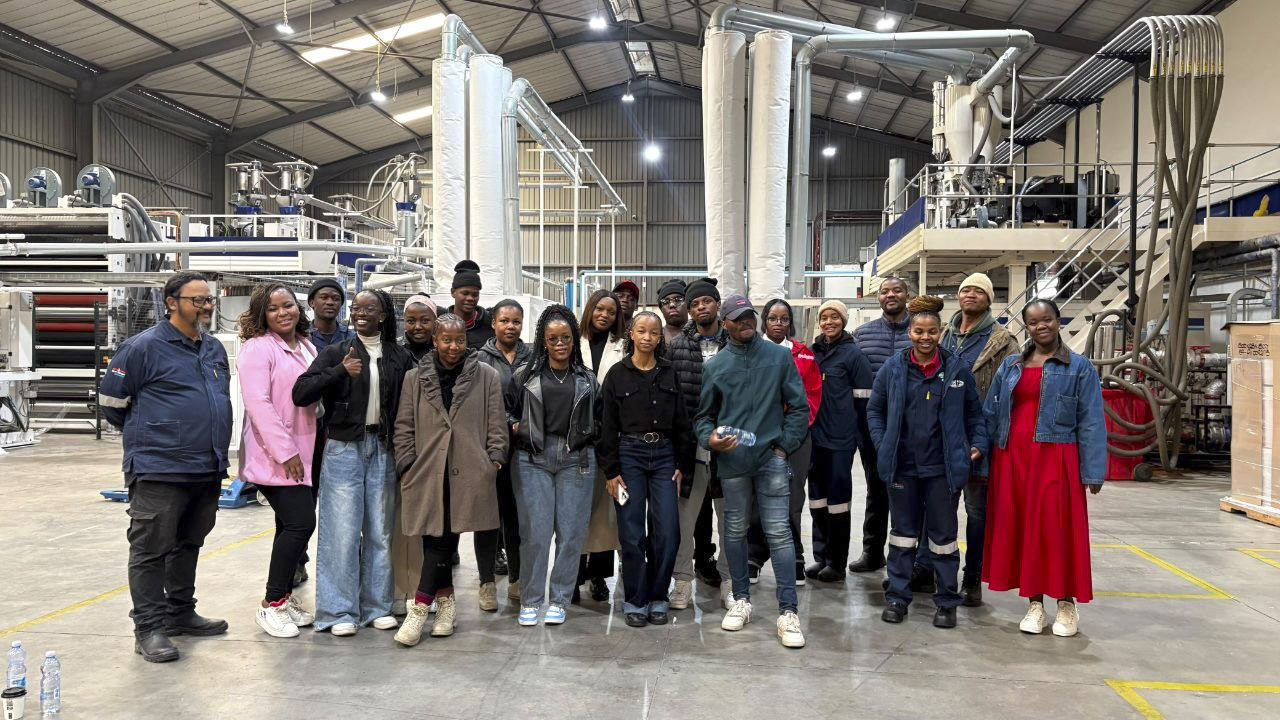
PRETORIA — Pavati Plastics Southern Africa began as a service-based business. A decade later, it has emerged as a fully black-owned manufacturer with its sights firmly set on building industrial capacity in South Africa.
The company’s transformation, which began in earnest in 2015, has seen it develop capabilities in extrusion, printing, recycling and specialised packaging. It now has 100% black ownership and is 51% black women-owned.
For financial director Ntombenhle Nhleko, the shift was neither accidental nor simply a response to government policy. It was a deliberate move driven by changing market opportunities and the need to build a sustainable manufacturing business.
“Between 2015 and 2021, Pavati Plastics evolved from a service business into manufacturing,” Nhleko said. “We were building a black-managed, sustainable packaging entity with capabilities in extrusion, recycling and specialised manufacturing.”
The R50 million turning point
Government support played a critical role in accelerating that transformation.
In March 2021, Pavati secured a R50 million matching grant from the Department of Trade, Industry and Competition (the dtic) through its Black Industrialists Scheme (BIS).
The BIS is one of government’s key industrial policy interventions, providing cost-sharing grants covering between 30% and 50% of qualifying project costs, subject to a maximum of R50 million. Its objective is to help black industrialists establish manufacturing operations or expand existing production capacity.
The scheme represents a broader attempt to move black economic participation beyond ownership and procurement towards direct involvement in industrial production.
That distinction matters in manufacturing, where the barriers to entry are significantly higher than in many service industries. Machinery, technology, technical expertise and working capital can require substantial upfront investment.
Pavati’s experience illustrates what that kind of intervention can make possible when funding is linked to an existing business with an established market.
ALSO READ: South Africa’s Unemployment Crisis Is A National Emergency
The company’s BIS-supported expansion focused in part on increasing its capacity to manufacture specialised polypropylene substrates that had previously been imported.
Its product portfolio now includes machine and manual pallet wrap, Zip Lock coin bags, cast polypropylene (CPP) and monoaxially oriented polypropylene (MOPP).
The company was granted a further 12-month extension to its BIS project in June 2025 by the Black Industrialists Financing Forum Adjudication Committee, extending the project deadline to 31 May 2026.
The extension also formally recorded Pavati’s move from 51% to 100% black ownership.
Building around what customers need
The investment has not simply allowed Pavati to produce more. It has expanded the range of products the company can develop and the markets it can pursue.
“The investment has allowed us to expand our manufacturing capabilities and diversify our product offering,” Nhleko said. “It has also enabled us to respond to customer requirements more effectively and pursue opportunities that were previously beyond our capabilities.”
That customer focus is central to Pavati’s product-development strategy.
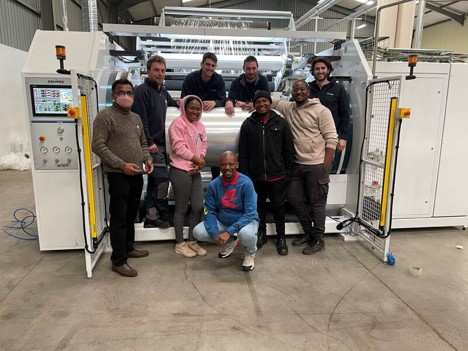
Rather than developing products in isolation, the company starts by engaging customers about their current packaging requirements and future needs. It then combines that feedback with market research and industry trends before assessing the technical possibilities with machinery suppliers.
“We engage with customers to understand their packaging needs and future objectives, conduct market research and look at industry trends,” Nhleko said. “We then work with our machinery suppliers to understand the functionality of the equipment, develop and test the product and obtain approval from the customer.”
The process brings together customers, equipment suppliers, employees, funders and regulators.
Importantly, the intellectual property generated through the development process remains with Pavati. That allows the company to build its own manufacturing knowledge and product capabilities rather than simply functioning as a contract producer.
Manufacturing with a smaller footprint
Pavati’s growth has also been accompanied by an emphasis on sustainability.
According to Nhleko, the company’s newer machinery is more energy efficient, while manufacturing offcuts can be returned to the production process rather than being discarded.
ALSO READ: From R800,000 to R340,000: How electric cars are going mainstream in SA
The combination of technology upgrades, lower energy consumption and waste reduction helped Pavati secure a joint win in the Sustainability category at the 2024 Black Industrialists Awards.
For a company operating in plastics and packaging, where waste and environmental impact remain major industry concerns, the recognition provides another dimension to its industrialisation story.
A test for black industrialisation
Pavati’s journey is significant beyond the company itself.
The BIS was designed to encourage black-owned businesses to move deeper into productive sectors of the economy, particularly manufacturing, rather than remaining concentrated in services, distribution and procurement.
Pavati’s experience shows what that transition can look like when government funding, technical investment and market demand come together.
But the larger question is whether the experience can be replicated.
South Africa’s manufacturing sector remains capital intensive, competitive and heavily exposed to imported products and global supply chains. For black-owned businesses, the challenge is not simply securing ownership or funding. It is building the machinery, technical expertise, market access and operational capacity required to remain competitive.
Pavati has moved from providing services to making products, while using its investment to develop new capabilities, replace imports and strengthen its position in the packaging market.
Its next test is whether that industrial base can continue growing without remaining dependent on government support.
If it can, Pavati’s story will be more than a successful beneficiary of the Black Industrialists Scheme. It could become an example of what South Africa’s black industrialisation agenda has been trying to produce: businesses that do not simply participate in the economy, but manufacture, innovate and compete within it.