NAIROBI — Nine months after Kenya and the United States signed a landmark $1.6 billion health agreement, senior officials from both countries have met in Nairobi to assess how the partnership is progressing and, more importantly, how Kenya will eventually take full responsibility for programmes that have long depended on American support.
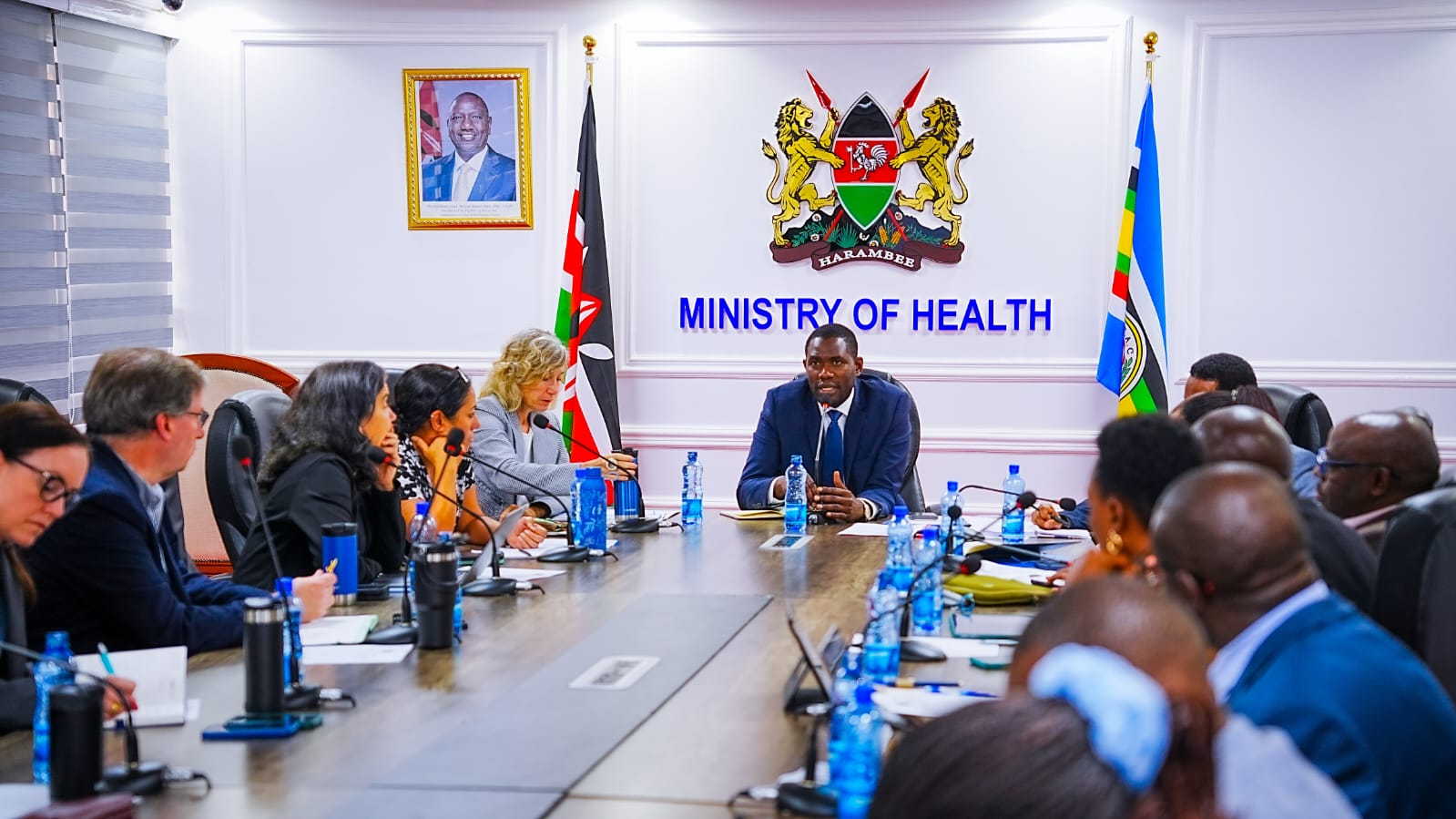
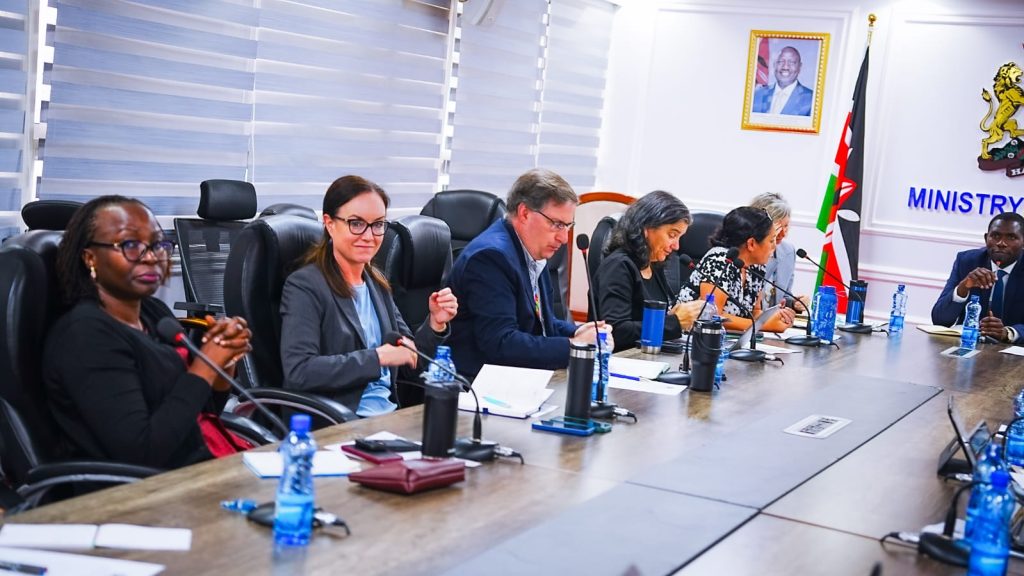
The sixth Joint Health Cooperation Framework Steering Committee Meeting focused on the transition of US-supported health programmes to Kenyan government leadership, the financing required to sustain them, risk management and preparations for the next phase of cooperation.
The meeting was chaired by Principal Secretary for Medical Services Dr Ouma Oluga and attended by senior officials from both governments, including United States Deputy Chief of Mission Carla Bernini and Head of the Project Management Unit Dr Mohammed Abdi Sheikh.
Representatives from the Council of Governors, the National Treasury and technical partners also took part, bringing the counties and Kenya’s financial authorities directly into discussions over a transition that could reshape how major health programmes are funded and managed.
A statement issued after the meeting said discussions focused on “progress towards the sustainable transition of supported health programmes to government leadership, financing, risk mitigation and preparations for the next phase of cooperation.”
Both governments reaffirmed their commitment to aligning the partnership with Kenya’s health priorities and building a more resilient, government-led health system.
A deal designed to change how aid works
The meeting comes after Kenya and the US signed the Health Cooperation Framework in Washington, in an agreement witnessed by President William Ruto and signed by US Secretary of State Marco Rubio and Kenya’s Prime Cabinet Secretary Musalia Mudavadi.
The deal made Kenya the first African country to conclude a government-to-government health partnership of this kind with Washington, with an estimated value of $1.6 billion, equivalent to roughly KSh208 billion, over five years.
The arrangement represents a significant departure from previous models in which much of US health assistance was implemented through non-governmental organisations.
ALSO READ: Kenyan lawmakers identify ‘disturbing trend’ of misconduct by British troops
US officials presented the government-to-government model as a deliberate shift away from what Rubio described as the “NGO industrial complex”, with funding and programme implementation placed more directly within government institutions.
The framework covers cooperation in the fight against HIV, tuberculosis and malaria, as well as emerging infectious diseases. It also seeks to strengthen Kenya’s public health system and its capacity to respond to future health emergencies.
But the most consequential part of the agreement may be what happens as American funding begins to taper.
Nairobi expected to take over
Under the framework, Kenya is expected to progressively assume responsibility for US-funded health commodities and human resources by 2031.
That means the country’s government will increasingly have to finance and manage programmes that have benefited from American support for years.
The Nairobi steering committee meeting therefore goes to the heart of the agreement’s long-term viability.
Officials must determine how quickly responsibilities can be transferred, which programmes are ready for government ownership, what risks could undermine the transition and where the money will come from to close potential financing gaps.
The presence of the National Treasury at the meeting is particularly important.
A transition of this scale cannot be achieved through the health ministry alone. As US support declines, Kenya will need to make room for additional health expenditure in its domestic budget, while ensuring that essential medicines, health workers and services do not become casualties of the funding shift.
The involvement of the Council of Governors is equally significant because county governments are responsible for much of Kenya’s frontline healthcare delivery.
The transition, in other words, is no longer simply a matter between Washington and Nairobi. It will increasingly be felt in county health systems and ultimately by patients.
The political debate over data
The health pact has also generated debate within Kenya, particularly around data protection and information sharing.
President Ruto has defended the agreement, arguing that Kenyan interests and data protections are safeguarded.
Speaking at a National and County Governments Coordinating Summit, Ruto said the Attorney General’s office had scrutinised the agreement “with a toothcomb” on data-related matters.
He has maintained that Kenyan data protection law takes precedence under the framework and that the government’s approach is centred on protecting the interests of Kenyan citizens.
ALSO READ: Muslim ritual meets Swahili culture at Kenya’s unique annual maulidi festival
Civil society organisations have taken a more cautious position.
A coalition of Kenyan groups has called for greater transparency and accountability around the agreement and its accompanying data-sharing arrangements.
The organisations have warned that inadequate oversight could create risks as Kenya moves from donor-supported programmes towards greater domestic financing.
Their concern is not limited to data.
They have also raised the possibility that poorly managed financing and implementation changes could disrupt continuity of care for people relying on HIV, tuberculosis, malaria and other health services.
For civil society, greater disclosure of implementation plans and meaningful involvement of affected communities are therefore central to ensuring that the transition does not weaken the health system it is intended to strengthen.
The real test begins now
The latest steering committee meeting suggests that the transition is moving from a political agreement on paper to a practical question of implementation.
Kenya now has to demonstrate that it can gradually absorb the financial and operational responsibilities attached to the partnership while maintaining essential services.
The presence of the Treasury and county governments provides a stronger institutional base for that process, but it also puts greater pressure on the government to spell out exactly how the handover will work.
The next phase of the partnership will therefore be judged less by the size of the $1.6 billion commitment than by what happens when the money starts moving differently.
Will Kenya have the domestic resources to maintain services? Will counties have the capacity to absorb additional responsibilities? And will the government publish a sufficiently detailed transition plan for citizens and civil society to scrutinise?
Those questions now sit at the centre of the partnership.
For Washington, the deal represents a new model of health cooperation.
For Nairobi, it could become a test of whether donor-supported programmes can be transferred into sustainable national systems without leaving the people who depend on them behind.