JOHANNESBURG – The largest constituency in Johannesburg’s election battle belongs to no political party. It consists of more than 1.2 million registered voters who stayed home in 2021.
Their numbers exceeded the combined ward votes of the ANC, DA and ActionSA. Now, with a month until the 4 November municipal elections, persuading even a fraction of them to return could shift the balance of power in South Africa’s economic heartland. The election date has been confirmed by the Electoral Commission of South Africa (IEC).
According to the IEC’s 2021 results, roughly 947 000 of Johannesburg’s 2.22 million registered voters cast ballots, a turnout of about 42%. Around 1.27 million did not vote.
By comparison, the ANC secured 313 387 ward votes, the DA 247 533 and ActionSA 128 986, a combined total of 689 906.
The parties that spent the next five years fighting for control of the city therefore did so with support from a minority of its registered electorate.
For this year’s contenders, the challenge extends beyond winning voters from rival parties. They must also convince those who have disengaged that voting can still make a difference.
A widening participation gap
Johannesburg’s low turnout reflects a broader national decline.
Participation in the 2021 municipal elections fell to 45.79% of registered voters, down from 57.94% in 2016. The Human Sciences Research Council (HSRC) estimated that those who voted represented only about 30% of the voting-age population.
The decline reversed earlier gains. Municipal election turnout had risen from about 48% in 2000 and 2006 to roughly 57% in 2011 and 58% in 2016.
Participation also fell in the 2024 national and provincial elections, dropping to about 59% from 66% in 2019.
Research by the Gauteng City-Region Observatory found that some of Johannesburg’s lowest turnout figures in 2021 were recorded in Soweto, Orange Farm, Diepsloot and the city centre, communities heavily affected by unreliable services.
Registration presents another obstacle. About 29 million South Africans were on the voters’ roll when it closed on 7 August, against an estimated eligible population of 39 million.
That leaves roughly 10 million eligible citizens outside the electoral process before polling day even begins.

Young people account for a substantial share of that gap. In June, IEC chief electoral officer Sy Mamabolo said more than 70% of eligible 18- and 19-year-olds were not registered.
Even among registered young voters, participation remains low. In 2024, turnout was 45% among 18- and 19-year-olds and 48% among those aged 20 to 29, below the national average.
ALSO READ: The Kingmakers’ Elections: What The World Should Watch on 4 November
The IEC’s registration weekends in June and August brought in about 754 000 first-time voters, 46% of them younger than 29. Gauteng recorded 78 405 young registrations.
But adding names to the roll does not necessarily restore confidence in politics.
The latest HSRC Voter Participation Survey, commissioned by the IEC, found that support for democracy as the preferred system of government had fallen to 36%, from 67% in the mid-2000s.
Only 17% of respondents expressed interest in voting in the 2026 elections, while three in four young respondents said they had little or no interest in politics.
Measuring who campaigns fail to reach
The participation gap is central to a proposed initiative to assess political campaigns on more than their ability to win.
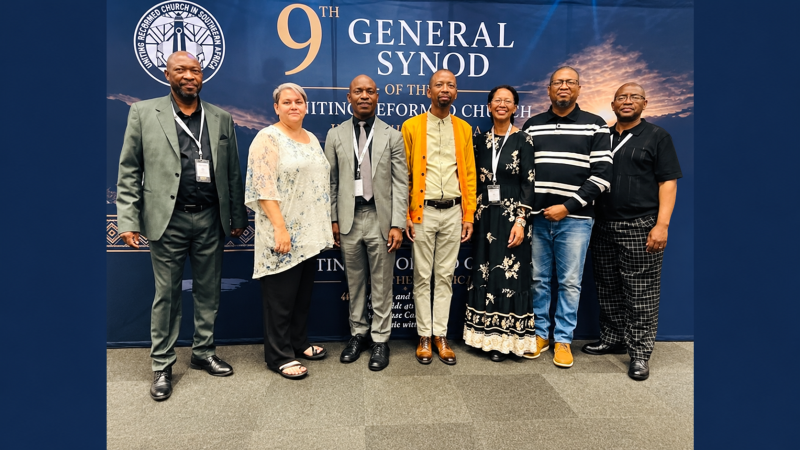
On 26 September, the International Centre for Political Campaigns (ICPC) and the University of Cape Town’s Nelson Mandela School of Public Governance convened an inception meeting in Cape Town to develop a Global Political Campaign Index.
Participants included Professor Pippa Norris of Harvard Kennedy School, Professor Bob Mattes of the University of Strathclyde, Dr Momar Dieng, Professor Sarah Lockwood and Professor Cheryl Hendricks.
ICPC group lead Glen Mpani said an election result offers only a partial measure of a campaign’s success.
“An election result tells us who won. It does not tell us whether citizens were heard, whether the choices offered were meaningful or how many people campaigns failed to reach,” he said.
“For us, the missing voter must be part of that assessment: whose concerns went unheard, who was overlooked and what can campaigns do better?”
The ICPC defines a “missing voter” as an eligible person who casts no ballot, whether because they did not register or because they registered and stayed home.
Johannesburg’s 1.27 million registered non-voters are therefore only part of the picture.
The proposed index would examine campaign integrity, inclusion and reach, policy substance, and whether voters experience meaningful choices and opportunities to be heard without pressure. A pilot will test the indicators before assessments are published.
Hendricks said the project must uphold the principles it seeks to measure.
“A school built on Nelson Mandela’s legacy has a responsibility to approach this work with integrity as well as technical rigour, because how power is pursued matters as much as who wins it,” she said.
City Hall’s revolving door
Johannesburg’s recent political history gives campaigners a difficult record to overcome.
Since the 2021 election, the city has had four mayors, with control changing hands repeatedly through coalition disputes, council votes and court intervention.
The DA’s Mpho Phalatse was elected in November 2021, removed in favour of the ANC’s Dada Morero in September 2022 and reinstated by the courts 25 days later.
She was removed again in early 2023. Al Jama-ah’s Thapelo Amad succeeded her, followed by his party colleague Kabelo Gwamanda. Morero returned in August 2024.
The uncertainty has continued within the ANC. Its regional executive resolved in March to recall Morero after he lost the regional chairpersonship to Loyiso Masuku.
The party has yet to confirm its mayoral candidate, with Morero, Masuku and Reverend Frank Chikane on its shortlist.
Residents elect councillors rather than the mayor directly. With no party expected to secure an outright majority, control of City Hall is again likely to depend on negotiations after the election.
A crowded field
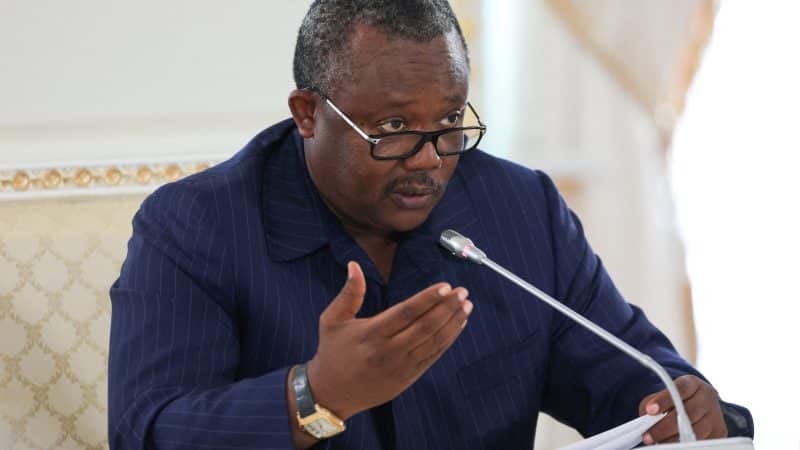
The UDM’s Yongama Zigebe joins a field of more than a dozen mayoral hopefuls, ranging from political newcomers to established national figures.
The DA has nominated former Cape Town mayor and Western Cape premier Helen Zille. ActionSA is backing its leader, Herman Mashaba, who served as Johannesburg mayor from 2016 to 2019. The Patriotic Alliance has put forward deputy president Kenny Kunene.
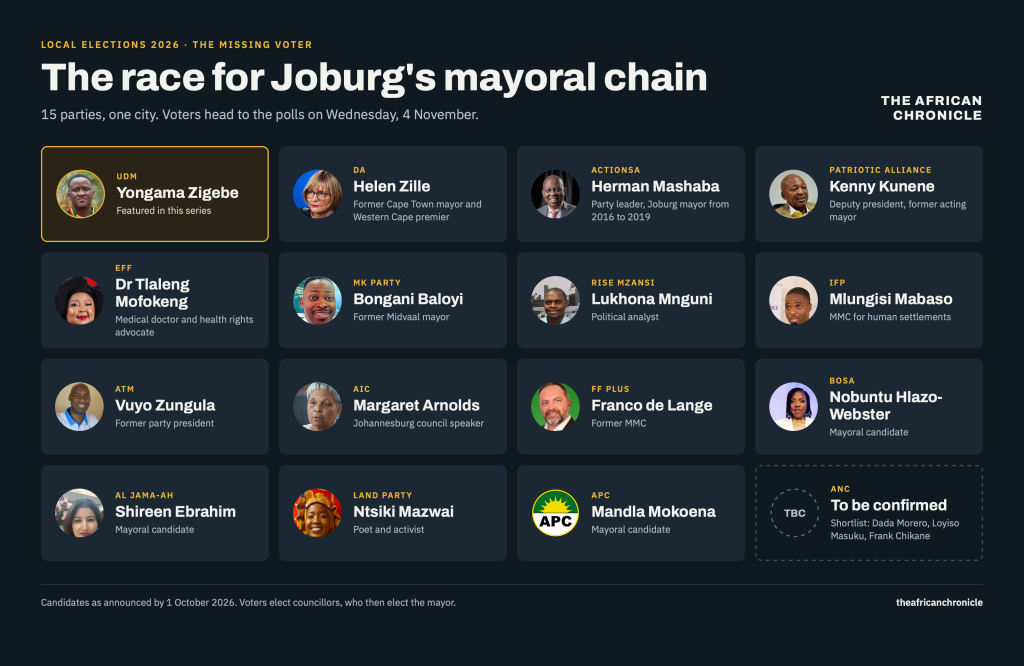
Other contenders include the EFF’s Dr Tlaleng Mofokeng, the MK Party’s Bongani Baloyi and RISE Mzansi’s Lukhona Mnguni.
The IFP is fielding Mlungisi Mabaso, while the African Transformation Movement has nominated Vuyo Zungula.
Council speaker Margaret Arnolds represents the African Independent Congress, and former mayoral committee member Franco de Lange is standing for the Freedom Front Plus.
BOSA has nominated Nobuntu Hlazo-Webster, Al Jama-ah Shireen Ebrahim, the Land Party Ntsiki Mazwai and the African People’s Convention Mandla Mokoena.
“Tired of being remembered only at election time”
As part of a series examining how Johannesburg’s mayoral contenders intend to win back disengaged voters, The African Chronicle spoke to Zigebe.
He rejected the idea that young people’s absence from the polls means they have no interest in the decisions shaping their lives.
“They are tired of being remembered only at election time and then left with unemployment, unsafe streets, unreliable services and no genuine voice in decision-making,” he said.
The UDM, he said, must work with young people and organise where they live, study, work and interact.
“We must organise in communities, campuses, workplaces and online spaces.”
He identified skills development, support for small businesses and safer public spaces as practical priorities for rebuilding participation.
Asked what it would take to restore Johannesburg, Zigebe said stable, capable governance must come first.
ALSO READ: Participation In Elections Without Understanding Reflects ‘Democracy On Autopilot’
“It won’t be restored by speeches or constant leadership changes, but by disciplined, competent and accountable governance,” he said.
His priorities include reliable water and electricity, maintained roads and public amenities, clean streets and consequences for officials who neglect essential services.
“Restoring Johannesburg is not just about fixing infrastructure; it’s about restoring dignity, opportunity and confidence. We aim to create an environment where businesses can thrive and every resident can feel that the city works for them,” he said.
Zigebe urged residents to judge his party on its commitment to capable government and community engagement.
“We want to be judged on our commitment to capable government and genuine community engagement.”
The voters who could change the result
The scale of Johannesburg’s abstention in 2021 makes turnout a central factor in this election.
A return by even a small share of the 1.27 million registered residents who did not vote could alter council representation and the coalition negotiations that follow.
For parties seeking control of the city, reaching those residents will require convincing them that their concerns will receive attention beyond election day.
Zigebe’s appeal is direct.
“Johannesburg does not need another promise; it needs leadership that works. That’s why I say: Joburg can work, let’s get to work.”