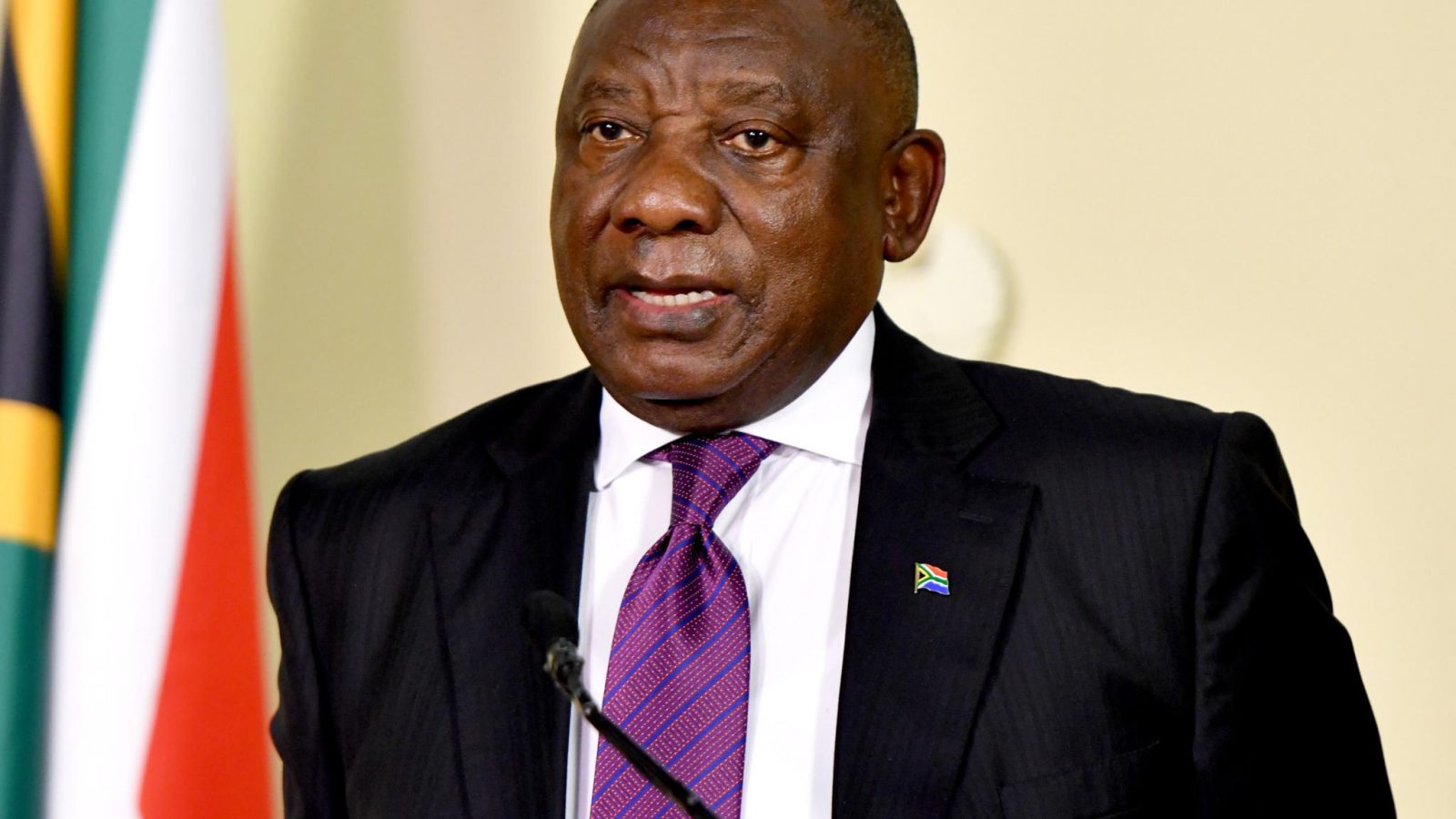
PRETORIA: President Cyril Ramaphosa says improvements in government’s finances must translate into jobs, better services and relief for households, acknowledging that many South Africans have yet to benefit from the economic recovery.
Writing in his weekly newsletter on Monday, following Finance Minister Enoch Godongwana’s Medium-Term Budget Policy Statement last week, Ramaphosa said the country had made significant progress in restoring its public finances.
“For the first time in nearly two decades, public debt has stabilised, and it is now beginning to decline,” he wrote.
But he acknowledged the gap between the fiscal outlook and people’s daily experiences.
“We know that many South Africans haven’t felt the benefits of this economic recovery yet. Unemployment is still far too high, too many families are struggling to get by and too many communities are dealing with poor services.”
Debt stabilises, but interest costs remain high
According to Treasury’s projections, gross debt stabilised at 78.4% of gross domestic product (GDP) in 2025/26, below the 78.9% peak forecast in February. It is expected to decline to 76.6% by 2029/30.
The improvement concerns debt relative to the size of the economy. Borrowing costs nevertheless remain a substantial burden: interest payments are expected to reach R441.5 billion this year, with debt service absorbing about a fifth of government revenue over the medium term.
Ramaphosa said every rand spent on interest “was a rand that couldn’t be used to build a school, build houses, equip a hospital, fix a road or provide essential services”.
Government has recorded a primary budget surplus since 2023, meaning revenue exceeds spending before interest payments are included. Treasury projects a primary surplus of R139.9 billion this year, rising to nearly 3% of GDP by 2030.
The overall budget remains in deficit, however, with that shortfall expected to narrow from 3.9% of GDP this year to 2.5% by 2030.
Ramaphosa pointed to the end of load shedding, South Africa’s removal from the Financial Action Task Force grey list, its first sovereign credit-rating upgrade in more than 16 years, and the rebuilding of SARS after state capture as signs of progress.
Revenue for 2026/27 is expected to exceed February’s forecast by R54.1 billion, including R17.1 billion in additional gross tax collections.
ALSO READ: Ramaphosa calls for BRICS to break Africa’s Raw-Materials trap
Social spending and temporary fuel relief
Ramaphosa said the social wage accounts for about 60% of non-interest spending, supporting health, education, social development and services for low-income households.
This includes free basic services for more than 11 million households, school meals and grants reaching more than 18 million beneficiaries.
He also highlighted additional funding to combat gender-based violence and femicide. The allocations will support the recruitment of more than 3,500 social workers and strengthen forensic and investigative services to help secure convictions. BusinessTech reported that R3.8 billion had been allocated for the social workers.
Godongwana also announced R10 billion in temporary fuel levy relief to ease pressure on households and businesses.
From 4 November to 1 December, the relief will amount to R1.50 a litre for petrol and R3 a litre for diesel. This will fall to R1 a litre for petrol and R1.50 for diesel from December until 5 January.
Better spending, better delivery
Ramaphosa said payments for capital assets were the fastest-growing spending item in the budget, while government had identified more than R11 billion in medium-term savings by cutting low-priority programmes.
“Our aim is not to spend less but to spend smarter,” he wrote.
Government is also reviewing the Infrastructure Conditional Grant to establish why provinces and municipalities underspend their allocations and deliver projects late or to a poor standard.
The review goes to the heart of the challenge Ramaphosa identified: allocating money does not guarantee functioning infrastructure or reliable services.
Weak growth and rising unemployment
The stronger fiscal outlook comes alongside a weaker economic forecast.
Treasury lowered its growth projection for 2026 from 1.6% to 1.2% and expects growth to reach only 2% by 2029.
ALSO READ: Ramaphosa takes SADC chairship, pledges regional unity and industrialisation drive
Statistics South Africa’s figures show that the official unemployment rate rose to 33.6% in the second quarter of 2026, from 32.7% in the first. About 8.5 million people were unemployed, while unemployment among people aged 15 to 34 stood at 47.4%.
Economists welcomed the fiscal discipline but questioned whether the improvement could be sustained.
Maarten Ackerman, chief economist at CAM Asset Management, described the statement as “a very positive budget in a very, very challenging environment”. He nevertheless warned that the economy would “struggle to print 1% growth for this year”.
KPMG South Africa lead economist Frank Blackmore said much of the revenue improvement came from higher commodity prices, which “will not last for a long time”.
Political support comes with reservations
Parties in the Government of National Unity offered qualified support, while critics questioned both the growth outlook and the timing of the fuel relief ahead of the 4 November local government elections.
The DA’s Kingsley Wakelin said “fiscal stability must be the foundation for economic growth, not the limit of government’s ambition”. He called for reforms capable of lifting growth to at least 3.5%.
The UDM’s Nqabayomzi Kwankwa said the budget “focuses on maintaining the status quo, and the projected growth of 1.2% is not setting the world alight”.
ATM leader Vuyo Zungula called for “more permanent, sustainable solutions instead of rebates that would last for two months”.
The EFF questioned the credibility of Treasury’s forecasts, saying projections intended to guide municipalities, investors and households were revised down year after year.
Cosatu’s parliamentary co-ordinator, Matthew Parks, said the federation was “deeply disappointed that once again Treasury and government collectively missed the opportunity”.
Ramaphosa said the fiscal gains placed a greater responsibility on government to deliver improvements that people could see and feel.
“Our job now is to turn financial stability into economic opportunity and a better quality of life for everyone,” he wrote.