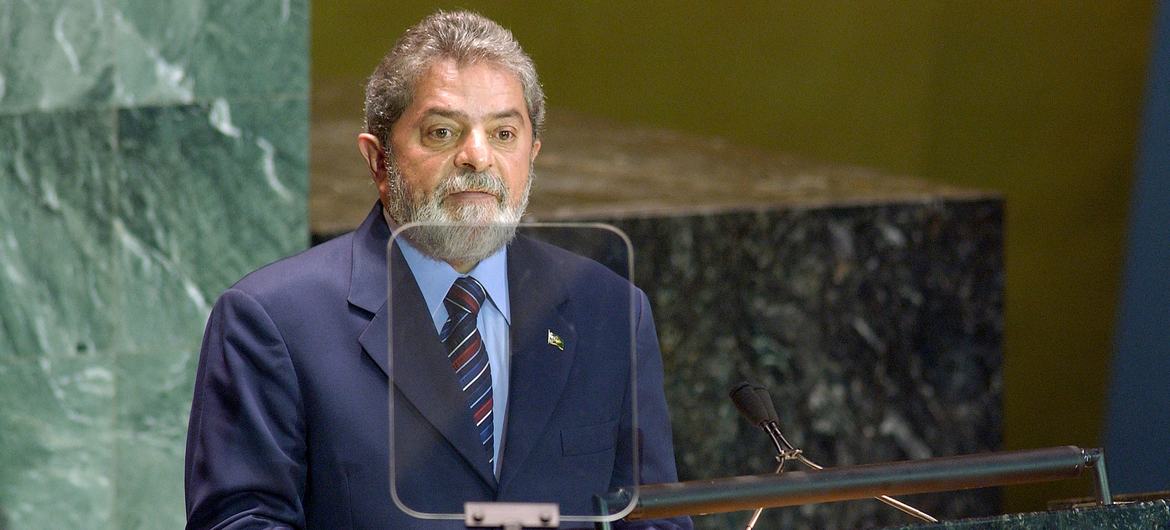
BRASÍLIA: Luiz Inácio Lula da Silva has secured a historic fourth term as Brazil’s president, overturning a first-round deficit to defeat Flávio Bolsonaro in an election his rival has refused to concede.
Official results from the Superior Electoral Court (TSE) show Lula won 64,256,232 votes, or 51.79%, against Bolsonaro’s 59,826,041 votes, or 48.21%.
The margin of about 4.43 million votes is more than twice Lula’s winning margin against Bolsonaro’s father, former president Jair Bolsonaro, in 2022. Turnout reached 80.78%.
Lula becomes the first presidential candidate since Brazil restored direct presidential elections in 1989 to win a run-off after placing second in the opening round.
He turns 81 on Tuesday and will be sworn in on 1 January 2027. His victory preserves his place as a prominent voice for the Global South, but leaves him facing an opposition-dominated Congress, economic pressure and a deeply divided electorate.
A campaign turned around
Three weeks earlier, Lula’s prospects appeared considerably weaker.
Flávio Bolsonaro led the 4 October first round with 47.03% of the vote against Lula’s 45.16%, a gap of about 2.2 million votes. Abstention reached 21%, the highest in a general election since 1998.
Several analysts interpreted the result as a sign that Bolsonaro was heading for victory.
“Sunday’s anti-Workers’ Party tsunami makes Flávio Bolsonaro the clear favorite to be elected Brazil’s next president,” political analyst Thomas Traumann wrote in Americas Quarterly after the first round.
Alessandra Ribeiro of Tendências Consultoria similarly said Bolsonaro’s lead suggested “a high probability of a second-round triumph”.
Lula responded by courting younger voters, offering debt relief to small businesses and promising free public transport on weekends. He also framed the contest around the prospect of another Bolsonaro presidency.
Pollster Andrei Roman told Al Jazeera that higher turnout in the run-off may have helped Lula recover.
Lula retained strong support in the poorer Northeast and among women, Catholics and lower-income households. He also won the cities of São Paulo and Rio de Janeiro, although Bolsonaro carried both states and the more affluent, largely evangelical South.
Addressing supporters on São Paulo’s Avenida Paulista on Sunday night, Lula credited voters with helping him find a way back.
“In this second round I learned the great lesson of my life,” he said. “When a leader doesn’t know what to do, he asks his people, and his people will know what he has to do.”
Bolsonaro seeks to overturn the result
Flávio Bolsonaro said it was “impossible to recognise” the outcome and announced plans to ask the courts to annul the run-off.
His objection centres on a ruling by Supreme Court Justice Cristiano Zanin, formerly Lula’s lawyer, extending voting by two hours to 7pm Brasília time. Bolsonaro described the decision as “unacceptable”.
ALSO READ: Unstable coalitions threaten service delivery as local elections near
According to Al Jazeera, both campaigns had requested the extension. Some polling stations had already closed, however, creating confusion and leaving some voters unable to cast their ballots.
Federal Police are investigating alleged disruptions to public transport in five states on election day. A court has also ordered the arrest of Salvador’s transport secretary.
Analysts nevertheless consider a reversal unlikely.
“It’s very improbable that it will lead to the reversal of the result,” analyst Mario Braga told Reuters while discussing the prospect of right-wing protests.
The dispute recalls the aftermath of the 2022 election, when Jair Bolsonaro refused to accept defeat. In September 2025, he was sentenced to 27 years in prison for plotting a coup to remain in power.
Barred from contesting elections until 2030, the former president was unable to run, leaving his son to carry the family’s political campaign.
Victory without control of Congress
Lula’s electoral comeback has not delivered a parliamentary majority.
Reuters reported that Bolsonaro’s Liberal Party and its allies could control more than 280 of the lower house’s 513 seats and as many as 50 of the Senate’s 81 seats.
Such numbers would give the opposition substantial influence over Lula’s legislative programme.
“I didn’t choose Congress; the people did,” Lula acknowledged in his victory speech.
He identified cancer treatment in the public health system, mathematics and engineering education, domestic artificial intelligence development, and the digital and green economies as priorities. He also wants a stronger federal role in public security.
Lula called for tighter rules governing foreign digital platforms, accusing them of attempting to influence the election.
His promise of free weekend public transport will require congressional approval, while a 15% increase in the government’s welfare programme is already being rolled out.
Economic pressures loom
The incoming administration faces limited room to meet those commitments.
Public debt exceeds 82% of gross domestic product, its highest level since the pandemic, adding pressure to reconcile social spending with fiscal stability.
A Tokyo-listed fund tracking Brazil’s Bovespa stock index fell almost 15% during Asian trading after the result. The real was also expected to weaken against the dollar.
ALSO READ: Uganda Accused of Brutal Crackdown on Opposition Supporters Ahead of Elections
Those early market signals add to the challenges facing Lula as he prepares for another term with an emboldened opposition.
International leaders respond
The election attracted close attention in Washington, where President Donald Trump’s administration had supported the Bolsonaro family and echoed claims that Jair Bolsonaro was the victim of a political “witch-hunt”.
Reuters reported that State Department officials had pushed for sanctions against Brazil aimed at weakening Lula.
Trump himself stopped short of endorsing a candidate before the vote, saying “we are watching”. His son, Donald Trump Jr, criticised the extension of voting hours.
Other leaders welcomed Lula’s victory.
European Commission President Ursula von der Leyen said Europe’s partnership with Brazil was thriving. Mexican President Claudia Sheinbaum declared: “Long live democracy, the people of Brazil won.”
Chile’s conservative president, José Antonio Kast, said the two countries had “a lot of shared future ahead”.
Lula’s foreign policy adviser, Celso Amorim, had described his re-election as important to maintaining a political balance in Latin America.
Ramaphosa welcomes a continuing partnership
For South Africa, Lula’s victory keeps a close diplomatic partner in office.
President Cyril Ramaphosa congratulated him on Monday, describing the result as significant beyond Brazil.
“On behalf of the government and the people of South Africa I congratulate my dear brother and friend, President Lula and the people of Brazil,” Ramaphosa said.
“This victory will echo beyond the shores of Brazil. It is a victory for the global south and progressive forces throughout the world.”
The Presidency said relations between South Africa and Brazil were rooted in South-South cooperation and multilateralism, including their work through BRICS, the India-Brazil-South Africa Dialogue Forum, the G77+China and the G20.
Ramaphosa visited Brazil in March at Lula’s invitation, a trip the Presidency said strengthened political and trade relations.
“We affirm our commitment to continue strengthening bilateral relations between our two countries and working closely together in all multilateral fora to forge a just and better world order underpinned by solidarity and adherence to international law,” Ramaphosa said.
Lula has prioritised relations with Africa since returning to office in 2023. Those diplomatic links also rest on deep historical ties: more than half of Brazilians identified as Black or of mixed race in the 2022 census.
A fourth term gives Lula another four years to pursue a stronger Global South voice in international affairs. His immediate task, however, is at home: defending the legitimacy of his victory, negotiating with a hostile Congress and governing a country in which almost half of voters backed his rival.