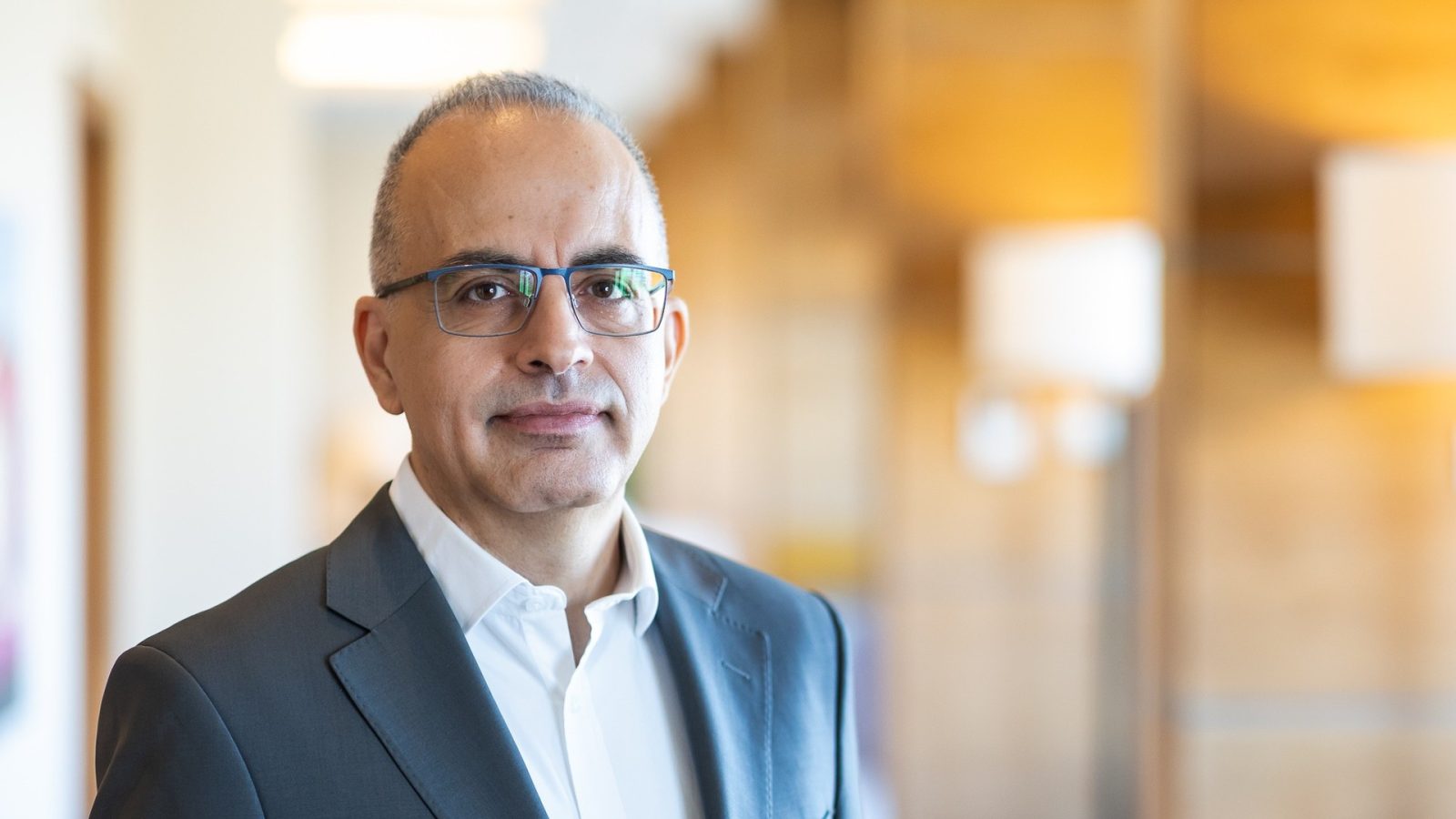
JOHANNESBURG: African governments, companies and public institutions risk losing investment, credibility and public trust because they are unprepared for disinformation campaigns, former International Criminal Court (ICC) spokesperson Fadi El Abdallah has warned.
But he says organisations must be able to distinguish between false attacks and legitimate criticism. While disinformation requires a swift, coordinated response, genuine governance failures must be addressed through transparency and accountability.
El Abdallah, who served as the ICC’s spokesperson and head of public affairs for 15 years, spoke live on SABC Channel Africa’s morning programme on Monday.
Earlier this month, he joined pan-African communications firm APO Group as chief strategic advisor for reputation and crisis communications. He heads a new division offering crisis advice to African clients.
“The cost of disinformation for African countries is real: less investment, higher borrowing rates, economic damage, and in the worst cases, threats to state stability,” El Abdallah said.
“What makes it so dangerous now is that it has never been cheaper or faster to produce and distribute false information, and most institutions are not prepared to counter it.”
The cost of perception
Several studies have attempted to put a financial value on the effect of negative perceptions of Africa, although they examine different issues and do not measure the cost of disinformation alone.
In 2024, advocacy group Africa No Filter and consultancy Africa Practice published The Cost of Media Stereotypes to Africa, which examined international coverage of elections in Kenya, Nigeria, South Africa and Egypt.
The study compared reporting on those countries with coverage of countries it identified as having similar risk profiles, including Malaysia and Denmark. It found that 88% of articles about Kenya’s election period were negative, compared with 48% for Malaysia.
It estimated that biased media coverage increased the perceived risk of investing in African countries, potentially costing the continent up to $4.2 billion a year in additional interest on borrowing.
“Current global media reporting often exaggerates the risks associated with doing business in Africa,” Africa Practice chief executive Marcus Courage said when the report was released.
A separate United Nations Development Programme study in 2023 estimated that African countries could save up to $74.5 billion if sovereign credit ratings relied on less subjective assessments. The figure relates to credit-rating practices more broadly and is not a direct estimate of losses caused by disinformation.
ALSO READ: Uganda High Court Clears Way for Besigye Treason Trial, Rejects Abduction Claims
Senegal’s then economy minister, Oulimata Sarr, said at the time that existing assessments were “not a true reflection of our economies”.
For El Abdallah, the response depends on the nature of the problem. An institution facing a genuine governance failure needs to correct it and account for it publicly. A coordinated campaign of falsehoods, meanwhile, requires monitoring, rapid responses and clear messages prepared before a crisis develops.
Disinformation campaigns on the rise
The Africa Center for Strategic Studies, a US Department of Defense research institution, documented 189 disinformation campaigns targeting African countries in 2024, nearly four times the number it had identified two years earlier. The centre said the figure was “surely an undercount”.
Its analysis found that at least 39 countries had been affected, with 20 targeted by three or more campaigns. About six in 10 campaigns were attributed to foreign states.
Russia was linked to about 80 campaigns, roughly 40% of the total. The centre described it as “the primary purveyor of disinformation in Africa”. China, the United Arab Emirates, Saudi Arabia and Qatar were also named among foreign sponsors.
El Abdallah said the speed and low cost of producing false content had made the threat harder to manage. In his view, the longer inaccurate claims go unanswered, the more opportunity they have to gain credibility.
“Silence is never neutral,” he said.
Lessons from The Hague
El Abdallah’s approach draws on his time at the ICC, an institution that has faced sustained criticism from some African governments over its investigations and prosecutions.
For much of the past two decades, African leaders have accused the court of unfairly targeting the continent. The relationship has also produced formal efforts by some countries to leave the court.
South Africa announced its intention to withdraw in 2016 after a dispute over its failure to arrest Sudan’s then president Omar al-Bashir. It revoked the notice in 2017 after the High Court found that the decision had been taken unlawfully.
Burundi became the first country to leave the court in 2017. In September 2025, the military-led governments of Burkina Faso, Mali and Niger announced plans to withdraw, describing the ICC as a “tool of neocolonial repression”. The court confirmed in July this year that the formal year-long withdrawal process was under way.
The ICC has also faced pressure from Washington, which imposed sanctions on its prosecutor and several judges in 2025.
“At the ICC we had to build a network and infrastructure to explain the institution’s work to governments, to embassies, to the media, and to the general public across Africa,” El Abdallah said.
ALSO READ: Ramaphosa refuses to resign, vows to challenge Phala Phala panel report in court
“The lesson I bring to APO Group is that counter-narrative is not an emergency response; it is a standing operational function. You have to build it before you need it.”
He said institutions should respond quickly, address the specific allegation being made and ensure their messages remain consistent across different channels.
Communication cannot hide a problem
El Abdallah said organisations often wait until a crisis has already broken before considering how they will respond.
“The biggest mistake, and it is not specifically African, it is a human mistake, is that people do not think of the worst that is coming. They do not build the infrastructure before the crisis happens,” he said.
“And then when there is a crisis, they try to use communication to cover the situation. But communications amplifies reality. It does not hide it.”
He argued that communication can help restore trust only when an institution is also dealing with the underlying problem. Attempts to use messaging to avoid accountability, he said, risk deepening public cynicism.
His advice is for organisations to identify their vulnerabilities, prepare crisis plans, train leaders to address difficult issues early and build relationships with journalists before they need them.
A new business offering
El Abdallah’s warning also sits alongside his new role at APO Group, which distributes press releases and operates the Africa Newsroom newswire.
The company says it reaches more than 450,000 journalists across all 54 African countries. Its new division offers services including crisis response, executive advice, preparedness and reputation recovery.
APO Group lists the African Development Bank Group, Africa CDC and Afreximbank among its clients.
When El Abdallah’s appointment was announced, founder and chairman Nicolas Pompigne-Mognard pointed to his experience managing the ICC’s reputation through “coordinated disinformation campaigns”, sanctions crises and war crimes trials.
For El Abdallah, the distinction remains between telling an organisation’s story and correcting the conduct behind a damaging one. Institutions need to be ready to challenge falsehoods, he says, but stronger communication cannot substitute for fixing a real failure.