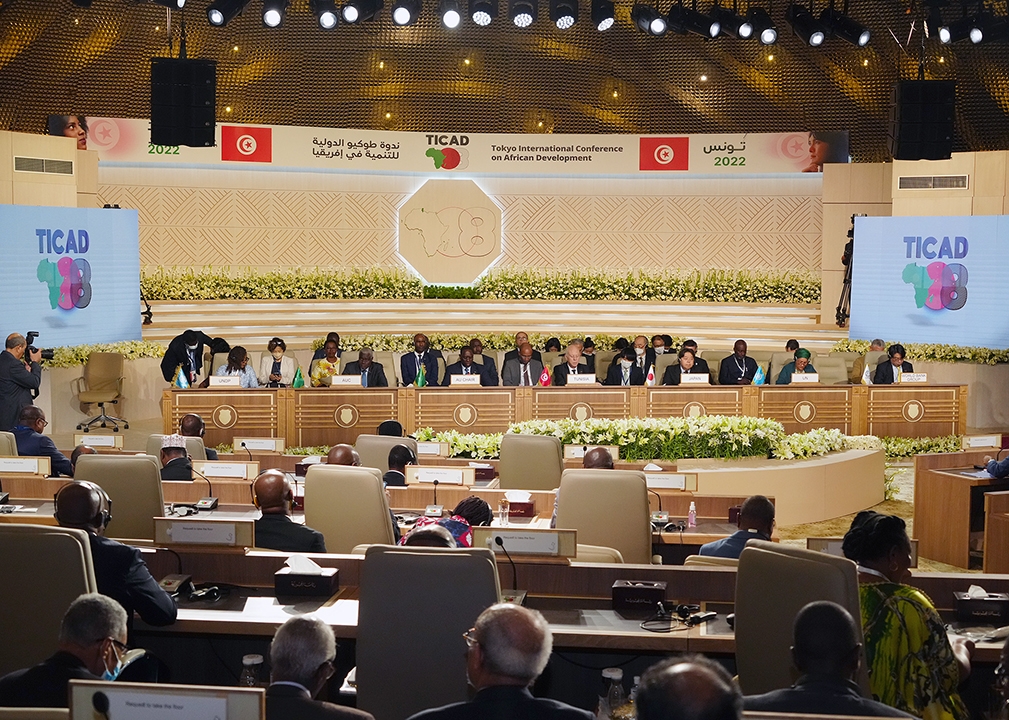
Yokohama, Japan — The African Development Bank (AfDB) is set to take a leading role at the 9th Tokyo International Conference on African Development (TICAD9), which begins on Wednesday, focusing on mobilising investment and deepening partnerships between Africa and Japan.
The three-day gathering, co-hosted by the United Nations, the World Bank, the African Union Commission, and the UN Development Programme, takes place at a time when Africa is seeking to close persistent investment gaps while building resilience against global economic and climate shocks.
The AfDB, long recognised as a key driver of Africa’s development, is expected to showcase how partnerships with Japan have helped deliver major gains across energy, transport, health, and climate resilience.
A Partnership with a Track Record
Since the launch of TICAD in 1993, Japan has established itself as a reliable partner in Africa’s development. One of the cornerstone collaborations with the Bank has been the Enhanced Private Sector Assistance for Africa (EPSA), launched in 2005. Through co-financing and targeted investment, EPSA has channelled billions into African businesses and infrastructure projects.
ALSO READ: Africa Turns to Artificial Intelligence to Drive Its 50-Year Vision
An extension of this partnership, known as EPSA6, is expected to be signed during TICAD9, reinforcing Japan’s long-term commitment. The framework operates through four pillars: co-financing, non-sovereign loans, private sector assistance, and direct investment finance, designed to support Africa’s private sector growth.
“The role of the private sector in driving Africa’s transformation cannot be overstated,” AfDB officials said ahead of the summit. To that end, the Bank will host side events encouraging Japanese investment in green hydrogen, health, agriculture, education, and transport initiatives like Mission 300.
Energy Access in Focus
On Tuesday, a day before the official opening, energy access, one of Africa’s most pressing challenges, took centre stage at an event organised by the Japan International Cooperation Agency (JICA) and partners.
Wale Shonibare, the AfDB’s Director of Energy Financial Solutions, Policy and Regulation, underscored the scale of the problem: 600 million Africans lack access to reliable electricity, representing 83% of the world’s population without energy.
Another 900 million lack clean cooking solutions, with Nigeria, the Democratic Republic of Congo, Ethiopia, Uganda and Tanzania accounting for half of those affected.
“Without energy, the foundation for development cannot be realised,” Shonibare told delegates. “We see enormous potential in Africa’s regional power pools. Today’s session is both timely and catalytic.”
Showcasing Opportunities
The Bank will also highlight its Africa Investment Forum, a joint initiative with eight other institutions designed as a marketplace for attracting private capital into large-scale projects. During last year’s Market Days in Morocco, a Japan-focused session drew over 100 participants, including business leaders, startups, and public institutions, to explore opportunities in agricultural innovation and green growth.
ALSO READ: African Bank’s $17M Bet on Jobs Over Guns in Mozambique’s Cabo Delgado
Senior AfDB executives attending TICAD9 include Kevin Kariuki, Vice President for Power, Energy, Climate and Green Growth; Solomon Quaynor, Vice President for Private Sector and Industrialisation; and Nnenna Nwabufo, Vice President for Regional Development and Business Delivery.
As TICAD9 unfolds, the emphasis will be on turning commitments into concrete investments. With Africa still grappling with weak infrastructure, climate vulnerabilities, and the world’s fastest-growing population, the conference is expected to reinforce Japan’s role as a reliable partner in Africa’s long-term development journey.