As the Economic Community of West African States (ECOWAS) celebrates 50 years since its founding, the region is grappling with a persistent and dangerous threat that undermines its vision of integration, stability, and development: money laundering.
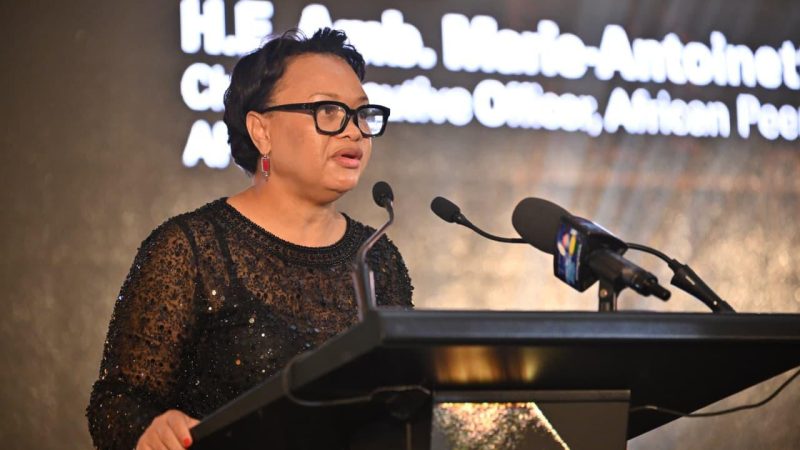
In Dakar, Senegal, the Intergovernmental Action Group against Money Laundering in West Africa (GIABA) led commemorations on June 3, 2025, alongside ECOWAS institutions and international partners. Dignitaries from member states, embassies, and agencies gathered to reflect on the region’s progress and chart a path forward under the ECOWAS Vision 2050. But beneath the ceremonial tone lies a sobering reality — illicit financial flows continue to rob Africa of billions in much-needed revenue every year.
Money Laundering: A Continental Threat
Money laundering is no longer a shadowy concern reserved for financial watchdogs. Across Africa, it’s a systemic problem linked to corruption, terrorism financing, smuggling, and tax evasion. In Nigeria, billions vanish through fraudulent contracts and offshore transfers.
In the Democratic Republic of Congo, mineral wealth is often siphoned off through complex laundering schemes. In South Africa, state capture inquiries have laid bare how sophisticated networks abuse financial systems for private gain.

The United Nations Economic Commission for Africa (UNECA) estimates that Africa loses more than $88 billion annually to illicit financial flows. That’s more than what the continent receives in development aid and foreign direct investment combined.
Where Systems Are Weak, Laundering Thrives
Many African countries struggle to maintain effective anti-money laundering (AML) and counter-terrorism financing (CTF) frameworks. Regulatory agencies are often underfunded, poorly coordinated, or vulnerable to political pressure. As economies digitise and financial systems modernise, new risks emerge, especially through crypto transactions, informal trade, mobile money, and unregulated investment schemes.
Who’s on the Global Watchlist? Greylisted and At-Risk Countries
The Financial Action Task Force (FATF), the global standard-setter on AML/CTF efforts, maintains a list of countries under “increased monitoring” — commonly known as the grey list. Countries on this list are not blacklisted, but they are flagged as having significant deficiencies in their AML/CTF regimes and are expected to make swift reforms.

African Countries Currently Greylisted (as of 2025):
- South Africa – Greylisted in 2023 due to weaknesses in tracking money flows and slow prosecutions.
- Nigeria – Greylisted in 2023; deficiencies include under-regulation of informal sectors and low asset recovery rates.
- Mozambique – Ongoing concerns over enforcement, especially following the hidden debt scandal.
- Democratic Republic of Congo (DRC) – Weak controls over extractive industries and the banking sector flagged.
- Tanzania – Listed over limited transparency in ownership and border transaction monitoring.
- Uganda – Concerns around terrorism financing and money laundering via real estate and NGOs.
Countries at Risk of Being Greylisted:
- Ghana – Recently removed from the grey list in 2021, but remains under scrutiny after lapses in enforcement.
- Namibia – Under FATF review over weaknesses in beneficial ownership transparency.
- Kenya – Under pressure to reform banking oversight and digital finance regulation.
- Zambia – Risk flagged due to poor implementation of AML laws in the financial sector.
- Mali – Political instability has disrupted progress on anti-money laundering systems.
- Burkina Faso and Niger – Conflict zones that provide fertile ground for unmonitored financial flows tied to arms and terror financing.
GIABA’s Work: Progress and Challenges

GIABA, the ECOWAS institution focused on combating money laundering, plays a central role in evaluating member countries and encouraging reforms. Speaking at the 50th-anniversary event, GIABA Director General Edwin W. Harris Jr. praised efforts to build institutional frameworks but also cautioned that real progress demands political will and accountability.
The group’s assessments and technical assistance help drive improvements, but actual implementation is still slow in many states. Too often, national interest lags behind international obligations.
ALSO READ: From Sandton threats to state contracts: Moriel faces scrutiny on two fronts
A Way Forward: From Commitments to Consequences
To meaningfully tackle money laundering and illicit finance, Africa — and West Africa in particular — needs to shift from policy statements to measurable action. Key steps include:
- Empowering independent institutions to monitor financial activity and prosecute offences without political interference.
- Strengthening cross-border cooperation through shared databases, real-time intelligence, and joint enforcement teams.
- Mandating transparency in business ownership and real estate transactions.
- Regulating digital finance, including crypto platforms and mobile money, to close emerging loopholes.
- Investing in civil society and journalism to follow the money and expose wrongdoing.
The Real Test of ECOWAS at 50
The ECOWAS Vision 2050 calls for a shift from “ECOWAS of States” to an “ECOWAS of People.” But without financial accountability, that vision risks remaining rhetorical. The real beneficiaries of money laundering are not the people of West Africa, but the networks of elites, arms traffickers, and corrupt bureaucrats who operate in the shadows.

Fifty years after the signing of the Lagos Treaty, the stakes are no longer just regional stability or economic growth. The integrity of African governance, the safety of its citizens, and the ability to fund schools, hospitals and jobs, all depend on the courage to shut down the illicit flows that bleed the continent dry.
If African countries are serious about changing their global reputation, being removed from FATF grey lists should not just be a technical goal. It must become part of a broader fight to protect what rightfully belongs to the people.