JOHANNESBURG – The fight against poverty in South Africa cannot be won without empowering women at the centre of the economy and community life.
That was the message from Ria Phiyega as she reflected on the 35-year journey of the Women’s Development Bank Trust. This organisation has built a reputation for using microfinance, skills training and community development programmes to help women lift families and communities out of poverty.
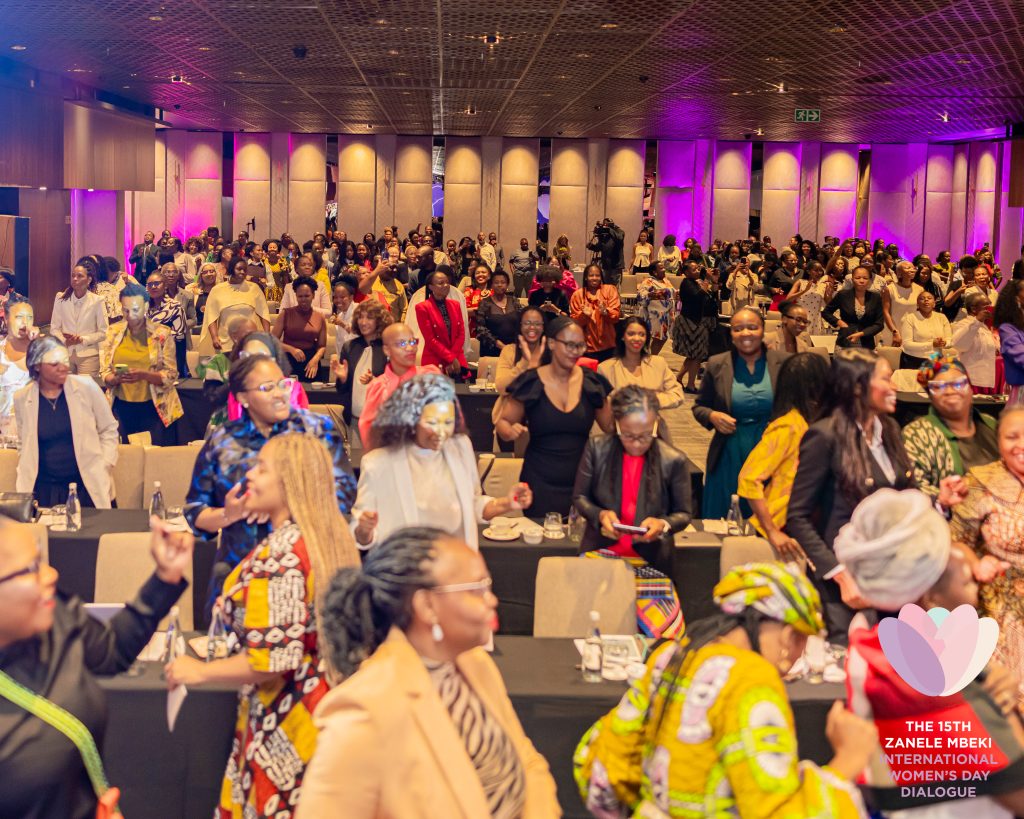
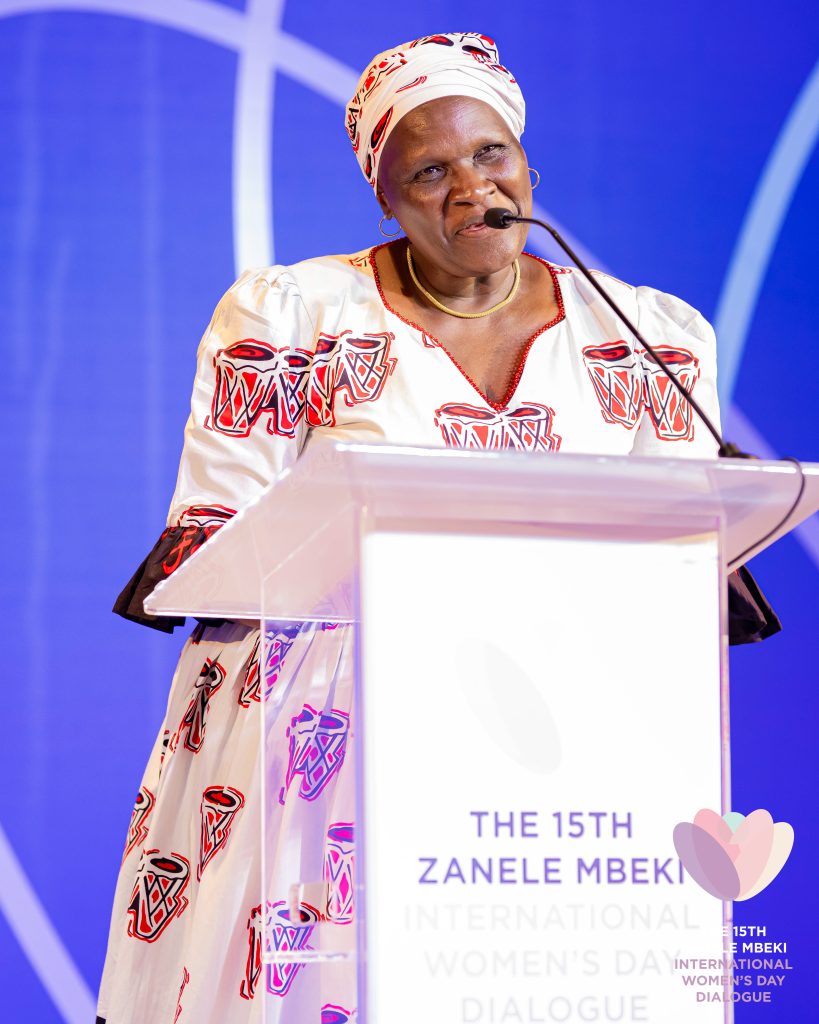
Speaking at the 15th Zanele Mbeki International Women’s Dialogue, Phiyega said the organisation’s work shows that poverty is not an unchangeable reality, but a challenge that can be confronted when communities are equipped with opportunity, skills and support.
She dedicated her message to the late Reeva Forman, one of the organisation’s founders, as well as to Zanele Mbeki and other women patrons who supported the initiative in its early years.
According to Phiyega, their efforts laid the foundation for what has become one of South Africa’s significant grassroots movements aimed at reducing poverty and inequality through women’s empowerment.
“Thirty-five years ago, a group of visionary women were driven by a powerful vision to enter the war against poverty,” Phiyega said. “Their courage and foresight laid the foundation for what has become one of the most impactful movements in the fight against poverty and inequality in South Africa.”
She noted that poverty remains one of the most persistent challenges facing communities across the country. However, she said the work of the WDB Trust demonstrates that meaningful progress is possible when communities are equipped with the tools and support needed to improve their circumstances.
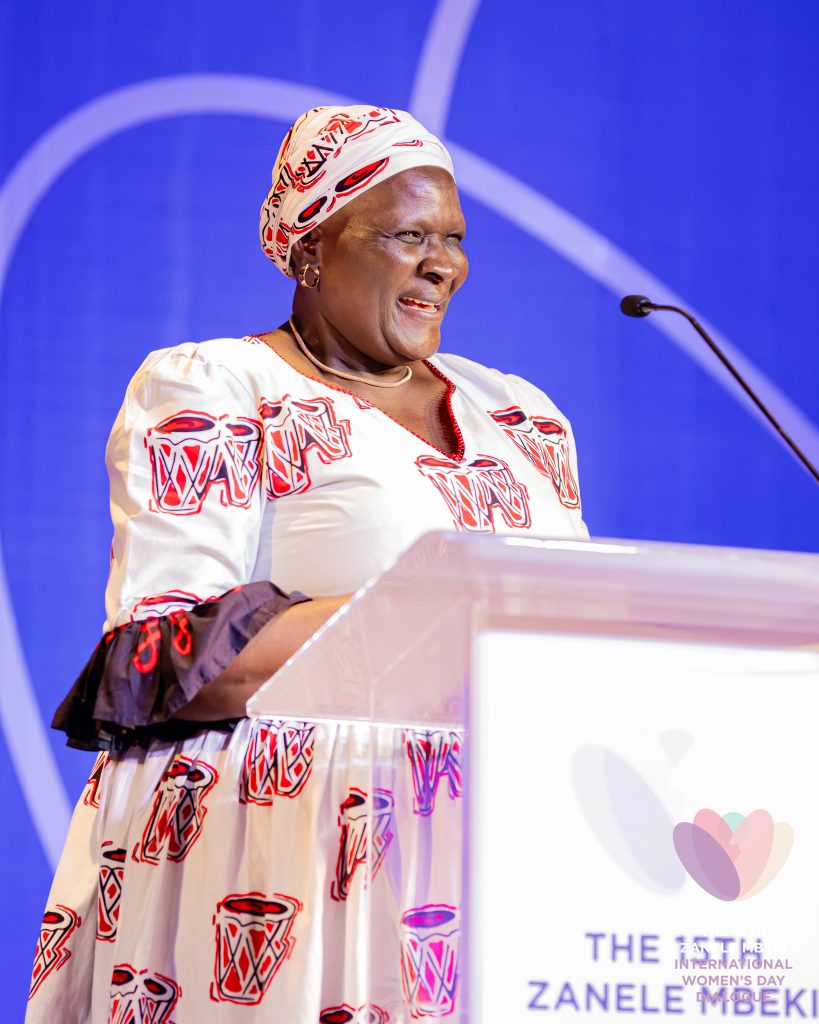
“Poverty is not just about the absence of income,” Phiyega said. “It is about the absence of opportunity, access and voice.”
Phiyega explained that the organisation was founded on the belief that sustainable development requires more than short-term assistance.
Instead of focusing on charity, the WDB Trust developed programmes designed to empower individuals and communities through financial access, education and skills development.
ALSO READ: Vatican commission says ‘no’ to women as Catholic deacons
The organisation’s approach combines economic empowerment, community development and social support initiatives to help households build sustainable livelihoods.
One of its key interventions has been expanding access to financial services for women who have historically been excluded from the formal banking sector.
Through its microfinance initiatives, the WDB Trust has provided low-income individuals and small entrepreneurs with access to financial services such as microloans and savings programmes.
The aim is to help women establish and grow small businesses, enabling them to generate income and improve the economic stability of their households.
Phiyega said the programme increasingly draws on the model developed by Muhammad Yunus through the Grameen Bank in Bangladesh.
The Grameen model demonstrated that providing small loans to people without access to traditional banking can help them build businesses and gradually lift themselves out of poverty.
By adapting elements of this model to the South African context, the WDB Trust has sought to extend financial inclusion to rural communities and marginalised groups.
The broader goal, according to Phiyega, is to ensure that all individuals, regardless of income level or location, can access essential financial services, including credit, savings and other tools that support economic participation.
Recognising that financial access alone cannot eliminate poverty, the organisation also established a training academy to equip individuals with the skills needed to participate in the modern economy.
The academy provides training programmes for youth and adults, with a particular focus on digital literacy and technological skills.
Rural youth are introduced to computer training and digital tools that improve their employment prospects and help prepare them for opportunities in an increasingly technology-driven labour market.
The programmes also encourage leadership development by enabling young people to use technology to innovate and solve problems within their communities.
For adults, the academy offers literacy and numeracy programmes supported by digital learning tools.
According to Phiyega, these initiatives strengthen everyday life skills and improve participants’ ability to participate in economic activities and community initiatives.
The training programmes also have broader social benefits, as adults who acquire new skills often become role models for younger generations and help foster a culture of lifelong learning within families and communities.
The training academy also incorporates programmes focused on women’s health education.
These initiatives provide information on managing chronic illnesses such as high blood pressure and diabetes, which remain common health concerns in many rural communities.
Participants are encouraged to adopt preventive healthcare practices and healthier lifestyles, reducing reliance on distant or overstretched health facilities.
Phiyega said that integrating health education with economic empowerment strengthens women’s ability to lead productive and independent lives.
Another key initiative highlighted in the address was the Zenzele Psychosocial Development Programme.
The word “Zenzele” translates to “stand up and do it for yourself,” reflecting the programme’s emphasis on self-reliance and community-driven development.
The initiative works with households in under-resourced rural areas to help them strengthen their resilience and connect with government and other partner development services.
Rather than providing permanent support, the programme focuses on building community capacity so that families can eventually sustain their own development.
Once communities demonstrate the ability to manage their own progress, the WDB Trust gradually withdraws from those areas, leaving behind local networks and systems that continue to support development.
To track the impact of its programmes, the organisation uses the Greenlight Methodology, a poverty-monitoring tool that allows participants to assess their progress across multiple social and economic indicators.
Households evaluate their circumstances in areas such as food security, income levels, housing conditions and access to education.
Each indicator is measured using a colour system in which red signals severe challenges and green indicates satisfactory conditions.
Progress is measured by the number of indicators that move from red to green over time.
According to Phiyega, the programme’s results have been encouraging.
In the iLembe District Municipality in KwaZulu-Natal, participants recorded an overall improvement of 39 per cent between the baseline assessment and the third Greenlight survey.
ALSO READ: Empowering Women, Empowering Economies: The Spark Ignited at EmpowerHER 2025
Core participants in the programme achieved a 45 per cent improvement, while group participants recorded a 35 per cent improvement.
Results were broadly consistent across the municipalities where the programme was implemented. KwaDukuza recorded a 40 per cent improvement, Maphumulo recorded 39 per cent and Ndwedwe recorded 37 per cent.
“These numbers are not just statistics,” Phiyega said. “They represent households that now have food security, women who run small enterprises, and communities that are organising themselves to face the future with confidence.”
The WDB Trust also participates in initiatives aimed at strengthening collaboration among women across Africa.
Through the African Women in Dialogue initiative, the organisation connects women leaders, activists and community organisers from different countries.
The platform encourages the sharing of experiences, policy dialogue and collective action aimed at advancing women’s empowerment across the continent.
Phiyega said the WDB Trust’s success lies in its holistic approach to poverty reduction.
Rather than treating poverty as a single problem with a single solution, the organisation addresses economic, social and cultural challenges simultaneously.
By combining microfinance initiatives, skills training, community development and continental collaboration, the organisation has developed a model that can be adapted by other development initiatives.
“As we reflect on WDB Trust’s journey, we are reminded that poverty is not inevitable,” Phiyega said.
“It is a challenge that can be defeated when we empower people, especially women, to take charge of their destinies.”
She added that the organisation’s experience shows that lasting change is possible when communities are supported to build their own solutions.
“Today we celebrate WDB Trust not just as an organisation, but as a beacon of hope and a testament to what is possible when people work together to create a more equal society.”