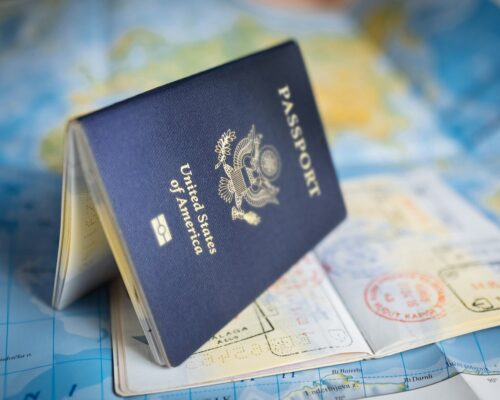
JOHANNESBURG – Mali and Burkina Faso have announced reciprocal travel bans on United States citizens, escalating diplomatic tensions between Washington and a growing bloc of West African states that say they are being unfairly targeted by US immigration and security policies.
In separate statements issued late Tuesday, the foreign ministries of both countries confirmed that US nationals will no longer be permitted to travel freely to their territories. The move follows a decision by the Trump administration earlier this month to place Mali and Burkina Faso on a list of countries subject to a full US travel ban, effective from January 1.
Both governments said their actions were taken strictly on the basis of reciprocity.
“The decision by the United States was taken unilaterally, without prior consultation, and does not reflect the realities on the ground,” Mali’s foreign ministry said, adding that Washington’s stated security concerns were not supported by factual developments within the country.
Burkina Faso echoed the same position, describing the US measure as unjustified and politically motivated, and stressing that mutual respect should underpin diplomatic relations.
The US rationale
The White House announced on December 16 that President Donald Trump had expanded the scope of US travel restrictions to include Mali, Burkina Faso and five other countries. According to the administration, the countries added to the list suffer from “demonstrated, persistent, and severe deficiencies in screening, vetting, and information-sharing” that allegedly pose risks to US national security and public safety.

The ban forms part of a broader immigration and border security agenda revived during Trump’s second term, building on similar policies enacted during his first presidency. US officials argue that the restrictions are preventative measures designed to strengthen border controls rather than punitive actions against specific nations.
ALSO READ: Trump’s Sweeping Travel Ban on 12 Nations Takes Effect, Drawing Global Outrage and Legal Scrutiny
However, African governments affected by the policy have pushed back strongly, arguing that they were neither consulted nor presented with evidence to support Washington’s claims.
A regional backlash
Mali and Burkina Faso are not alone in responding forcefully to US travel restrictions. On December 25, neighbouring Niger announced it would stop issuing visas to US citizens altogether. Niger’s state media cited a diplomatic source who said the move was also based on the principle of reciprocity after the country found itself targeted by Washington.
Earlier in June, Chad suspended visa issuance to US citizens after it was included on a previous list of 12 countries affected by a travel ban. At the time, Chadian authorities said the measure was necessary to defend national dignity and sovereignty.
Together, these decisions point to a broader regional backlash against US policies that Sahelian governments view as discriminatory and dismissive of African sovereignty.
Shifting geopolitics in the Sahel
The travel bans come at a time of profound political realignment in the Sahel. Mali and Burkina Faso are both governed by military-led administrations that have distanced themselves from traditional Western partners, particularly France and the United States, while strengthening ties with non-Western allies, including Russia.
Since seizing power, the governments in Bamako and Ouagadougou have repeatedly accused Western countries of interference and double standards, especially on security and governance issues. Travel restrictions imposed by Washington are therefore being interpreted not just as immigration measures, but as political signals.
Analysts say the reciprocal bans reflect a deliberate effort by Sahelian states to assert parity in international relations.
“This is about more than visas,” said a West Africa-based political analyst. “These governments are signalling that they will no longer accept decisions imposed on them without dialogue, especially from countries that previously positioned themselves as partners.”
Implications
In practical terms, the reciprocal bans are likely to have limited immediate impact on tourism, as US travel to Mali and Burkina Faso has already been low due to ongoing security concerns. However, the measures could affect diplomats, aid workers, business representatives and journalists, many of whom rely on regular travel between the US and the Sahel.
ALSO READ: Travel between African countries is still hard: fresh ideas to get movement flowing
Humanitarian organisations have also raised concerns that escalating diplomatic tensions could complicate development and aid operations in a region already facing severe humanitarian challenges, including displacement, food insecurity and insurgent violence.
For Washington, the growing list of African countries responding with reciprocal measures risks undermining US influence in a strategically important region at a time when geopolitical competition is intensifying.
A widening rift
While neither side has indicated that talks are underway to resolve the dispute, diplomatic observers warn that continued escalation could further erode already strained relations between the US and parts of Africa.
For Mali and Burkina Faso, the bans are being framed domestically as acts of self-respect and sovereignty. For the United States, they are likely to be viewed as symbolic gestures with limited leverage.
What is clear, however, is that the era in which African states quietly absorbed Western policy decisions is fading. As more governments respond with reciprocal actions, travel bans are becoming not just tools of border control, but markers of a shifting global order in which African states are increasingly willing to push back.