CAPE TOWN — Regional electricity integration could play a decisive role in addressing Africa’s long-standing power shortages and unlocking investment in energy infrastructure, according to the African Energy Chamber’s State of African Energy 2026 Outlook.
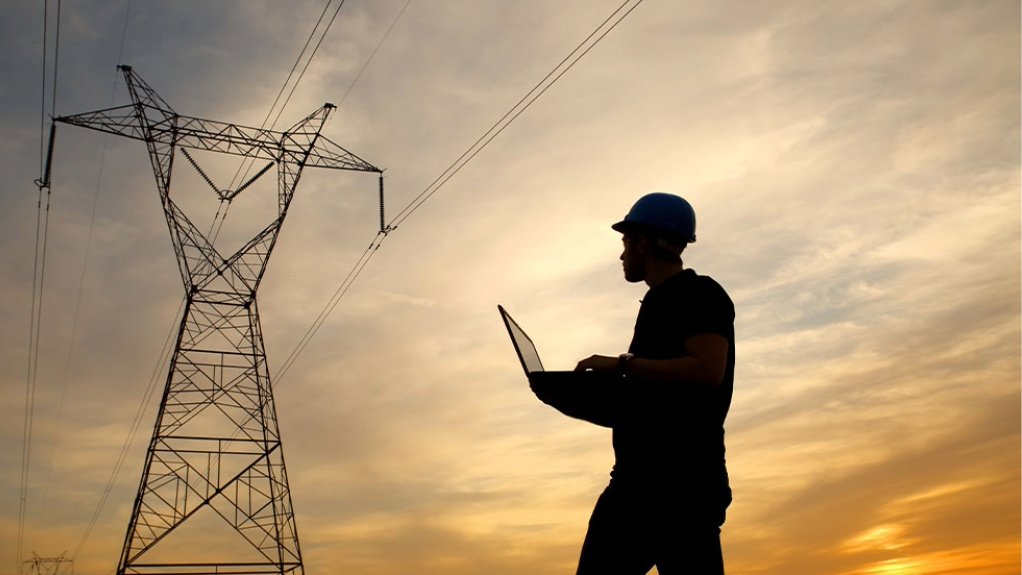
The report argues that Africa’s five regional power pools, Southern, Eastern, Western, Central and North Africa, offer a practical pathway to lowering electricity costs, improving reliability and reducing risks for investors by creating larger, interconnected markets.
By enabling cross-border trade and coordinated planning, the pools can help countries balance supply and demand more efficiently while supporting the continent’s industrial and economic ambitions.
Among the five, the Southern African Power Pool (SAPP) is cited as the most advanced. Its relatively strong institutional framework, extensive grid interconnections and transparent electricity market have allowed member states to trade power and optimise their generation mix. The Outlook describes SAPP as a model for regional integration, but cautions that even this more mature system is far from reaching its full potential.
ALSO READ: Africa’s Upstream Future: Momentum Builds, but Investment Discipline Remains a Hurdle
Despite progress, electricity trading within SAPP remains limited. In 2023, only 7.7 terawatt-hours (TWh) were traded across the pool, compared with total demand of about 344 TWh, roughly 2% of consumption. Most of this trade still takes place through bilateral contracts, while just 13% is conducted via the day-ahead market.
By contrast, mature European markets trade more than 24% of physical consumption through day-ahead platforms. Transmission constraints and low market liquidity continue to restrict SAPP’s ability to stabilise supply across borders.
Elsewhere on the continent, power pool development is uneven. West Africa’s Power Pool (WAPP) has made progress expanding cross-border connections and increasing trade, but faces challenges linked to incomplete grid links, fragmented regulation and persistent payment arrears.
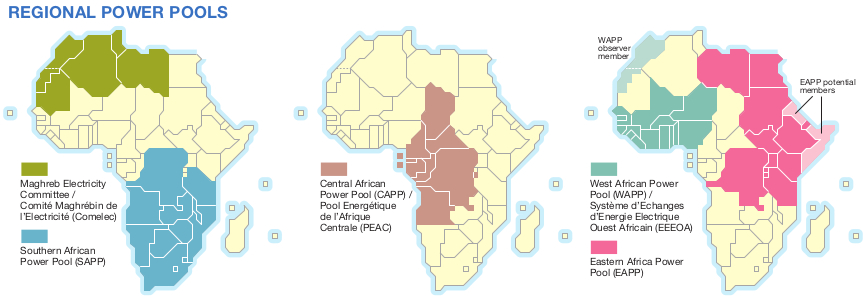
In Eastern Africa, large-scale interconnection projects are advancing, yet political and regulatory differences, infrastructure gaps and occasional security tensions have slowed momentum.
The Central African Power Pool remains the least developed, with minimal cross-border electricity trade and limited transmission infrastructure. North Africa presents a different challenge: while the region has some of the continent’s most advanced energy infrastructure, electricity trade within Africa remains limited. Countries in the region tend to prioritise bilateral arrangements or exports to Europe rather than deeper intra-African integration.
The report places these regional efforts within the broader vision of the African Union’s African Single Electricity Market, which aims to harmonise standards, regulations and planning to create the world’s largest integrated power market by 2040.
However, it warns that achieving this goal will require overcoming significant obstacles, including vast distances, technical incompatibilities, infrastructure financing gaps and competing national interests.
ALSO READ: Data Centers Could Be the Spark Africa’s Power Sector Needs
Financing emerges as a central concern across all regions. High public debt levels and fiscal pressures have constrained governments’ ability to fund large-scale transmission projects, prompting greater reliance on public-private partnerships.
The Outlook identifies several models for private-sector participation, including Build-Own-Operate, Build-Own-Operate-Transfer, Build-Transfer-Operate, and Engineering, Procurement, Construction and Finance arrangements.
Examples such as Rwanda’s Kigali Power Transmission Project and the CLSG interconnector linking Ivory Coast, Liberia, Sierra Leone and Guinea illustrate how blended financing from multilateral institutions, governments and private investors can deliver complex cross-border infrastructure.
NJ Ayuk, Executive Chairman of the African Energy Chamber, said regional electricity integration offers clear economic and developmental benefits.
“By leveraging private investment alongside government support, these frameworks can mobilise capital, technology and expertise to construct and operate critical transmission infrastructure,” he said, adding that stronger regional integration could lower costs, improve reliability and help lay the foundation for a more secure and increasingly renewable-powered African energy system.