Rising Tides, Vanishing Coconuts: Tanzania’s Pangani Faces a Reckoning With the Sea
Along Tanzania’s Pangani River, saltwater is moving inland, coconut harvests are shrinking and mangroves are swallowing farmland. For the communities living between the river and the Indian Ocean, sea-level rise is no longer a distant climate warning. It is changing where they farm, fish and live.
PANGANI, Tanzania — Buga Steven measures the advance of the Indian Ocean in coconuts.
There was a time when his trees produced about 5,000 coconuts in a season. Now, he says, the harvest is less than a third of what it once was.
The coconuts that survive are smaller too.
“And they are much smaller than before,” Steven told UN News from his home in Pangani, the historic coastal town where the Pangani River meets the Indian Ocean.
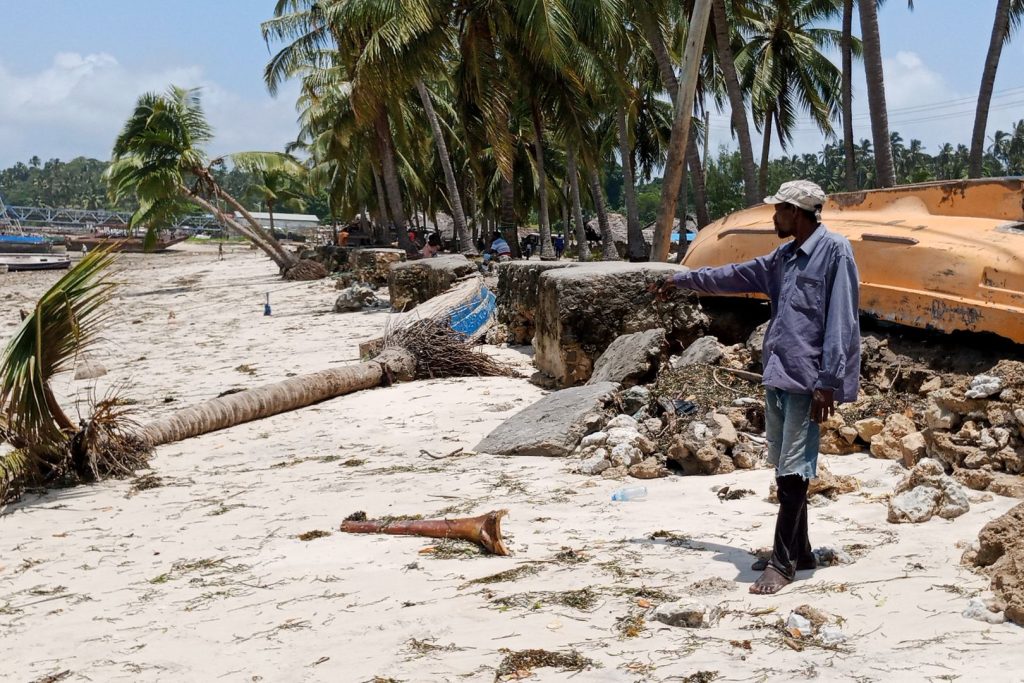
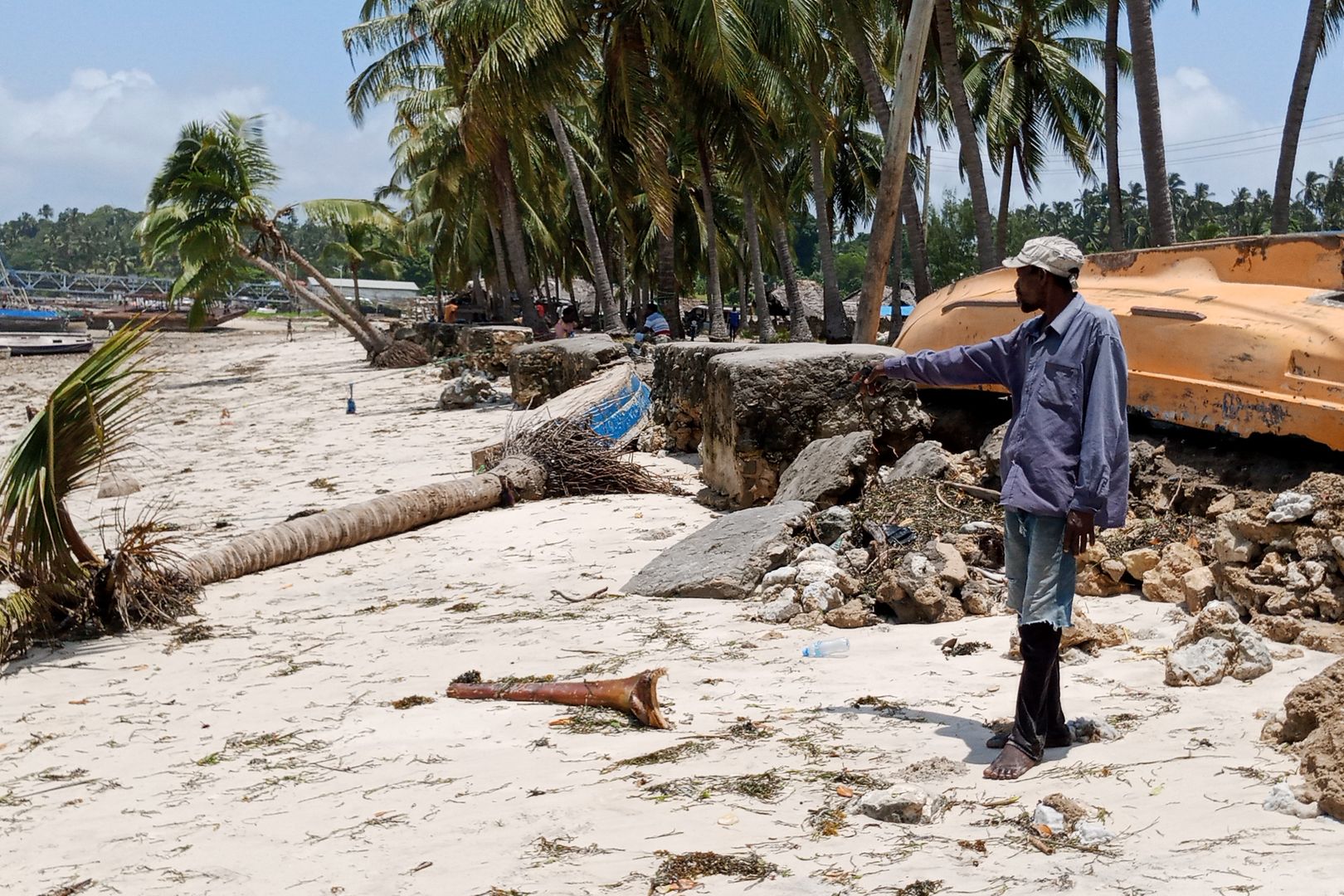
Saltwater has moved roughly eight kilometres inland along the Pangani River, according to the United Nations Environment Programme (UNEP)
For farmers along the river, the change has become difficult to ignore. Saltwater has moved roughly eight kilometres inland along the Pangani River, according to the United Nations Environment Programme (UNEP), reaching fields that once supported generations of farming families.
The mangroves are moving with it.
For Steven, their spread across former farmland is evidence that the coastline is changing faster than communities can adapt.
“Everyone living along the riverbanks where mangroves are growing should be given grants so they can move elsewhere,” he said. “Those areas have already been taken over by mangroves.”
When the sea reaches the farm
Pangani’s experience offers a close-up view of a much larger global shift.
Global mean sea level rose by an average of 4.7 millimetres a year between 2014 and 2023. In 2024, the annual rate reached a record 5.9 millimetres, driven mainly by melting glaciers and ice sheets and the expansion of seawater as the oceans warm.
The consequences are particularly acute for communities living close to the coast.
Almost 770 million people, roughly one in every 10 people worldwide, live in coastal areas less than five metres above the high-tide line, according to a report by the UN Secretary-General on the threats posed by sea-level rise.
Saltwater has moved roughly eight kilometres inland along the Pangani River, according to the United Nations Environment Programme (UNEP)
Along East Africa’s Swahili coast, the exposure is compounded by low-lying settlements and economies heavily dependent on fishing and small-scale agriculture.
In Pangani, the impact is visible in the coconut groves.
Iddi Hashimu Iddi has watched the health of his trees deteriorate as saltwater has moved inland.
“The trunks were much thicker and healthier,” he said. “But rising sea levels have affected them. Salt has moved far inland, productivity has dropped, the trees are unhealthy, and many are dying.”
The decline in coconut production has consequences well beyond the farm.
“We depended on coconut farming to sustain our livelihoods, educate our children, and meet social obligations,” Iddi said. “Now we face major challenges because of the impacts of sea level rise.”
The coconuts are moving inland
The geography of the coconut trade is changing along with the coastline.
Haroub Selemani, a farmer and trader, said buyers increasingly have to travel inland and to higher ground to find coconuts large enough to meet demand.
“For those of us living from Matakani to Jasini, we no longer have proper coconuts,” he said. “If you want large coconuts, you have to go to places like Mafisi or Mseko and further uphill.”
The movement of mangroves has created another problem for farmers: what was once agricultural land is increasingly becoming protected coastal vegetation.
Saltwater has moved roughly eight kilometres inland along the Pangani River, according to the United Nations Environment Programme (UNEP)
Tanzania’s conservation laws restrict the clearing of mangroves, leaving some landowners caught between declining farmland and restrictions on removing the trees.
“According to Government regulations, mangroves and coconut trees must compete, and whichever survives remains,” Iddi said.
“But if a landowner cuts mangroves, it becomes a serious offense because it violates government laws.”
The result is a difficult choice for communities whose livelihoods depend on land that is becoming increasingly affected by saltwater.
The sea is changing the fishing grounds too
The changes are not confined to agriculture.
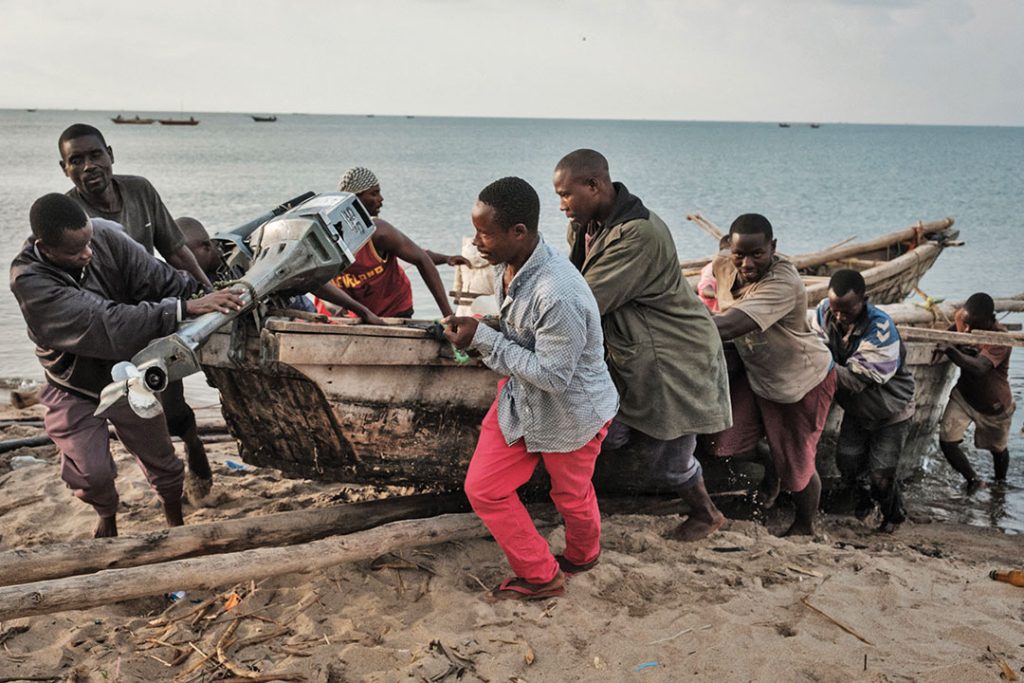
Offshore, fisherman Ali Hamis Daudi has watched erosion and the loss of coastal vegetation alter the shoreline and the places where fishing boats can anchor.
Traditional knowledge about fishing grounds is also becoming less dependable.
“If you come late, you may not find a place to anchor your boat,” Daudi said.
“In the past, we knew exactly what depth of water certain fish species preferred. Now the fish have moved.”
For communities dependent on both farming and fishing, the changes can compound one another.
“When saltwater enters inland areas and affects agriculture, it ultimately impacts food security as a whole,” said Clara Makenya, UNEP’s representative in Tanzania.
Saltwater intrusion can also damage freshwater supplies and contribute to the deterioration of infrastructure, she said.
No single solution
UNEP has supported several adaptation measures in Pangani, including mangrove restoration, coral reef rehabilitation and engineered coastal protection.
But Makenya said the experience has shown that coastal communities cannot rely on one intervention everywhere.
“Infrastructure and nature-based systems complement one another,” she said. “What matters is determining which approach is suitable in a particular location.”
Some interventions have already struggled.
Saltwater has moved roughly eight kilometres inland along the Pangani River, according to the United Nations Environment Programme (UNEP)
Daudi said an attempt to restore mangroves in Magarawani failed because the sandy terrain could not support them. Casuarina trees planted as an alternative were later destroyed by the ocean.
That experience illustrates the complexity of adapting to a changing coastline. A measure that works in one section of the coast may fail in another because of differences in soil, wave action, tidal patterns and existing ecosystems.
For communities like Pangani, adaptation is therefore not simply a question of building a wall or planting trees. It is also about deciding which areas can still support livelihoods and which may eventually have to be abandoned.
A local crisis reaches the global stage
That question will be part of a much larger international discussion this week.
On 24 September, heads of state and senior officials are due to gather at UN Headquarters in New York for a high-level plenary meeting on sea-level rise.
It will be the General Assembly’s second such meeting since 2024 and is expected to conclude with a consensus political declaration focused on strengthening international cooperation and support for vulnerable coastal states and communities.
Such declarations are not legally binding. Their impact ultimately depends on whether governments and international institutions translate commitments into funded adaptation programmes.
In Pangani, residents are already thinking beyond declarations.
Daudi wants protection for the harbour.
“If a wall is constructed, the sea will not advance further inland,” he said. “Otherwise, the problem will keep getting worse, and eventually this harbor will be destroyed, and we will have to move our boats onto the road.”
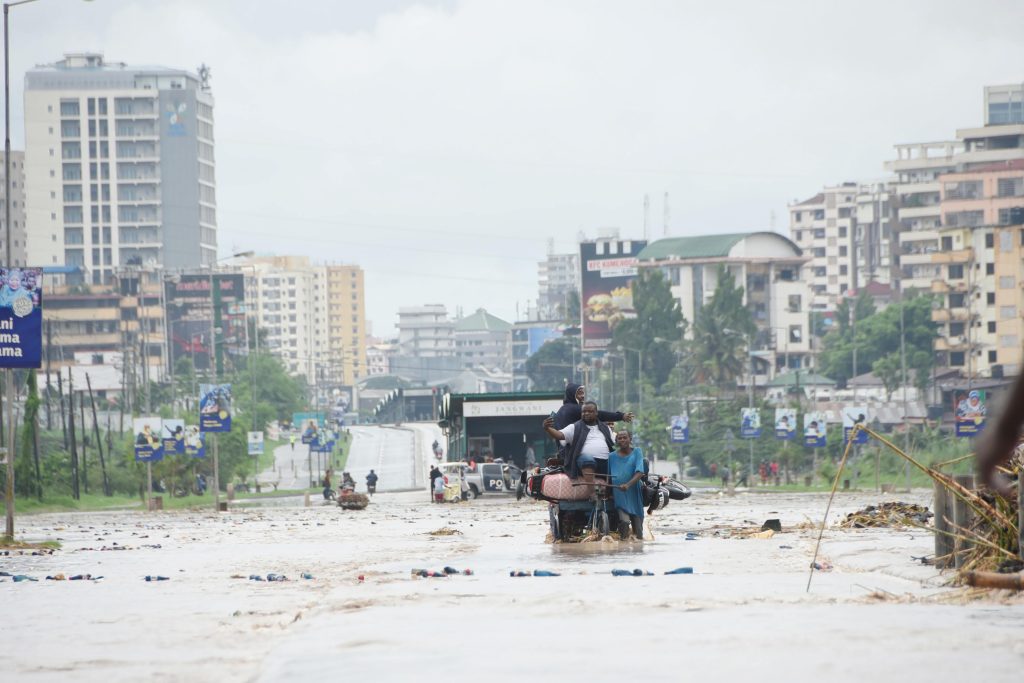
People passing over a flooded section of Morogoro road at Jagwani area. PHOTO | ERICKY BONIPHACE
Iddi has reached a different conclusion.
“The most important thing is for the government to compensate all of us who have been affected,” he said. “Give us compensation and allow us to leave these areas behind.”
For Steven, the coconut farmer who once measured his livelihood in thousands of coconuts, the evidence is already visible across the landscape.
The trees are producing less.
The coconuts are smaller.
The saltwater has moved inland.
And where farms once stood, mangroves are taking root.
“Those areas,” Steven said, “have already been taken over.”
Rachel Moyo
Subscribe to Our Newsletter
Keep in touch with our news & offers
Thank you for subscribing to the newsletter.
Oops. Something went wrong. Please try again later.
Bafana Bafana’s preparations for their 2027 AFCON qualifying campaign have suffered an early setback, with midfielder Lebohang Maboe ruled out after an ankle injury picked up in club action.
Along Tanzania’s Pangani River, saltwater is moving inland, coconut harvests are shrinking and mangroves are swallowing farmland. For the communities living between the river and the Indian Ocean, sea-level rise is no longer a distant climate warning. It is changing where they farm, fish and live.
Uganda’s planned Shs12.7 trillion domestic borrowing for 2026/27 may be manageable, but the central bank warns that exceeding the target could drive up interest rates, restrict private-sector credit and undermine efforts to stabilise public debt.
A $155 million US investment in Johannesburg-based WIOCC Group is set to bring American capital alongside AFC and Saudi Arabia’s Vision Invest, accelerating the expansion of fibre networks, subsea cables and data centres across a continent where only 35.7% of people were using the internet in 2025.