The partnership will provide locally hosted AI computing infrastructure and GPU-as-a-Service, as Egypt seeks to strengthen its position as a regional hub for artificial intelligence, data centres and advanced digital services.

CAIRO, Egypt: Egypt is moving to strengthen its position in Africa’s artificial intelligence and data-centre economy with the launch of what Vodafone Business and Cassava Technologies describe as the country’s first national AI factory.
The strategic partnership will provide sovereign AI infrastructure designed to allow businesses and government institutions to develop and run artificial intelligence applications locally, while keeping data hosted and processed within Egypt.
The initiative brings together Vodafone Egypt’s local telecommunications and enterprise infrastructure with Cassava Technologies’ AI capabilities and its partnership with NVIDIA.
The companies say the project is intended to support Egypt’s emergence as a regional destination for AI investment and advanced digital infrastructure.
The launch comes as countries across Africa seek to build greater domestic capacity to develop, host and deploy artificial intelligence technologies rather than relying entirely on computing infrastructure outside their borders.
The AI factory will provide what the companies describe as a full-stack infrastructure environment for AI applications, covering the computing capabilities required to train and run AI models as well as local data hosting and processing.
For Egypt, the investment could strengthen its ability to compete for technology companies and data-centre projects that require high-performance computing infrastructure and secure local data environments.
The partnership is also aimed at government institutions and major industries that need to process sensitive information while complying with local regulatory requirements.
AI factory to provide GPU-as-a-Service
A key component of the project is GPU-as-a-Service, which will allow organisations to access advanced graphics processing unit computing capacity without necessarily having to build and maintain their own AI infrastructure.
GPUs have become central to modern artificial intelligence because they can perform the large-scale parallel computations required for training and running AI models.
Vodafone Egypt said the service will allow organisations to access advanced computing capabilities more efficiently and quickly.
Mahmoud El-Khatib, Vice President of Enterprise Business at Vodafone Egypt, said the project would support the country’s efforts to develop sovereign AI capabilities while ensuring data residency within Egypt.
ALSO READ: What China’s New AI Alliance Means for South Africa and the Future of Artificial Intelligence
He described the initiative as part of Vodafone Egypt’s broader investment in digital infrastructure and its efforts to attract advanced technology investment.
The partnership places considerable emphasis on data sovereignty, reflecting growing concerns among governments and businesses over where sensitive information is stored and processed.
Under the model announced by the companies, organisations will be able to host and process data locally while accessing AI infrastructure powered by NVIDIA technology.
The companies said this could strengthen cybersecurity and give organisations greater control over their data and its protection.
For governments and heavily regulated industries, the ability to deploy AI while keeping sensitive information within national borders can be an important consideration when selecting cloud and computing infrastructure.
Cassava positions Africa as more than a technology consumer
Cassava Technologies’ role in the project is part of its wider push to develop advanced digital infrastructure and AI capabilities across African markets.
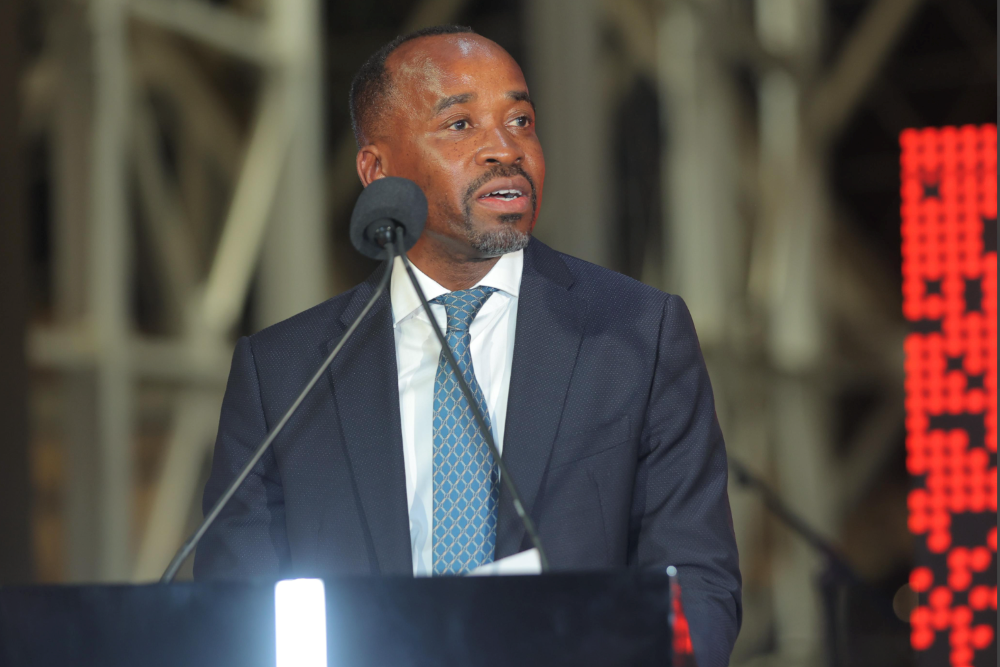
Ahmed El Beheiry, Group Chief Technology and AI Officer and CEO of Cassava AI, said the company’s objective was to help African businesses move beyond simply consuming technology developed elsewhere.
“For Cassava, contributing to building Egypt’s AI ecosystem is an act of empowerment, not just a technological milestone,” he said.
He said the partnership was intended to provide Egypt with infrastructure capable of supporting its technology industry and allowing it to participate in global AI innovation while maintaining sovereignty.
Cassava is also the first NVIDIA cloud partner in Africa, according to the companies.
Beyond providing computing capacity to existing businesses, the AI factory is expected to support Egypt’s efforts to attract companies involved in artificial intelligence, advanced computing and data-centre development.
The partnership combines high-performance computing with local data hosting, creating infrastructure that could support the development of a broader sovereign AI ecosystem.
The companies said the project could contribute to digital-economy growth and create new opportunities in technology and innovation.
Specialised training and enablement programmes within the NVIDIA ecosystem will also be made available to organisations to help businesses develop the skills required to build, deploy and manage AI systems.
Vodafone Egypt plans more than EGP20 billion investment
The AI factory forms part of Vodafone Egypt’s wider investment programme in the country’s digital infrastructure.
The company said it plans to invest more than EGP20 billion during the current fiscal year, building on more than EGP125 billion invested over 28 years.
Vodafone Egypt said it serves more than 55 million customers and employs about 10,000 people.
The company’s existing digital services footprint includes Vodafone Cash, its mobile wallet service, which it says is used by more than 20 million Egyptians.
The Egyptian project illustrates the growing importance of local computing infrastructure as artificial intelligence becomes embedded in business, government and consumer services.
AI adoption requires more than software. It depends on data centres, high-performance computing, reliable connectivity, cloud platforms, cybersecurity and specialised technical skills.
That is creating a new infrastructure race across Africa, with countries seeking to position themselves as locations where AI companies can develop and deploy services at scale.
Egypt’s geographic position, established telecommunications infrastructure and large domestic market give it a potentially significant role in that competition.
The Vodafone-Cassava partnership is therefore not simply a new AI service. It is a bet on the growing commercial value of sovereign computing capacity and on Egypt’s ability to become a regional base for the next generation of digital infrastructure.