Zimbabweans looking to buy into Africa’s biggest share sale have until 2 October to get their applications in through Bard Santner. The Harare advisory firm is opening a local route into Dangote Refinery’s US$1.6 billion IPO, but the minimum investment is a hefty US$20,000.
Zimbabwe Investors Get Local Route Into US$1.6bn Dangote Refinery IPO
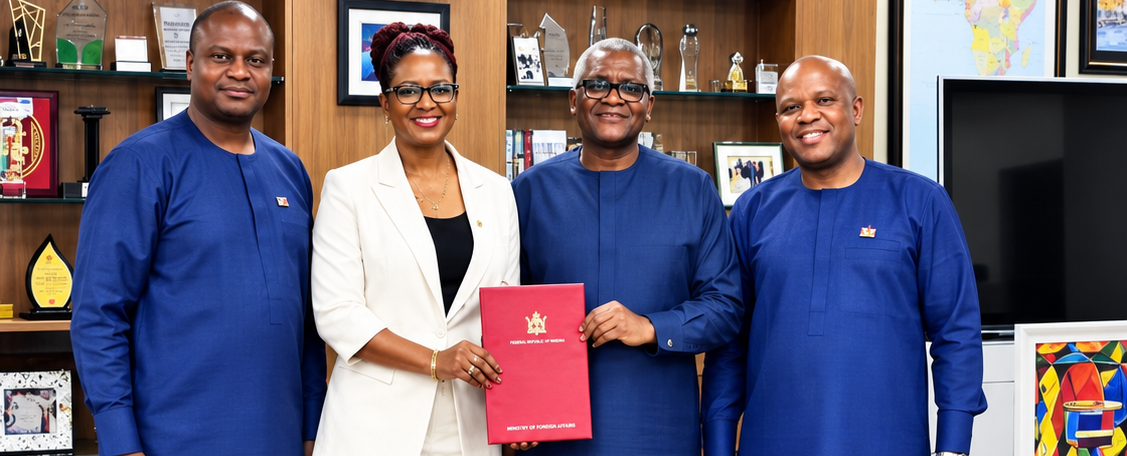
HARARE, Zimbabwe – A Harare financial advisory firm has opened a local route for Zimbabwean investors to participate in what is being billed as Africa’s largest initial public offering.
Bard Santner Inc., which operates across asset management, corporate finance, wealth management and remittances, is facilitating access to the US$1.6 billion initial public offering of Dangote Petroleum Refinery and Petrochemicals FZE, the world’s largest single-train oil refinery.
Its investment subsidiary, Bard Santner Investors (BSI), is handling applications from eligible Zimbabwean investors.
The IPO opened on 14 September and is officially scheduled to close on 13 October. However, BSI has set an earlier local deadline of 2 October 2026, giving Zimbabwean investors a much shorter window to submit their applications.
US$20,000 minimum investment
The local offer comes with a sizeable entry price.
According to BSI’s investment note, Zimbabwean investors need a minimum of US$20,000 for 50,000 shares. Applications above that level must be made in multiples of 10 shares.
BSI says it will handle the documentation and compliance requirements for clients seeking access to the offer.
The process, however, is not entirely digital.
Ngoni Chikowore, Bard Santner’s head of asset management, told TechCabal that time constraints prevented the firm from establishing an online application platform, meaning applications are being processed manually.
Bard Santner chief executive Senziwani Sikhosana described the offering as a significant opportunity for Zimbabwean investors to gain exposure to one of Africa’s largest industrial projects.
“Our team is here to facilitate and simplify the process for our investors,” Sikhosana said.
Africa’s biggest share sale
Dangote Refinery is offering 4.1 billion shares at ₦525 each, generating gross proceeds of about US$1.63 billion and valuing the company at roughly US$49 billion.
The company is expected to list on the Nigerian Exchange later in November, subject to the applicable processes.
Following the share sale, founder Aliko Dangote is expected to retain about 84.3% of the company, while the Nigerian National Petroleum Company is set to hold about 6.8%.
The bulk of the IPO proceeds will be used to expand the Lekki refinery, with Dangote targeting a doubling of its capacity to 1.4 million barrels of crude oil per day by 2029.
The refinery began producing petrol in September 2024 and reached full refining capacity in February 2026.
Its financial performance has also changed dramatically.
The company moved from a reported US$476 million loss in 2025 to US$1.82 billion in net income in the first half of 2026, according to reports on the IPO.
The “People’s IPO”
Dangote formally launched the offering on the Nigerian Exchange on 14 September, describing the sale as an attempt to broaden participation in wealth creation.
The refinery is the first company of its kind to be offered for public subscription on the exchange in its 66-year history.
The public response was immediate. Nigerian investment platform Bamboo reported heavy traffic following the launch, with some users experiencing difficulties accessing the platform.
ALSO READ: Dangote Calls on Africa to Keep Its Capital at Home as Industrialisation Takes Centre Stage
Dangote has positioned the shares as an investment for ordinary savers as well as institutional investors, pointing to the refinery’s dollar-linked revenues and potential dividend payments.
For Zimbabwean investors, the appeal is likely to be closely tied to the country’s long history of currency instability and the preference among some savers for assets denominated in or linked to US dollars.
But the investment comes with the usual market risks. Potential returns are not guaranteed and the value of the shares after listing will depend on market conditions and the company’s future performance.
Dangote’s growing Zimbabwe footprint
Bard Santner’s involvement in the IPO follows its earlier work around Dangote’s proposed investments in Zimbabwe.
The firm helped facilitate discussions around a Dangote investment programme announced after talks between the Nigerian businessman and President Emmerson Mnangagwa in November 2025.
The proposed investments cover areas including cement manufacturing, limestone and coal mining, power generation and fuel transportation infrastructure.
Dangote first visited Zimbabwe in 2015 with plans to invest in cement, coal and power. Those plans subsequently stalled amid a combination of bureaucratic hurdles, tariffs and broader economic challenges.
Bard Santner has since helped revive the relationship.
The firm reportedly used the Afreximbank Annual Meetings in Abuja as an opportunity to present Zimbabwe’s investment reforms directly to Dangote.
The industrialist’s regional expansion plans also extend beyond Zimbabwe.
In August, Dangote met Botswana President Duma Boko to discuss a proposed US$3.5 billion regional fuel pipeline and a possible US$336 million cement plant.
For Bard Santner, the IPO mandate therefore adds another dimension to its relationship with the Dangote Group, linking its corporate investment work in Zimbabwe with access to one of Africa’s biggest capital-market transactions.
Regulators issue warning
The scale of the IPO has also attracted regulatory attention.
Nigeria’s Securities and Exchange Commission has warned prospective investors about unauthorised operators soliciting money for Dangote Refinery shares.
Investors have been urged to verify the credentials of anyone offering access to the shares and ensure that applications are made through authorised channels.
For Zimbabweans using Bard Santner’s local facilitation route, the immediate deadline is 2 October, despite the official Dangote IPO closing date of 13 October.
The minimum commitment of US$20,000 also means the offering is not a small-ticket investment, and prospective investors will need to weigh the potential opportunity against the risks associated with buying shares in a newly listed company.
Subscribe to Our Newsletter
Keep in touch with our news & offers
Thank you for subscribing to the newsletter.
Oops. Something went wrong. Please try again later.