Those who have read section 328(7) the other way have read it carefully. The invitation extended here is simply to read it once more, and to read it whole.




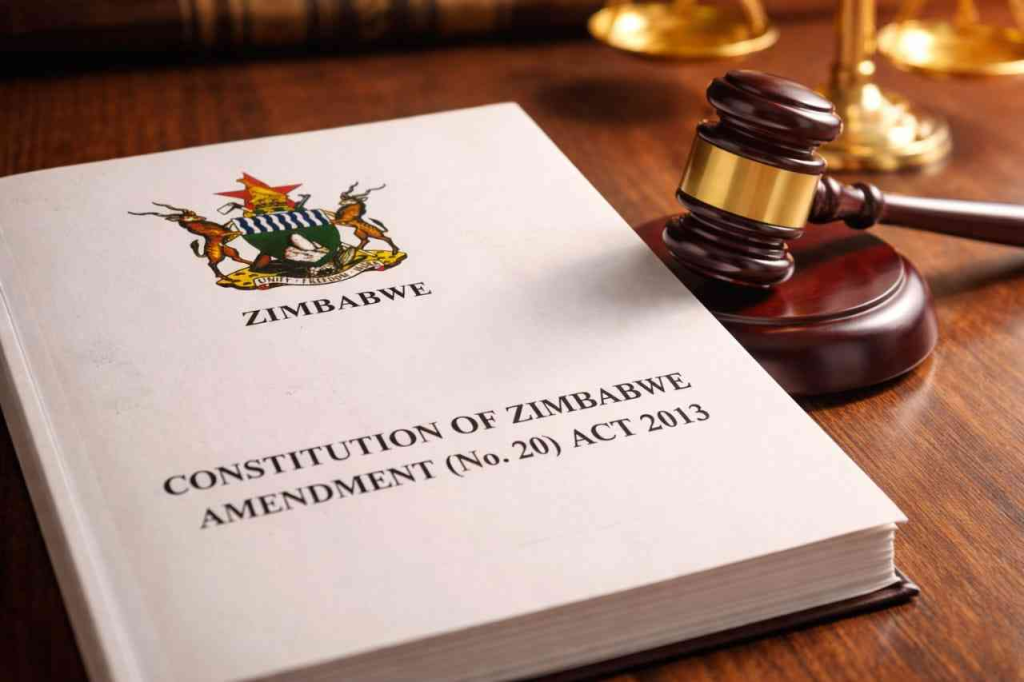
This piece is confined to one question, a question of constitutional architecture: do Clauses 3, 5, 10 and 12 of the Bill, which are its key or core amendments; engage section 328(7) of the Constitution, such that the Bill cannot lawfully proceed under the two-thirds procedure in section 328(5), and must instead be submitted to a national referendum; under section 328(9)?
I propose to answer this question in three stages. I shall first set out, faithfully, the construction of section 328(7) advanced by voices in the public discourse (particularly by Senator David Coltart) that have been critical and even opposed to the Bill in its entirety on what they say are constitutional grounds. I shall then examine that construction from within. Only thereafter shall I turn to the affirmative case, anchored in the text of the Constitution and in the binding reasoning of the Constitutional Court in its judgment in the landmark case of Marx Mupungu v Minister of Justice, Legal and Parliamentary Affairs & 6 Ors (CCZ 7/21, 2021).
The error I trace is one of pattern, not malice; it is of the kind a careful lawyer can fall into when a provision is read in the part rather than the whole. Senator David Coltart and Mr Doug Coltart have articulated the position most explicitly across their public commentary. They share a single underlying reading of the text. That reading, offered as it is by careful lawyers from a careful textual engagement, warrants a serious answer. This piece is that answer.
THE CRITICS’ CONSTRUCTION OF SECTION 328(7)
Section 328(7) of the Constitution reads, verbatim:
Notwithstanding any other provision of this section, an amendment to a term-limit provision, the effect of which is to extend the length of time that a person may hold or occupy any public office, does not apply in relation to any person who held or occupied that office, or an equivalent office, at any time before the amendment.
The version that follows from the narrative of the “opposing position” would read:
Notwithstanding any other provision of this section, any amendment the effect of which is to extend the length of time that a person may hold or occupy any public office does not apply in relation to any person who held or occupied that office, or an equivalent office, at any time before the amendment.
The opposing position widely shared in the public domain by various civil society groups, some religious organisations and in academic commentary, treats this provision as a constitutional tripwire engaged the moment any amendment, directly or indirectly, extends or lengthens the time during which any incumbent remains in office. On that score, Clauses 3, 5, 10 and 12 are said to produce that effect for the President, for Senators, for Members of the National Assembly, and even for councillors; which, the critics argue, must therefore cause the clauses in question to be put to a referendum. The case of the critics rests on three interpretive moves, each of which must be identified with care.
READ MORE: The Discipline of Constitutional Argument: Why Alarm Is Not Evidence
The first concerns the indefinite article in the phrase, “an amendment to a term limit provision” in Clause 328(7). The framers of the Constitution chose “an” and the singular noun “amendment”. In earlier published commentary by some critics, the text is rendered faithfully as “an amendment”. In subsequent submissions, “an amendment” becomes “anyamendment”. In the most recent interventions, the rendition is no longer “an amendment”, or even “any amendment”; it is “anything that has the effect of extending the length of time” that a person may hold or occupy any public office. That is a cascade. From “an”, to “any”, to “anything”, in three successive iterations, the textual anchor moves progressively further from the words actually used by the text of the Constitution.
Senator Coltart, to his credit, has put the move in his own words with characteristic directness. He explains that “the simple enquiry is whether the provision one seeks to change involves the length of time a person holds public office“, that “the Constitution solely looks at the effect of the amendment”, and that “it doesn’t matter how you describe it”. On a public platform where italics are unavailable, he marks the operative words of the subsection in capitals: “THE EFFECT OF WHICH IS TO EXTEND THE LENGTH OF TIME“. The instruction in each formulation is the same: it is to skip the qualifier to a term-limit provision and proceed straight to the effect. In substance, an amendment to a term-limit provision becomes any amendment whose effect extends the length of time. The qualifier is gone. The defined category is gone. The boundary is gone.
It is necessary to pause and observe, with the candour the question requires, that the cascade moves in only one direction. A reader genuinely seeking the meaning of section 328(7) does not, in three successive iterations of a single phrase, drift exclusively toward the broader reach and never once toward the narrower. Whether the drift is the product of careless oversight or of conscious design, the outcome is identical: the text is replaced by reconstruction, and the reconstruction reaches, conveniently, precisely the conclusion the interpreter wishes to defend. That is no longer interpretation. It is, with respect, reverse engineering.
The second move concerns the meaning of “term-limit provision“. The critics do not confine the phrase to its statutory definition in section 328(1), namely “a provision of this Constitution which limits the length of time that a person may hold or occupy a public office”. They extend it to any provision that touches the time in which a public officeholder remains in office. On this reading, section 143(1), which prescribes that Parliament is elected for a five-year term, is considered to be a term-limit provision; regulating the tenure of Members of Parliament as individuals. In the same vein, section 158(1), which prescribes the timing of general elections, is said to be a term-limit provision. The category, on this view, expands to cover any provision whose amendment would lengthen any incumbent’s time in office.
The third move concerns the words “any public office” at the tail-end of section 328(7). On the reading of the critics, the phrase is given a meaning which, literally, means every or any public office in the Constitution, including offices not subject to any term limit. For example, unlike the President, Members of Parliament are not term-limited; councillors are not term-limited; yet on this reading, section 328(7) is engaged in respect of those offices whenever the electoral cycle or term of office in which their occupants serve is extended or lengthened.
Taken together, the three moves produce the conclusion the critics urge: that Clauses 3, 5, 10 and 12 engage not only section 328(7); but also vicariously engage section 67 under Chapter 4 of the Constitution; and that therefore the Bill must consequentially be put to a referendum in terms of subsections (7) and (9) of section 328. That is the consequence of the version of the case against the Bill. I now examine it.
TEXTUAL DISMANTLING: “AN” IS NOT “ANY”
The critics’ construction departs from the text of section 328(7) at its very first word. The framers chose “an“: the indefinite singular article. It refers to a particular kind of amendment, namely an amendment to a term-limit provisionin the technical sense defined in section 328(1). The text does not say “any amendment“; still less does it say “anything that has the effect of extending the length of time“.
The distinction is important; it is not pedantic. The framers knew the difference between “an” and “any“, and used each deliberately and purposively. Within section 328 itself, where breadth was intended, the framers said “any“: section 328(6) begins, “Where a Constitutional Bill seeks to amend any provision of Chapter 4 or Chapter 16“. In subsection (7), the framers wrote “an amendment to a term-limit provision“. Within a single section of the Constitution, the framers alternated between the two articles with deliberate purpose. To substitute “any” for “an” is not to interpret section 328(7); it is to rewrite it. And as the progression from “an“, to “any“, to “anything” illustrates, once an interpreter departs from the text of the Constitution, the expansion has no principled boundary.
Pressed on the substitution, the critics’ reading falls back on a bare cross-reference: but read section 328(1). The fallback is a conflation. Section 328(1) is the definitional clause. Section 328(7) is the operative non-benefit rule. They are two provisions doing two different jobs. Section 328(1) supplies the protected category by defining the term term-limit provision. Section 328(7) states the non-benefit consequence for amendments within that category. The opposition reading invokes section 328(1) without ever unpacking what it means for a provision to limit the length of time. It treats the two subsections as a single instrument and claims the protection of the defined term while never satisfying its definition. The category cannot be assumed; it must be earned through the definition. Invoking the one without unpacking what the other defines merely begs the question.
CLAUSES 3, 10 AND 12 ARE NOT TERM-LIMIT AMENDMENTS
I turn to the second pillar of the critics’ construction: the proposition that sections 92, 95(2), 143(1) and 158(1) are term-limit provisions. They are not.
Clause 3 repeals and substitutes section 92, which governs the election of the President. It addresses who elects the President, the procedure for that election, and consequential matters relating to the office. It imposes no limit on the number of terms a person may hold the office, and no limit on the length of time a person may hold it. Section 92 is not, and has never been, a term-limit provision. Clause 3 amends the mode of election; it does not amend any limitation on cumulative tenure. The two-term cap or limit in section 91(2) remains unchanged.
Clause 10 amends section 143(1). The marginal note is unambiguous: “Duration and dissolution of Parliament”. The provision appears in Part 8 of Chapter 6 of the Constitution, titled “Duration, Dissolution and Sittings of Parliament”. It reads, verbatim:
Parliament is elected for a five-year term which runs from the date on which the President-elect is sworn in and assumes office in terms of section 94(1)(a), and Parliament stands dissolved at midnight on the day before the first polling day in the next general election called in terms of section 144.
READ MORE: Choosing Evolution Over Repetition
That is a provision about the duration of Parliament as an institution or office; it is not a provision about the tenure of Members of Parliament, as individuals or officers. The Constitution imposes no term limit on Members of Parliament, whose tenure is provided in sections 121, 125 and 129. A Senator may stand for re-election indefinitely; also, a Member of the National Assembly may stand for re-election indefinitely.
Ask what happens when the seat of a Member of Parliament falls vacant in the middle of its term. The answer divides the genuine term limits from the provisions in the Bill passed by Parliament, cleanly, and in opposite directions. When a seat in Parliament falls vacant, and they fall vacant quite often, the candidate who wins the by-election does not receive a fresh five-year term of their own. As a new Member of Parliament, they are sworn in to serve only what is left of the life of the Parliament. The Constitution says so. Section 158(3) provides that a by-election need not even be held if the vacancy falls within nine months of a general election; in that case the seat simply stays empty until the general election. Consider what that means. If the seat carried a personal term on the tenure of a Member of Parliament, it could never be left empty for any period of time, certainly not for nine months; a personal term would have to begin. It is left empty precisely because the five-year term length belongs to the institution of Parliament, not to the person; not to the Member of Parliament. When Parliament dissolves, every seat falls vacant, by-election seats and original seats alike, because they all run on one clock: the clock of the institution.
Section 143(1) governs how long a single Parliament sits before the next general election; it has never capped the number of times a person may serve. It cannot be a term-limit provision, because it limits no term of any individual or officer.
Turning to Clause 12, it amends section 158(1), headed “Timing of elections” in Part 2 of Chapter 7. Section 158(1)(a) currently requires that a general election be held “thirty days before the expiry of the five-year period specified in section 143”. Clause 12 substitutes this with a “seven-year period” to align with the calendar of the new national electoral cycle. The provision is scheduling, by text and location. It does not limit how many times any public officer may stand for any elective office. It limits no term of any officeholder.
The critics’ answer is aggregation: that the three clauses (5 re: section 95(2), 10 re: section 143(1) and 12 re: section 158(1), taken together, function collectively as a grand term-limit amendment. The argument does not improve with aggregation. A collection of provisions that are not, individually, term-limit provisions does not become one by being added together. Categorical character is not a function of arithmetic. This brings me to the doctrinal centrepiece of the question: the distinction between a term limit and an electoral cycle.
A term limit, properly understood, is a cap or a limit which is a numerical ceiling on cumulative public service by a designated person or officeholder. The Constitution states the cap for the office of President, in section 91(2), in language too clear to paraphrase:
A person is disqualified for election as President or appointment as Vice-President if he or she has already held office as President under this Constitution for two terms, whether continuous or not, and for the purpose of this subsection three or more years’ service is deemed to be a full term.
That is a cap or a limit. By contrast, the duration of a single term, whether under section 95(2)(b), section 143(1), or section 158(1), is an electoral cycle or a term length: the period over which the office runs in any one iteration. The Constitution treats the term limit and the electoral cycle as distinct categories. The limit controls how many times. The cycle controls how long each time. To treat the cycle as if it were the limit is to flatten a distinction the framers took deliberate care to draw. Clause 5 changes when the second presidential term ends; it does not change whether a third term may begin. The limit or cap in section 91(2) stands.
The clearest way to see the full measure of that distinction is to set Senator Coltart’s words next to the words of the Constitution. He asks whether a provision “involves the length of time a person holds public office”. The Constitution asks something different: whether a provision limits that length, not whether it touches upon it. Involves and limits are not synonyms. Every provision that touches the office in any way involves the length of time; few provisions limit it. Section 328(1) protects the few, not the many.
Two features identify a term-limit provision. The first is personal: the provision must regulate the tenure of an individual, not the office. The second is mechanical: it must limit by qualification and disqualification, by reference to time already served or to a cumulative ceiling, through language such as “non-renewable”, “renewable only once”, “not more than”, “not exceeding”, or “for a fixed term”. To limit without qualifying or disqualifying is to do nothing at all. Run section 91(2) through those features, and it satisfies them at every step: personal tenure, disqualifying language, cumulative cap. Run sections 95(2)(b), 143(1) and 158(1) through the same features, and they fail at every step. None refers to a person; none contains a cumulative cap; none contains disqualifying language. The period belongs to the office, not to the office-holder. Section 91(2) caps the office-holder; sections 95(2)(b), 143(1) and 158(1) set the institutional cycle. Both are needed; neither does the work of the other.
THE REDUCTION OF “ANY PUBLIC OFFICE”
The third pillar of the critics’ construction is the appeal to the phrase, “any public office” at the tail-end of section 328(7). If that phrase is read in the unbounded way the critics urge, the consequences cannot have been the intention of the framers of the Constitution.
For example, as explained earlier, Members of Parliament are not term-limited. The Constitution imposes no cap or limit on the number of times a person may be elected to either House of Parliament. Yet on the critics’ application of the phrase, “any public office and with Parliament being a public office, the extension applicable to Parliament under Clause 10 would engage section 328(7) on behalf of a class of officeholders for whom no term limit exists. Section 328(7), so read, would operate to protect a non-existent term limit. That is a constitutional impossibility: a protective provision cannot, by definition, protect that which does not exist. The same logic applies to councillors under Clause 12.
READ MORE: Zimbabweans Continue to Make Their Voices Heard at Constitutional Hearings
Carried to its conclusion, the critics’ reading of “any public office” would require a national referendum for every adjustment to the electoral calendar of any or every public office in Zimbabwe, however technical, however incidental. That cannot have been the intention or purpose of the framers of the Constitution. The phrase “any public office” operates within the qualifying clause of section 328(7); it presupposes the existence of a term-limit provision; it does not create one. Section 328 protects the architecture of the State; it does not protect every consequential interest that any officeholder may incidentally enjoy.
WHAT, THEN, ARE THE TERM LIMITS?
I turn to the affirmative case. Having shown what the term limit provisions are not, I should now set out what they are.
The Constitution contains, on a careful enumeration, fifteen term-limit provisions. They share a recognisable textual signature: each prescribes a numerical cap on the tenure of a person, phrased in finite, determinable, quantifiable, cumulative, maximum, non-renewable or limited-renewability terms. They are, in summary: section 91(2), limiting the President to two terms whether consecutive or not, with a minimum of three years deemed a full term; section 154(2), the Clerk of Parliament, six years renewable once; section 186(2), Constitutional Court judges, a non-renewable term of not more than fifteen years; section 186(6), Supreme Court judges; section 189(3), members of the Judicial Service Commission; section 197, empowering an Act of Parliament to limit the terms of heads of government-controlled entities; section 205(2), Permanent Secretaries, up to five years renewable once; section 216(3), Commanders of the Defence Forces, not more than five years to a maximum of two terms; section 221(2), the Commissioner-General of Police; section 226(1), the Director-General of the Central Intelligence Organisation; section 229(2), the Commissioner-General of the Zimbabwe Prisons and Correctional Service; section 238(5), the Commissioners of the Zimbabwe Electoral Commission; section 259(5), the Prosecutor-General; section 310(3), the Auditor-General; and section 320(1), the Commissioners of Constitutional Commissions.
Each and every one of these provisions imposes a numerical cap on the tenure of persons or officeholders. Every one of them is, on the face of the text, a term-limit provision within the definition supplied by section 328(1). In the Mupungu case, the Constitutional Court traversed the same statutory landscape. It identified the same textual signature: provisions in which the framers of the Constitution fixed a specific, determinate length of time as the legal ceiling on the holding of public office by a specified officeholder. None of these fifteen provisions is amended by Clauses 5, 10 or 12. Each remains, on the face of the Constitution, untouched.
THREE METHODS, ONE CONCLUSION
The same conclusion follows from three concurrent methods.
The dictionary method. The Constitutional Court itself, in Mupungu v Minister of Justice, Legal and Parliamentary Affairs and Anor CCZ 7/21, applied the ordinary, grammatical meaning of “term” and “term limit”. A term is, in the Court’s adoption of the standard dictionary definition, a fixed or limited period for which something lasts or is intended to last. A term limit is something different: a legal restriction on how many terms, or how long in total, a person may serve. The dictionary distinguishes them; the Constitution distinguishes them; and section 328(2)’s express-language requirement reinforces the discipline. An amendment to a term-limit provision cannot be inferred from drafting silence or stray illustration. It must be express, and the boundary of the defined category must be respected.
The logical method. Section 328(1) is plain in genus and differentia. The genus is a provision of this Constitution. The differentia is the qualifying and disqualifying language unpacked above. A provision falls inside the protected category only if it satisfies both. Section 91(2) does; sections 95(2)(b), 143(1) and 158(1) satisfy only the genus. The opposition reading stops at the genus and treats it alone as sufficient. Without the differentia, the premise of section 328(7) is not satisfied, and the predicate does not arise. No premise, no predicate and no consequence or effect.
The comparative method. A constitution can carry a term-length provision for the presidency for many decades, and in one case for over a century and a half, without ever carrying a term limit. The two are not the same instrument; they do not have the same character; and they do not arrive together by necessity. Comparative constitutional practice makes the point three times over.
The United States enacted a four-year presidential term of office in 1788, in Article II of the original Constitution. It did not enact a term limit provision at all until the Twenty-Second Amendment of 1951, one hundred and sixty-three years later. Within that century and a half, the term length provision was settled and uncontroversial; the limit provision did not exist. Franklin D. Roosevelt was elected to four consecutive presidential terms between 1932 and 1944, and served until his death in 1945. He did not breach the term length provision in serving four terms, because the length provision did not limit personal tenure. The constitutional debate that followed his presidency was not whether Roosevelt had violated the existing rules; it was whether to add a separate provision capping personal tenure. The Twenty-Second Amendment was the considered, formal answer. It was enacted as an additional rule, not a clarification of an existing one. That structural fact carries the legal point. If the existing term length provision had already limited personal tenure, no amendment would have been needed.
Botswana presents the same architecture within the SADC region. The 1966 Constitution, adopted at independence, set a five-year presidential term of office. It contained no term-limit provision. Thirty-one years later, in 1997, the National Assembly passed a constitutional amendment introducing a two-term cap on the presidency. As in the United States, the term length and the term limit were two separate provisions, enacted at two separate moments. The term length provision had stood on its own for three decades without controversy. What was added in 1997 was the distinct instrument of a term-limit provision, sitting alongside the term length provision rather than replacing it.
Zimbabwe is the most pointed example, because the architecture is sharper here than anywhere else. Every constitutional dispensation in Zimbabwe since 1980 has carried a term-length provision for the presidency. The Lancaster House Constitution of 1980 set a term length; the successive amendments thereto preserved it; the various drafts produced through the constitution-making process of the late 2000s and early 2010s each carried a term length provision. What did not appear in any Zimbabwean constitution until 2013 was a term-limit provision for the presidency. The two-term cap was enacted for the first time in 2013, in section 91(2) of the present Constitution. The drafters in 2013 had both kinds of provisions in front of them as they wrote. They could have collapsed the term length and the term limit into a single provision. They did not. They wrote section 91(2) to cap personal tenure, and section 95(2)(b) to set the institutional electoral cycle. The structural decision was deliberate. If a term length provision and a term limit provision were the same instrument, no constitution-drafter or framer would write both. The Zimbabwean drafters wrote both because they regarded them as different provisions doing different constitutional work.
That comparative pattern is dispositive. Amendment No. 3 amends the institutional cycle. It does not amend the personal tenure cap. The historical record, the comparative record and the structural record all point the same way: term length and term limit are distinct, the Bill touches only the first, and the second stands undisturbed.
MUPUNGU, SENATOR COLTART’S ANCHOR
The most thoughtful version of the critics’ reading is the one Senator Coltart anchors in Mupungu. At what is conventionally cited as paragraph 50, the Constitutional Court, in the course of an illustrative contrast, listed ten examples of provisions that “unquestionably constitute specific term limit provisions within the parameters of s 328“. Section 95(2) appeared at the head of that list. Senator Coltart reads the inclusion as conclusive: if the Court has called section 95(2) a term-limit provision, any amendment to it engages section 328(7).
A careful reading must concede the inclusion and then place it. The list opens with the words By way of contrast, because the Court was contrasting age-limit provisions, which were the actual question before it, with what it took to be uncontroversial term-limit provisions. The Court was not deciding whether section 95(2) was a term-limit provision; the issue did not arise. The listing was obiter, comparative, and unaccompanied by analysis.
Paragraph 51 moved from listing to characterisation: As is self-evident, the tenure of all of the aforementioned public offices is undoubtedly subject to a specific “term-limit provision” within the meaning of s 328(1). The word that does the work is tenure. Tenure is personal: it denotes the total time a particular individual may serve. Nine of the ten provisions in the Court’s list satisfy that description, each carrying disqualifying language that caps personal tenure: renewable “once only”, up to a “maximum of two terms”, or “not exceeding twelve years” in the aggregate. Section 95(2) carries none of those features. It sets a cycle for the office, not the tenure of any person.
The Court’s own methodology elsewhere in the judgment confirms the inclusion of section 95(2) as benign. Faced with section 186, Patel JCC identified the term-limit provisions as section 186(2), with its non-renewable term of not more than fifteen years, and section 186(6), with its fixed term. He picked out the provisions with disqualifying or capping language and left to one side those that merely set out periods of service. Applied consistently, that methodology places section 91(2) inside the category and section 95(2)(b) outside it. The Attorney-General’s authoritative list of fifteen genuine term-limit provisions follows the same logic: it begins with section 91(2) and does not include section 95(2). And section 328(2) requires amendments to be made in express terms: a referendum-protected term-limit provision cannot be conjured from a length provision by an illustrative listing in obiter dicta.
READ MORE: The Myth of the Electoral Cure
The only provision amended by the Bill that has been vociferously argued by the critics to fall within this category is section 95(2)(b), amended by Clause 5 to substitute “seven years” for “five years” as the duration of each term of “Office of President“. I come, accordingly, to Clause 5 and to the Mupungu reasoning that governs it.
CLAUSE 5 AND THE MUPUNGU DOCTRINE OF THE NOTWITHSTANDING INSERTION
The proper analysis of Clause 5 proceeds along two branches, either of which is sufficient in itself. The Bill, on its face, addresses both. I take them in order.
The first branch is the cap-and-cycle distinction that has already been developed. Section 95(2)(b) prescribes the length of each presidential term of office: five years, coterminous with the life of Parliament. This refers to the presidency, as an institution or office and not to the tenure of the President, as an individual or officeholder. There is no cap or limit specified in section 95(2)(b); the cap or limit on cumulative service of the President is in section 91(2), which Clause 5 does not touch at all. Clause 5 prescribes a different electoral cycle or term length; it does not prescribe a different cap or limit.
Therefore, section 95(2)(b) is not, properly understood, a term-limit provision within the meaning of section 328(1) at all. The premise of section 328(7), “an amendment to a term-limit provision“, is not satisfied. The rule does not fire. No premise, no predicate and no consequence or effect.
The term of office of the presidency as an institution works the very same way as that of Parliament. Under the Bill, if the office of President falls vacant, the new section 101 sends us to section 92, and the amended section 92 under Clause 3 has Parliament elect a President “whenever necessary to fill a vacancy.” But because section 95(2)(b) institutionally keeps the President’s term coterminous with the life of Parliament, that successor does not begin a fresh seven-year cycle. The successor serves what remains of the cycle. When Parliament’s life ends, the President’s term also ends with it.

Now, set this scenario against the rest of the fourteen term-limit provisions governing non-elective public offices, with no electoral cycles, whose incumbents are appointed. When the Director-General of Intelligence Services leaves in mid-term, the successor is appointed, in the words of section 226(1), “for a five-year term which may be renewed once.” A fresh term. Their own term. The same is true of the Commanders of the Defence Forces, the Commissioners-General, the Prosecutor-General, the Auditor-General. The clock starts again with each person, because the term length or cycle is not institutional, it belongs to the person and applies to their tenure.
There is the whole matter in one contrast. For the elective office of the President and for Members of Parliament, which are governed by a national electoral cycle, a vacancy is filled for the remainder of the cycle, because the term lengthbelongs to the office, not the officer. For the fourteen appointed offices out of fifteen term limit provisions in the Constitution, a vacancy brings a fresh term, because the cap belongs to the person or officer. The first is the signature of an electoral cycle. The second is the signature of an appointive cycle. The provisions this Bill amends bear the first. They do not bear the second.
The second branch addresses the position the Bill’s framers have taken, with deliberate constitutional care, on the face of the Bill. Anticipating that section 95(2)(b) may be argued to fall within the section 328(1) definition, the drafters have inserted a non obstante phrase in Clause 5(2a), which reads:
Notwithstanding section 328(7), subsection (2)(b) shall apply to the continuation in office of the President.
Similarly, Clause 10(2a) reads:
Section 143 (“Duration and dissolution of Parliament”) of the Constitution is amended —
(a) in subsection (1) by the deletion of the words “five-year term” and the substitution of “seven-year term.”
That legislative device is not a constitutional novelty. It is the precise device employed by the framers of the Constitution of Zimbabwe (Amendment No.2) Act of 2021, which the Constitutional Court has already analysed, construed, and upheld. Section 186(4) of the Constitution, in its current form, contains a provision worded in materially identical terms: it provides that subsections (1), (2) and (3) of section 186 shall apply to the continuation in office of the Chief Justice, the Deputy Chief Justice, and the Judges of the Constitutional Court and Supreme Court, “notwithstanding subsection (7) of section 328”. The Court was invited, in Mupungu, to construe that very phrase. The Court did so, with forceful clarity. The reasoning binds every court in Zimbabwe under section 167 of the Constitution; it binds, no less, every reader of the Constitution who seeks to apply it in good faith.
The Court held that the “notwithstanding section 328(7)” insertion in section 186(4) does not modify section 328(7); it does not amend section 328(7); it does not supersede or override section 328(7). The Court rejected each of those constructions. The clause was held, instead, to be a clarifying and reinforcing provision: inserted to make clear, on the face of the amended section, that the amendments effected by subsections (1), (2) and (3) of section 186; which raised the retirement age of superior court judges from seventy years to seventy five, are not amendments to a term-limit provision at all, and therefore that they remain applicable to the continuation in office of the named judicial officers without infringement of section 328(7). The harmonised interpretation gave full meaning to the inserted subsection without occasioning any conflict between section 186 and section 328.
The relevance to Clause 5 is direct and decisive. Proposed section 95(2a) is constructed on the identical template as section 186(4). It is the same device, the same purpose, the same form. If section 186(4) does not amount to an amendment of section 328, then Clause 5(2a), worded in materially identical terms for a similar purpose, likewise does not. The same holds, in parallel, for Clause 10(2a). And if the inserted subsections do not amend section 328, then section 328(9), which protects section 328 itself from amendment without a referendum, is not engaged at all; and therefore, does not apply to Clauses 5 and 10. The construction is not novelty; it is the application of binding precedent. The Constitutional Court has done the analysis. The Bill follows it.
THE OUSTER CHAIN
A variation of the opposition argument now circulates publicly. Mr Doug Coltart has set it out on a public platform. The Bill, he argues, “explicitly oust[s] (and thereby modif[ies]) section 328(7)” so that the incumbent President and Parliament may benefit from the extension of their terms. Modification is amendment within the section 332 definition of amend, which includes vary, alter, modify, add to, delete or adapt. An amendment to section 328 may be made only by following the procedures in section 328(9), which import the referendum requirement of section 328(6). Therefore, on this reading, a referendum is required.
The chain is precise; each step depends on the one before it. The first step is also the load-bearing one. If section 95(2)(b) is not a term-limit provision within section 328(1), section 328(7) does not fire on the proposed amendment in the first place. There is nothing for the Bill to oust. The proposed sections 95(2a) and 143(2a) make textually explicit what is already true: that an amendment to an electoral cycle provision is not an amendment within section 328(7) and so does not engage its non-benefit rule. With no amendment to section 328 in fact effected, section 328(9) is not engaged. The procedures of section 328(6) are not imported. The chain is broken at its first link, and every link after it falls with the first.
Section 328(2) seals the result. It requires amendments to the Constitution to be made in express terms. The Bill, on its face, amends sections 95(2)(b), 143(1) and 158(1). It does not amend section 91(2). It does not amend section 328. The express terms of the Bill are determinative, and an ouster by implication is not an amendment in express terms.
THE CHARGE OF SELF-DEALING, AND WHY THE LAW ANSWERS IT
Before I deal with the referendum question, it is important that I address a widespread contention in public discourse which is dressed in constitutional terms. It is the suggestion that the President and Members of Parliament are, by this Bill, extending their own terms of office for their personal benefit in violation of the personal benefit rule in section 328(7). In a word, the contention is that the Bill is an instrument of self-dealing.
I address this contention because it has been dressed in the language of the Constitution, and in that dress it is misleading. It is misleading for three reasons, each of which follows from what I have already laid out before.
The first is that there is no term limit in the Bill to be extended for anyone’s benefit. The cap or limit on the President’s cumulative service stands firm in section 91(2), and the Bill does not touch that section. As pointed out earlier, Members of Parliament are subject to no cap at all, their tenure is governed by sections 121, 125 and 129, and a Member of either House may stand for unlimited re-election.
READ MORE: Zimbabwe’s Amendment Bill No. 3 Sparks Nationwide Debate as Public Hearings Draw Thousands
A charge of self-dealing on a term limit provision presupposes that a term limit is being amended yet, for the President it is not; and for Members of Parliament there is none to amend. The premise of the charge is absent ab initio.
The second reason is that what the Bill does amend belongs not to the officeholder but to the institution. As I have shown, sections 95(2)(b) and 143(1) govern the national electoral cycles of the President and Parliament, as institutions or public offices; and not the cap or limit on the President and Members of Parliament, as officeholders, respectively.

I mentioned earlier that the filling of a vacancy either in the office of the President or in a parliamentary by-election settles the point, in that the successor in either case serves only the remainder of the electoral cycle, because the cycle belongs to the office and not to the officer. Therefore, the benefit, if it may be called that, is incidental to an institutional measure; it is not its object.
The third reason is the most important; because it shows that the application of the amendment to sitting holders is not a defect to be apologised for, but the correct and intended operation of law. The governing principle is the rule that every enactment is “Always Speaking”. An enactment must be construed, unless the contrary is expressed or necessarily implied, as applying to all persons and circumstances it governs, whether past, present or future; so as to give effect to its true intent. That principle is a settled canon of statutory construction, and it is codified in our law in section 11 of the Interpretation Act. The Constitutional Court applied it directly in Mupungu. The Court there held that the amendment raising the retirement age of superior court judges from seventy to seventy-five years, not being an amendment to a term-limit provision as defined in section 328(1), applied to the then sitting judges, and rejected the contention that it could reach only judges appointed in the future.
The relevance of that interpretation to the present Bill is exact. Where an amendment is not an amendment to a term-limit provision, the “Always-Speaking Doctrine” requires that it applies to the sitting officeholders generally, past, present and future alike. To read it as reaching only future holders would be erroneous, and would exemplify the very absurdities, the gaps and discontinuities in tenure, that the principle exists to prevent. It would also be unfair and unjust, for it would single out the sitting officeholders for exclusion from a measure of general application, on no principled legal ground other than that they happen to be in office when it takes effect.
So, the charge of self-dealing, examined against the law, inverts the true position. It treats as improper precisely that which binding precedent says and confirms to be lawful and ordinary. It presupposes an amendment to a presidential term limit that has not occurred under an unamended section 91(2) and which, for Members of Parliament, could not occur. It treats the general and equal application of an amendment, the very feature the law requires, as though it were a private advantage covertly secured. It is, for these three reasons, not a constitutional objection at all. It is a misreading, and on examination a misleading one, of what the Bill actually does and of how the law directs that it be applied.
THE DECOYS
Two further moves recur in the opposition reading and deserve naming.
The first is the suggestion that section 328(1) is concerned with “time” rather than with “terms”. The text itself rebuts it. The defined term is term-limit provision. A term limit, the definition continues, is a provision that limits the length of time that a person may hold a public office. The word “time” specifies what is being limited. It does not displace the word “term” or enlarge the category to all term-length provisions.
The second is the heading point: that section 91(2) cannot be the operative term-limit provision because its heading reads “Qualifications for election as President”, while section 95 carries the word “term” in its heading. The argument confuses cause and effect. The mechanism by which a term limit operates is qualification and disqualification, which is exactly what the heading of section 91 names. That section 95 is about a term length provision does not mean it limits one.
THE REFERENDUM QUESTION
I come to the question at the heart of this debate: does the Bill require a national referendum? The answer is supplied by section 328 itself, read in the order in which its subsections appear. Section 328(5) provides the standard parliamentary procedure for constitutional amendment: a Constitutional Bill must be passed, at its last reading in the National Assembly and the Senate, by the affirmative votes of two-thirds of the membership of each House. Section 328(6) requires a referendum, in addition, only where a Constitution Bill seeks to amend any provision of Chapter 4, the Declaration of Rights, or Chapter 16, which concerns agricultural land. Section 328(8) places a procedural restriction on amendments to subsections (6) and (7) themselves, and is not engaged. Section 328(9), which protects section 328 itself from amendment without a referendum, applies only where a Bill seeks to amend section 328; it, too, is not engaged.
In Mupungu, the Court was asked to construe the reach of section 328(7) and to apply it to an amendment that extended judicial retirement from seventy to seventy-five years. The Court rejected an “effects-based” reading, under which any amendment that incidentally affected tenure would be caught; and instead, applied a textual test: section 328(7) is engaged only where the text of a provision properly characterised as a term-limit provision is itself amended. The Court distinguished, with great care, between provisions that genuinely cap or limit tenure, such as section 186(2), and provisions that govern other features of office, such as the retirement age of apex court judges. Raising the retirement age, the Court held, did not amend a term-limit provision; any other interpretation would have been contrary to the ordinary and grammatical meaning of the phrase “term-limit”.
Applied to the Bill, Mupungu forecloses the critics’ overreaching reading. If raising the retirement age of a Constitutional Court judge from seventy to seventy-five years does not amend a term-limit provision, then altering the national electoral cycle of Parliament and the Office of the President as institutions or public offices, from five years to seven years, in provisions that do not impose any cap or limit on Members of Parliament or the President, plainly cannot. Clauses 5, 10 and 12 do not engage section 328(7); they do not engage section 67; they therefore do not require or trigger a referendum.
READ MORE: Zimbabwe Gears Up for Big Say on Constitution Amendment Bill No.3
Clause 3 amends section 92 and Clause 5 amends section 95, both in Chapter 5; Clause 10 amends section 143, in Chapter 6; while Clause 12 amends section 158, in Chapter 7. Not one word of Chapter 4, or Chapter 16, or section 328 is amended by the Bill. The referendum architecture is not engaged at all. Therefore, the applicable procedure for the amendment of the Bill is the two-thirds procedure in section 328(5), which Parliament is, under section 117(2)(a), expressly empowered to exercise.
The constitutional case against the Bill has rested, in its strongest form, on three interpretive moves: the substitution of “any” for “an“; the expansion of “term-limit provision” beyond its textual and statutory definition in section 328(1); and the extension of “any public office” to offices for which no term limit exists. Each, on examination, departs from the text of section 328(7), from the structure of the Constitution read as a coherent and harmonious whole, and from the binding reasoning of the Constitutional Court in Mupungu.
The Constitution distinguishes, with care, between the cap or limit on cumulative tenure and the duration or term length of a single electoral cycle; between offices subject to a term limit and offices or not; and between amendments that engage Chapter 4, Chapter 16 or section 328 itself, and amendments outside those entrenched provisions of the Constitution. The Bill respects each of those distinctions. It engages section 328(7) only where, in an abundance of caution, it must. Where it does so, it answers the question expressly on the face of the Bill, by the precise legislative device the Constitutional Court has already analysed and upheld in Mupungu.
The inevitable conclusion is this: Clauses 3, 5, 10 and 12 comply with section 328 of the Constitution; the procedure in section 328(5) is constitutionally sufficient for Clauses 5, 10 and 12; and the insertions of the non obstante phrase in Clauses 5 and 10, constructed on the identical template as existing section 186(4) and governed by the binding ratio of Mupungu, do not amount to an amendment of section 328. Therefore, no national referendum is required as a precondition to the passage of those clauses into law.
The argument that the Bill requires a referendum is one a careful reader can make in good faith. It is also one a careful reader can be persuaded out of. The persuasion lies in the operative text of section 328(7), read with the definition supplied by section 328(1), confirmed by the dictionary, logical reasoning and comparative analysis, and with Mupungu applied consistently rather than selectively or out of context. The Constitution has placed the cap on personal tenure in section 91(2). The Bill does not touch it. The cap stands. The electoral cycle moves. That is all the text requires.
Those who have read section 328(7) the other way have read it carefully. The invitation extended here is simply to read it once more, and to read it whole.
Nomuzikayise Ngwenya is a legal practitioner and the Group Strategy Lead at the International Centre for Political Campaigns. Her work spans political campaign strategy, political communications and war-room operations across Africa.


